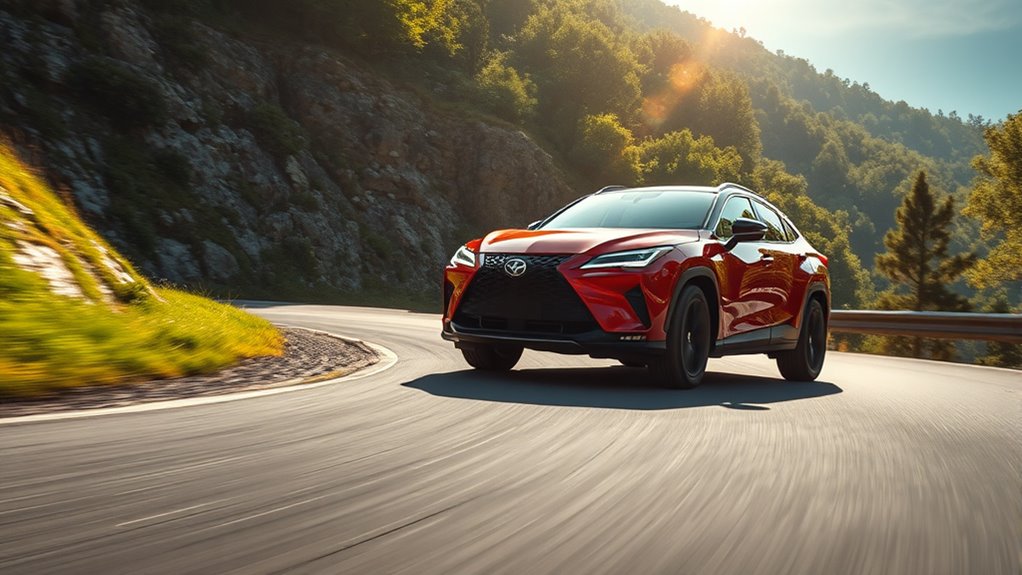
Hybrid driveline torque vectoring actively manages power between your wheels using electric motors and traditional engines. It adjusts torque instantly, improving cornering by increasing grip and stability. During turns, it pushes torque to the outside wheels while reducing it on the inside, helping you stay confident and in control. This system responds quickly to your inputs, making your drive smoother and more precise. Keep exploring to discover how this technology makes your handling safer and more engaging.
Key Takeaways
- Electric motors deliver instant torque adjustments, enabling precise distribution during cornering.
- Torque vectoring actively manages power to specific wheels to enhance grip and stability.
- Sensors monitor driving dynamics to optimize torque distribution in real-time for improved handling.
- Integration of electric motors allows rapid responses to counteract understeer or oversteer.
- Overall system enhances vehicle stability, safety, and driver confidence during cornering maneuvers.
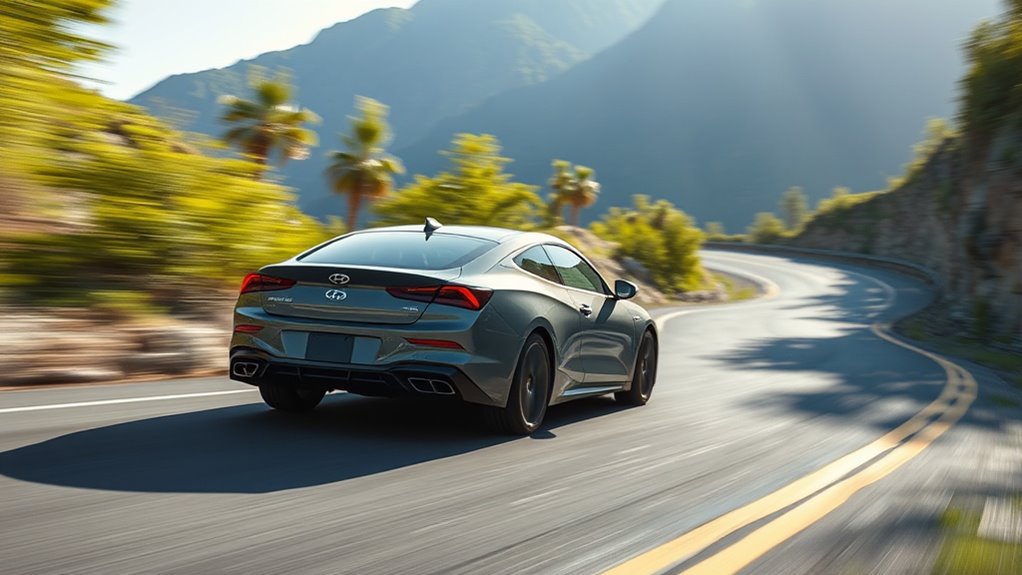
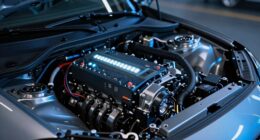
Hybrid drivelines with torque vectoring are transforming vehicle handling by seamlessly adjusting power distribution between wheels to improve stability and agility. This technology combines traditional internal combustion engines with electric motors, creating a sophisticated system that enhances cornering performance. When you enter a turn, the vehicle’s control system actively manages how much torque goes to each wheel, ensuring optimal grip and responsiveness. The integration of electric motors plays a vital role here; their instant torque delivery allows for rapid adjustments that traditional drivetrains can’t match. As a result, you experience a smoother, more precise handling feel, especially during aggressive cornering maneuvers.
The electric motor integration in hybrid torque vectoring systems isn’t just about power supply—it’s about enhancing vehicle stability. When you steer into a bend, sensors continuously monitor your steering input, vehicle speed, and lateral forces. The system then calculates the ideal torque distribution, leveraging electric motors on one or both axles to counteract understeer or oversteer tendencies. By selectively increasing torque on the outside wheels and reducing it on the inside wheels, the system effectively “pushes” the vehicle through the turn, reducing body roll and improving cornering grip. This active management means you can take sharp corners with confidence, feeling that your vehicle responds intuitively and remains composed.
Moreover, the seamless integration of electric motors allows for quick, targeted responses that traditional mechanical systems struggle to match. Electric motors can rapidly adjust torque without delays, providing instant corrections that stabilize the vehicle during dynamic driving conditions. This agility in torque vectoring not only improves handling but also enhances safety, especially on slippery or uneven surfaces. You’ll notice that the vehicle feels more planted and predictable, giving you greater control and confidence in various driving scenarios.
In essence, hybrid drivelines with torque vectoring elevate your driving experience by intelligently combining electric motor integration with advanced control algorithms. They work behind the scenes to optimize vehicle stability during cornering, ensuring you stay on your intended path. Whether you’re navigating tight bends or high-speed curves, this technology helps your vehicle respond precisely to your inputs, making driving more engaging and safer. Additionally, advanced control systems play a crucial role in achieving these performance benefits, further enhancing overall handling and safety as hybrid systems continue to evolve.
Frequently Asked Questions
How Does Torque Vectoring Affect Overall Vehicle Durability?
Torque vectoring can improve your vehicle’s handling, but it may impact overall durability. It puts extra stress on the drive shaft, potentially affecting drive shaft durability over time. Additionally, the increased reliance on electronic components can lead to faster electronic component wear. To keep your vehicle in top shape, guarantee regular maintenance and monitor these parts, especially if you frequently drive on demanding terrains or sharp corners.
What Are the Cost Implications of Implementing Hybrid Driveline Torque Vectoring?
Implementing hybrid driveline torque vectoring involves significant cost implications. You need to conduct a thorough cost analysis to understand expenses related to advanced technology integration, including sensors, control units, and software updates. While upfront costs may be high, the benefits of improved handling and efficiency can offset these investments over time. You should also consider ongoing maintenance costs and potential savings from enhanced vehicle performance and safety features.
Can Torque Vectoring Systems Be Retrofitted Into Existing Vehicles?
You can retrofit torque vectoring systems into existing vehicles, but it’s like fitting a square peg in a round hole—you’ll face aftermarket compatibility and retrofit challenges. Not all vehicles are designed for such upgrades, and installing these systems requires expertise and custom solutions. Before proceeding, weigh the benefits against potential complexities and costs, and consider professional installation to guarantee safety and maximum performance.
How Does Hybrid Torque Vectoring Impact Fuel Efficiency?
Hybrid torque vectoring boosts your vehicle’s energy savings by optimizing power distribution, which helps reduce fuel consumption. This system also enhances handling, allowing you to take corners more efficiently. As a result, it lowers emissions, contributing to a cleaner environment. By improving overall efficiency, hybrid torque vectoring makes your driving more sustainable without sacrificing performance, giving you better control and greener travel every time you hit the road.
Are There Specific Driving Conditions Where Torque Vectoring Is Most Effective?
Torque vectoring works best during urban commuting and off-road driving, where precise handling and stability are essential. It enhances cornering by distributing torque to specific wheels, helping you navigate tight turns or uneven terrain smoothly. In urban areas, it improves maneuverability and safety, while off-road, it offers better traction and control. You’ll notice its benefits most when driving through challenging corners or difficult surfaces, making your drive safer and more confident.
Conclusion
By embracing hybrid driveline torque vectoring, you transform your vehicle into a skilled dancer on the road, gracefully adjusting to every bend and turn. This technology acts like a conductor, harmonizing power delivery for peak cornering and stability. As a result, your driving experience becomes smoother, safer, and more responsive—turning each journey into a finely tuned performance. With torque vectoring, you’re not just driving; you’re orchestrating a symphony of control and efficiency.