
Choosing between a NEMA 14-50 outlet and a hardwired EVSE depends on your priorities. If you want flexibility, lower upfront costs, and easier upgrades, a NEMA 14-50 is ideal because you can plug in different chargers and relocate easily. However, if you prefer durability, faster charging, and seamless integration with smart technology, a hardwired setup might be better despite higher initial costs. Want to know which suits your needs best? Keep exploring for more details.
Key Takeaways
- NEMA 14-50 offers greater flexibility and easier installation, suitable for temporary or future upgrades.
- Hardwired EVSE typically provides faster charging and a more durable, permanent setup.
- Hardwired installations are more expensive initially but often integrate better with smart home systems.
- NEMA 14-50 is more cost-effective upfront and easier to replace or relocate later.
- The best choice depends on your need for flexibility, performance, budget, and smart technology integration.
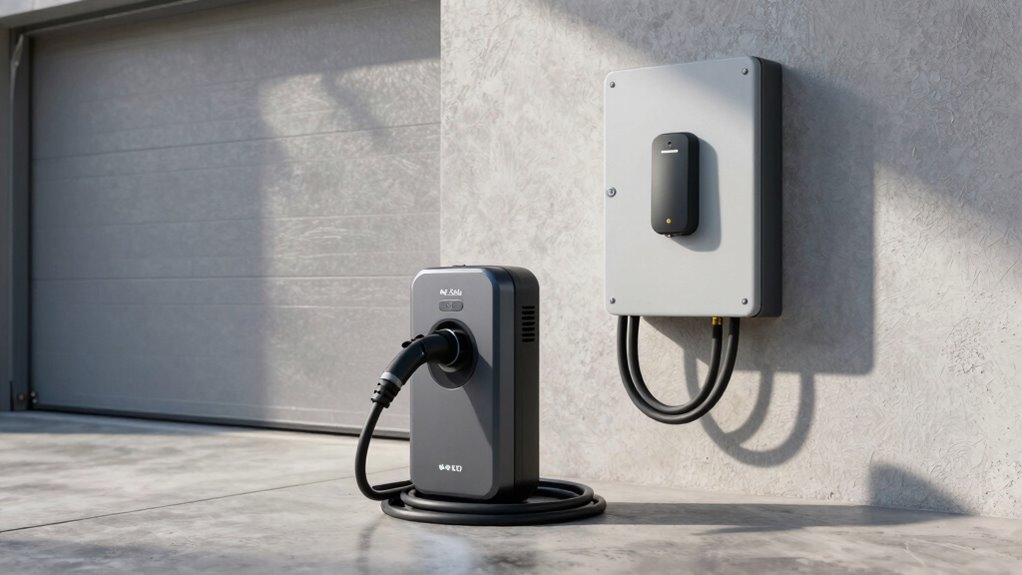
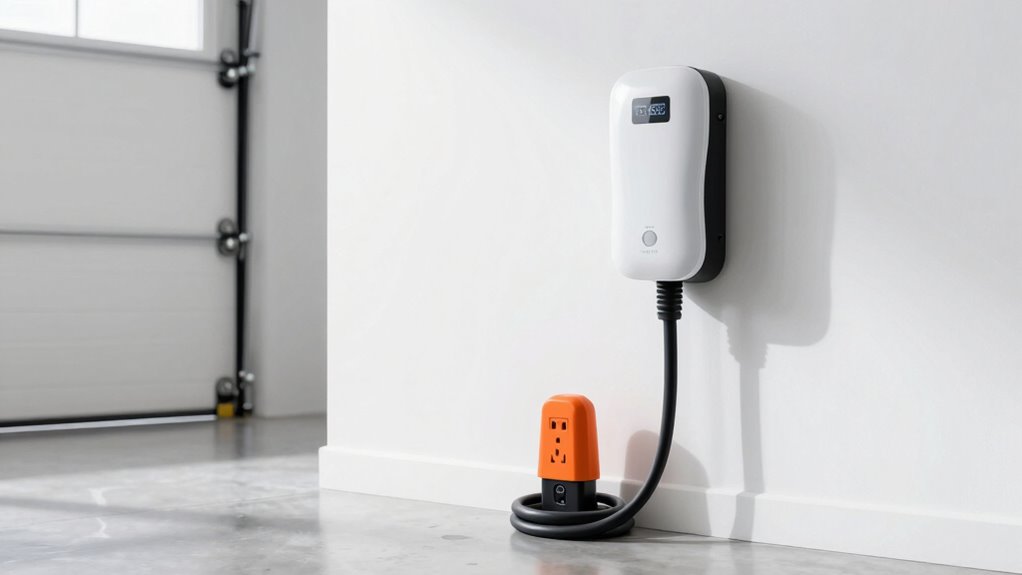
When choosing an electric vehicle supply equipment (EVSE), understanding the differences between a NEMA 14-50 outlet and a hardwired charger is essential. Your decision impacts charger compatibility, installation costs, and overall convenience. A NEMA 14-50 outlet offers flexibility; it allows you to plug in your charger easily, making it ideal if you want a portable setup or anticipate upgrading your charger in the future. However, the plug-and-play nature means charger compatibility can vary, so you need to ensure your EVSE is compatible with the outlet. On the other hand, a hardwired charger connects directly to your electrical system, offering a more permanent solution. This setup usually provides faster charging capabilities and eliminates the need for a plug, but it also involves more complex installation and potentially higher upfront costs. Additionally, modern connected appliances leverage smart technology to optimize charging times and monitor energy usage, which can be more seamlessly integrated with hardwired setups. When considering installation costs, a NEMA 14-50 outlet is generally less expensive initially. You can often install it yourself or hire a technician for a relatively straightforward setup, which keeps costs down. Additionally, because it’s a standard outlet, replacing or moving the charger later is simpler and cheaper. Conversely, a hardwired charger involves more extensive electrical work, requiring a professional to properly install the unit directly into your electrical system. This process can be costly, especially if your electrical panel needs upgrades or additional wiring. While the upfront investment is higher, many find that the durability and performance benefits of a hardwired setup justify the expense over time.
Frequently Asked Questions
Can I Upgrade My NEMA 14-50 Outlet Later?
Yes, you can upgrade your NEMA 14-50 outlet later, but consider its outlet durability and charging flexibility first. Upgrading allows you to switch to a hardwired EVSE for improved safety and reliability, which enhances your charging experience. Keep in mind that upgrading might involve rewiring or replacing the outlet, so consult a professional electrician to guarantee the process is safe and meets current electrical codes.
Is a Hardwired EVSE More Durable Than a Plug-In?
You might wonder if a hardwired EVSE is more durable than a plug-in. It often is, thanks to fewer connection points reducing wear and tear. Durability comparison shows hardwired units generally require less maintenance because they’re permanently installed and less prone to accidental disconnection. But, keep in mind, if something goes wrong, repairs can be more involved. Still, for longevity and reliability, hardwired setups tend to outlast plug-in options, offering peace of mind.
What Are the Safety Differences Between the Two Setups?
You’ll find that hardwired EVSEs typically offer enhanced safety because they often include integrated ground fault protection and are permanently connected, reducing accidental disconnections. NEMA 14-50 setups, while convenient, rely on circuit protection devices like GFCIs for ground fault safety, which can be less reliable if not maintained. Overall, hardwired units provide more consistent safety features, but proper installation and regular checks are essential for both setups.
How Does Installation Complexity Compare for Each Option?
You’ll find that installation ease varies considerably between the two options. NEMA 14-50 outlets typically involve simpler wiring complexity, making them easier for DIY projects or quick setups. Hardwired EVSEs require more intricate wiring and professional installation, especially if you need to run new circuits or upgrade your electrical panel. Overall, NEMA 14-50 setups are more straightforward, while hardwired options demand more time and technical expertise.
Are There Specific Vehicle Compatibility Considerations?
You should consider your vehicle’s connector compatibility and charging speed. Some EVs require specific connectors, so verify your setup matches those requirements. Charging speed varies depending on the EVSE type; hardwired units often deliver faster, more consistent power, but NEMA 14-50 outlets can still support rapid charging if your vehicle’s charger accommodates it. Check your vehicle’s specifications to optimize compatibility and achieve the best charging performance.
Conclusion
Ultimately, choosing between a NEMA 14-50 and a hardwired EVSE is like picking the right gear for a hike—you want what fits your trail. The NEMA 14-50 offers flexibility, like a trusty backpack that you can take anywhere, while a hardwired setup is like a sturdy hiking stick—permanent and reliable. Think about your needs and future plans, and you’ll find the setup that will carry you smoothly on your journey to EV charging.