To avoid emissions violations when upgrading your exhaust, always choose certified catalytic converters that meet your area’s legal standards. Check local regulations to guarantee your modifications are compliant, and consult with automotive professionals for guidance on proper installation. Regular tune-ups and inspections help maintain emissions performance and prevent issues. By following these steps, you can upgrade confidently while staying within environmental regulations—continue to learn more about making your upgrades both effective and legal.

Get business pricing on garage and car supplies
- Business-only prices and quantity discounts
- Tax-exempt purchasing
- Multiple users, one account, clear invoices
Key Takeaways
- Ensure all aftermarket catalytic converters are EPA-certified or meet local emissions standards before installation.
- Consult automotive professionals to select and install exhaust upgrades that comply with regional regulations.
- Verify that modifications do not cause emissions to exceed legal limits during testing procedures.
- Regularly maintain and tune your vehicle to optimize emissions performance and prevent violations.
- Stay informed about regional laws and ensure all exhaust parts remain compliant to avoid penalties.
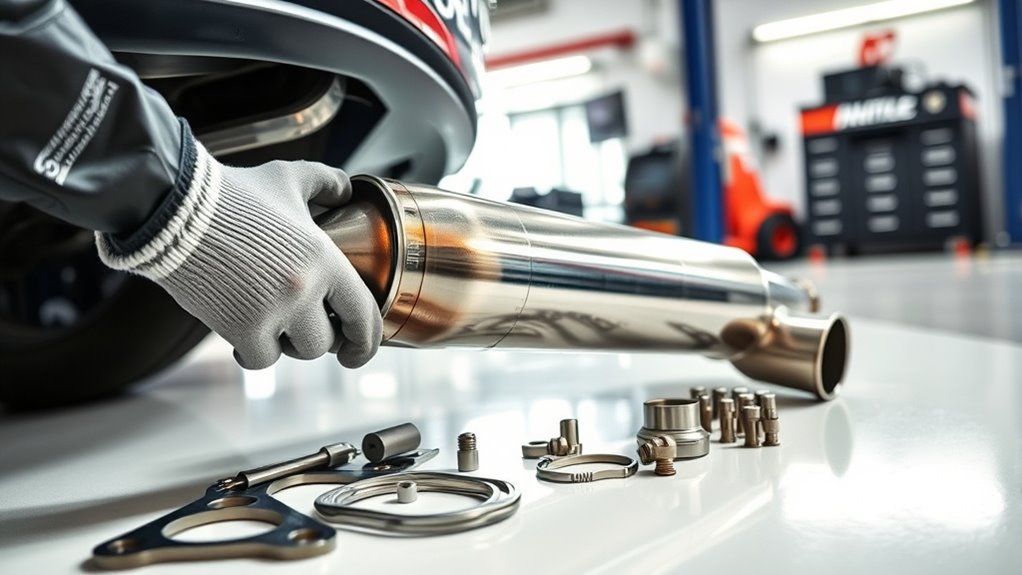
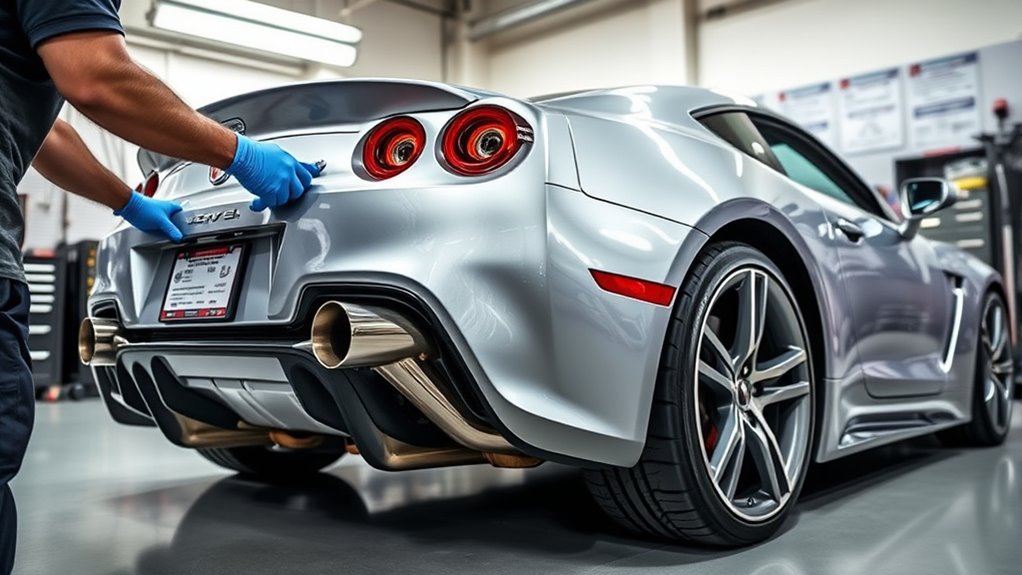
Upgrading your vehicle’s exhaust system can boost performance and sound, but it also comes with the risk of emissions violations if not done properly. One key aspect to consider is how your modifications affect your vehicle’s emissions control system, especially the catalytic converter. Catalytic converter upgrades are popular for improving exhaust flow and sound, but they must meet legal standards to avoid violations. Many aftermarket converters claim to reduce emissions or increase performance, but not all are compliant with local regulations. Before installing a new catalytic converter, check if it’s certified by the appropriate environmental agency, such as the EPA in the United States. Certified converters have passed strict emissions testing procedures that ensure they effectively reduce pollutants and meet legal standards. Installing an uncertified or illegal converter can lead to hefty fines, failed inspections, or even vehicle impoundment.
Understanding emissions testing procedures is vital, especially if you plan to replace or upgrade your exhaust components. These tests evaluate your vehicle’s emissions output to ensure it complies with environmental regulations. Typically, emissions testing involves connecting diagnostic equipment to your vehicle’s onboard computer and measuring exhaust gases during idle and controlled acceleration. If your modifications cause emissions to exceed legal limits, your vehicle will not pass inspection. To avoid this, you need to confirm your upgraded exhaust system, including the catalytic converter, works within the parameters set by these tests. Sometimes, performance upgrades can inadvertently cause your vehicle to emit more pollutants if the catalytic converter isn’t properly matched to the new system.
To stay compliant, consider consulting with automotive professionals or exhaust specialists who understand emissions regulations. They can recommend catalytic converters that are both high-performance and compliant with emissions standards. Additionally, keeping your vehicle well-maintained—like ensuring proper engine tuning and regular inspections—helps your exhaust system run efficiently and pass emissions testing. It’s also wise to stay informed about local laws, as regulations vary by region. Some areas may have stricter rules or require specific certifications for aftermarket parts.
Products Worth Considering

Milwaukee 2697-22 M18 18-Volt Lithium-Ion Cordless Hammer Drill/Impact Driver XC Combo Kit (2-Tool)

Innova 5610 OBD2 Bidirectional Scan Tool

Chemical Guys 14-Piece Arsenal Builder Car Wash Kit with Foam Blaster
As an affiliate, we earn on qualifying purchases.
Frequently Asked Questions
Are Aftermarket Exhausts Legal in All States?
You might wonder if aftermarket exhausts are legal in all states. The truth is, state regulations vary, so aftermarket legality isn’t universal. Some states have strict emissions laws, making certain upgrades illegal if they don’t meet standards. Before upgrading, check your state’s specific regulations to confirm your modifications comply. Ignoring these rules can lead to violations, fines, or failed inspections, so always verify local laws before installing aftermarket exhaust systems.
How Do I Verify if an Exhaust Passes Emissions Tests?
You verify if your exhaust passes emissions tests by checking with your state’s emissions testing station or online databases. During emissions testing, the inspectors perform exhaust verification to ensure your vehicle meets legal standards. You can also review the exhaust manufacturer’s specifications to confirm it’s designed to pass emissions tests. Always keep documentation of compliance, and if unsure, have your exhaust system inspected by a professional before testing.
What Are Common Penalties for Emissions Violations?
Imagine a car pulled over, flashing lights, and a hefty fine looming—this is what happens if you face emissions violations. Common penalties include emissions fines, which can range from hundreds to thousands of dollars, and failed safety inspections, leading to vehicle impoundment or restrictions. Ignoring emissions laws risks costly fines and vehicle setbacks, so always verify your exhaust upgrades meet standards to avoid these costly consequences.
Can I Upgrade My Exhaust Without a Professional Inspection?
You shouldn’t upgrade your exhaust without a professional inspection, as it guarantees your modifications won’t violate emissions regulations. Upgrading exhaust sound and car performance can be tempting, but a professional check helps confirm your new exhaust system meets legal standards. Skipping an inspection risks penalties or failed emissions tests. Always consult an expert to make sure your upgrades boost performance without causing compliance issues.
Do OEM Exhaust Parts Also Require Emissions Compliance?
OEM exhaust parts are designed to meet emissions standards and typically require OEM compliance to stay legal. When you replace or upgrade your exhaust, confirm the parts are certified to meet emissions standards in your area. Using aftermarket parts that don’t meet these standards can lead to violations. Always verify that your OEM exhaust parts are compliant, and consider professional installation to maintain your vehicle’s legal status and avoid emissions violations.
Conclusion
Think of upgrading your exhaust like tuning a finely crafted instrument—you want it to sound better without breaking the harmony. By staying informed about local regulations, choosing certified parts, and working with knowledgeable professionals, you’ll keep your vehicle in tune with the law. Remember, avoiding emissions violations isn’t just about compliance; it’s about playing your part in keeping our environment in perfect harmony. Keep these tips in mind, and you’ll cruise smoothly without hitting any legal sour notes.