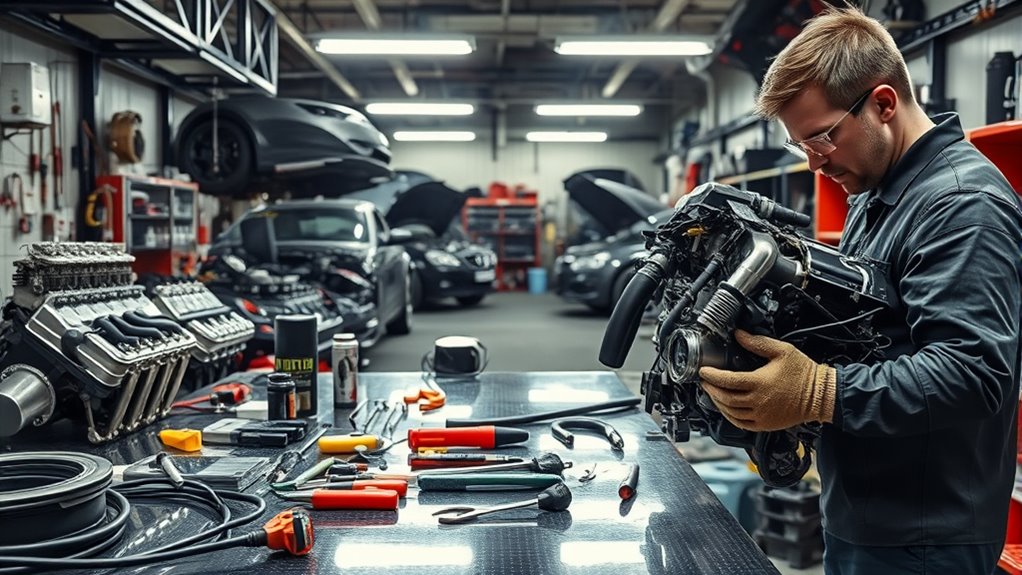
In your car tuning shop, liability risks come from warranty disputes, legal claims, and gaps in insurance coverage. If modifications cause issues, customers might seek warranty repairs or legal action, which can be costly. Proper communication, clear service agreements, and thorough insurance help manage these risks. Staying aware of legal and insurance updates is also essential. To better understand how to protect your business, discover how these risks can be effectively managed and minimized.
Key Takeaways
- Modifications can void warranties, leading to costly claims and disputes with customers.
- Clear service agreements and documentation protect shops legally during liability claims.
- Inadequate insurance coverage exposes shops to significant financial risks from damages or injuries.
- Poor communication about warranty limits increases the likelihood of legal disputes.
- Proper risk management includes understanding legal regulations, maintaining insurance, and managing customer expectations.
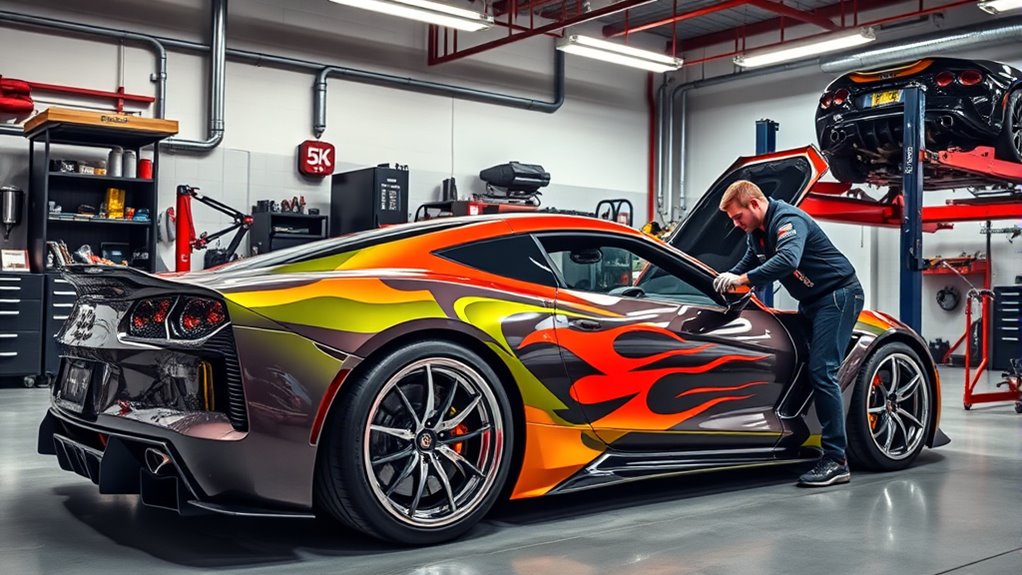
Car tuning shops face significant liability risks that can impact their operations and reputation. When you modify a vehicle, you open yourself up to potential warranty claims from customers who might experience issues shortly after the work is done. If a customer’s car develops problems related to your modifications, they may seek repairs covered under the manufacturer’s warranty, or they might expect you to fix the issue at no cost. Failing to clearly communicate what’s covered or not covered can lead to disputes, legal claims, and damage to your shop’s credibility. Furthermore, warranty claims can be costly, especially if the repairs reveal underlying issues caused by your modifications. To protect your business, you need a detailed understanding of how warranty policies intersect with your services, and you should have procedures in place for managing such claims professionally. Additionally, understanding potential pitfalls in adopting new payment technologies can help ensure your shop’s transactions are smooth and secure, reducing liability in financial dealings.
Insurance coverage is another critical aspect of liability prevention. If a customer’s vehicle is damaged during a tuning procedure or if a modification causes an accident, you could be held liable for damages or injuries. Without appropriate insurance coverage, your shop might face significant financial burdens, including legal fees, compensation, and repair costs. It’s essential to have extensive insurance policies that specifically cover the risks associated with car tuning. These policies should include general liability, professional liability, and possibly product liability coverage, depending on the scope of your services. Having the right insurance not only safeguards your shop’s assets but also reassures customers that you’re committed to responsible business practices.
Additionally, proactive communication with your clients about the limits of your warranty and the scope of your insurance coverage can help manage expectations and reduce misunderstandings. Make sure clients understand what’s guaranteed, what isn’t, and what procedures to follow if they encounter issues. Clear documentation of the work performed, along with detailed service agreements, can serve as essential legal protections should disputes arise. You should also stay updated on legal regulations and insurance policies specific to your region, as these can change and affect your liability exposure. Regularly reviewing and updating your coverage can prevent gaps that might leave you vulnerable.
Ultimately, understanding and managing warranty claims and insurance coverage are crucial steps in mitigating liability risks in your car tuning shop. These measures enable you to deliver quality service confidently, protect your business’s financial health, and maintain your reputation in a competitive industry.
Frequently Asked Questions
How Can Shops Minimize Legal Liability When Customizing Vehicles?
To minimize legal liability, you should clearly communicate customer warranties and guarantee all customizations meet safety standards. Document every modification, obtain written approvals, and use detailed contracts to protect yourself. Regularly train your staff on safety protocols and legal requirements. By maintaining high safety standards and honoring warranties, you reduce risks of disputes or lawsuits. Staying compliant with regulations and transparent with customers keeps your shop legally protected.
What Insurance Coverage Is Recommended for Car Tuning Businesses?
You should prioritize extensive insurance policies that cover general liability, garage keeper’s, and product liability to protect your tuning business. These policies help manage risks associated with vehicle damage, injuries, or accidents during modifications. Implementing solid risk management strategies, like staff training and safety protocols, further reduces potential claims. Regularly review and update your insurance coverage to ensure it aligns with your evolving services and exposure levels.
Are There Specific Permits Required for High-Performance Modifications?
You need to check local permitting requirements for high-performance modifications, as these vary by location. Typically, you’ll need permits that guarantee compliance with safety and environmental standards. Additionally, adhering to certification standards for specific upgrades or modifications may be necessary to avoid legal issues. Always verify with your city or state regulations to stay compliant, and consider consulting with an expert to ensure you meet all permitting and certification standards.
How Do Liability Laws Differ Across Various States or Countries?
You should know that legal variations and regulatory differences across states or countries substantially impact liability laws. In some places, you might face stricter rules for modifications, including higher liability risks if something goes wrong. It’s vital to stay informed about local laws to guarantee you’re compliant. Always check specific regulations before making high-performance modifications, as failure to do so could increase your liability and legal exposure.
What Are the Best Practices for Documenting Customer Consent and Modifications?
You should guarantee you get customer signatures on consent forms before starting any modifications, clearly outlining the work to be done. Maintain detailed modification logs for each vehicle, noting parts used, changes made, and dates. This documentation protects you if issues arise, demonstrating that the customer approved the work. Consistently applying these best practices helps minimize liability risks and keeps your shop compliant with legal requirements.
Conclusion
Navigating liability risks in your car tuning shop is like walking a tightrope—you need balance, awareness, and a steady hand. One misstep could send legal storms your way, threatening your business’s foundation. Stay vigilant, prioritize safety, and keep clear documentation to steer through these turbulent waters. When you’re prepared, you’re not just avoiding pitfalls—you’re paving a smooth road for your passion to thrive without fear of legal storms.