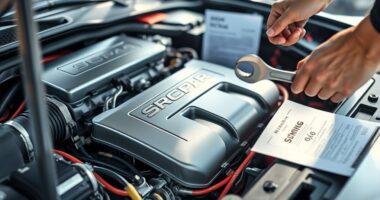

Using race fuel on street-driven builds can violate local environmental laws, licensing, and safety standards, risking fines, vehicle impoundment, or legal action. Many regions restrict or prohibit non-compliant fuels for public roads to protect ecosystems and guarantee safety. You may also face issues with vehicle registration and insurance if your modifications or fuel usage do not meet legal requirements. To stay compliant, it’s essential to understand the regulations thoroughly—stick around to learn what you need to know.

Get business pricing on garage and car supplies
- Business-only prices and quantity discounts
- Tax-exempt purchasing
- Multiple users, one account, clear invoices
Key Takeaways
- Using race fuel on public roads may violate environmental laws due to prohibited additives and emissions standards.
- Licensing and permits are often required for purchasing, transporting, or using race fuel legally.
- Race fuel use on street builds can breach local, state, or federal vehicle and safety regulations.
- Non-compliant fuel modifications can invalidate vehicle registration and insurance coverage.
- The legal risks and environmental impacts generally outweigh performance gains from using race fuel on streets.
If you’re contemplating using race fuel on your street-driven build, it’s vital to understand the legal implications involved. Race fuels are specially formulated to maximize performance on the track, but their use on public roads can lead to serious legal issues. One of the key factors to bear in mind is environmental regulations. Many jurisdictions have strict rules governing the types of fuel you can legally use in vehicles on public streets. Race fuel often contains higher levels of lead, volatile compounds, or other additives that are prohibited or heavily regulated due to their environmental impact. Using such fuels without proper authorization can result in hefty fines, vehicle impoundment, or even criminal charges.
Using race fuel on public roads can lead to fines, impoundment, or criminal charges due to environmental regulation violations.
Beyond environmental regulations, you also need to be aware of licensing requirements. Some regions require special permits or certifications to purchase, transport, or use certain types of fuels, including race fuel. These licensing requirements are in place to ensure that only qualified individuals handle potentially hazardous substances, reducing the risk of spills, accidents, or environmental contamination. If you overlook these regulations, you could face penalties that range from fines to legal action, especially if your use of race fuel leads to pollution or safety hazards. Additionally, some jurisdictions may conduct inspections or require documentation proving proper handling and disposal of such fuels.
Additionally, the legality of using race fuel on the street depends on local, state, and federal laws. For example, in some areas, it’s illegal to operate a vehicle on public roads with fuel that doesn’t meet standard specifications for emissions and safety. Race fuel often doesn’t meet these standards, making it illegal for use outside sanctioned race tracks or private property. If you’re caught using it on the street, authorities can seize your vehicle, and you might be required to revert to legal fuel types before it can be driven again. Understanding fuel compliance standards is essential for staying within legal boundaries and avoiding unintended violations.
It’s also worth noting that some aftermarket modifications to your fuel system or engine to accommodate race fuel may invalidate your vehicle’s registration or insurance policy. Insurance companies might refuse coverage if your build doesn’t comply with legal fuel regulations, leaving you exposed to financial risk in case of an accident.
Ultimately, while using race fuel might seem appealing for performance gains, the legal risks often outweigh the benefits. You should research your local regulations thoroughly and consult with authorities or legal experts if you’re unsure about the requirements. Staying compliant not only helps you avoid penalties but also ensures that your street-driven build remains safe and environmentally responsible. Protecting the environment and adhering to fuel regulations is crucial for sustainable and legal vehicle operation. Being aware of fuel compliance standards can help you make informed decisions and avoid inadvertent violations.
race fuel permits and licensing kit
As an affiliate, we earn on qualifying purchases.
As an affiliate, we earn on qualifying purchases.
Frequently Asked Questions
Are There Specific Licenses Required to Purchase Race Fuel Legally?
Yes, you typically need specific licenses or permits to purchase race fuel legally. You must comply with fuel storage and safety regulations to prevent accidents or legal issues. Check local and federal laws, as some regions require proper licensing for handling and storing high-octane fuels. Always guarantee your storage containers meet safety standards, and keep documentation handy to prove you’re following the necessary regulations for legal and safe use.
How Does Using Race Fuel Affect Vehicle Emissions Testing?
Using race fuel can profoundly impact your vehicle’s emissions testing. It often contains additives and higher octane levels that may cause your emissions to exceed legal limits, affecting compliance with emissions regulations. While some believe it has minimal environmental impact, others argue it can increase pollutants. To stay within legal standards, you should consider how race fuel influences emissions, especially if your vehicle undergoes regular emissions testing or inspection.
Can I Legally Transport Race Fuel Across State Lines?
You generally can’t legally transport race fuel across state lines without following strict environmental regulations and safety precautions. Many states have restrictions due to hazardous material laws, requiring proper labeling, container types, and permits. Always check local and federal regulations before transporting race fuel. Failing to adhere can lead to fines, confiscation, or legal issues. Prioritize safety by using approved containers and keeping fuel secure during transit.
What Insurance Implications Come With Using Race Fuel on the Street?
Using race fuel on the street can turn your insurance nightmare into a reality. It greatly impacts your insurance claims and liability coverage, making you more vulnerable if an accident occurs. Many insurers see race fuel use as a high-risk activity, potentially voiding your coverage. You might face hefty out-of-pocket costs, and your liability coverage may not protect you fully, so it’s crucial to understand these risks before fueling up with race fuel on public roads.
Are There Local Ordinances Restricting the Use of Race Fuel?
You need to check local ordinances because fuel regulations often restrict the use of race fuel on streets. Many areas have safety precautions in place to prevent accidents or environmental damage, which might ban or limit race fuel use entirely. It’s crucial to consult your local authorities or zoning laws to make certain you’re compliant. Ignoring these rules could lead to fines, penalties, or safety hazards, so always verify before using race fuel on street-driven builds.
Conclusion
While race fuel might boost your street-driven build’s performance, it’s vital to remember that legality often lags behind ambition. The thrill of pushing boundaries can quickly clash with regulations designed to protect everyone’s safety. In this delicate balance, your passion for speed must coexist with responsibility. Ignoring legal boundaries might bring a fleeting rush, but respecting them guarantees your ride remains a source of pride, not trouble—reminding you that some victories are best celebrated within the lines.
Fall Picks
fall essentials
As an affiliate, we earn on qualifying purchases.