Tuning your electric or hybrid car can improve performance but often risks voiding your warranty, especially if it involves software or battery management system changes. Manufacturers typically specify that unauthorized modifications may lead to component failures and costly repairs not covered under warranty. Even small tweaks can cause system instability or safety issues, which could invalidate your coverage. To understand how to modify your vehicle without losing warranty protection, continue exploring how manufacturer policies and professional advice can help.
Key Takeaways
- Software modifications in electric and hybrid vehicles often void warranty due to system integrity concerns.
- Tuning can interfere with the Battery Management System, risking battery damage and warranty coverage loss.
- Manufacturers typically prohibit unauthorized software changes, and repairs related to such modifications may not be covered.
- Even minor tuning adjustments can stress electrical and battery components, potentially leading to warranty-voiding failures.
- Consulting with manufacturers or qualified technicians ensures modifications remain warranty-compliant and system-safe.
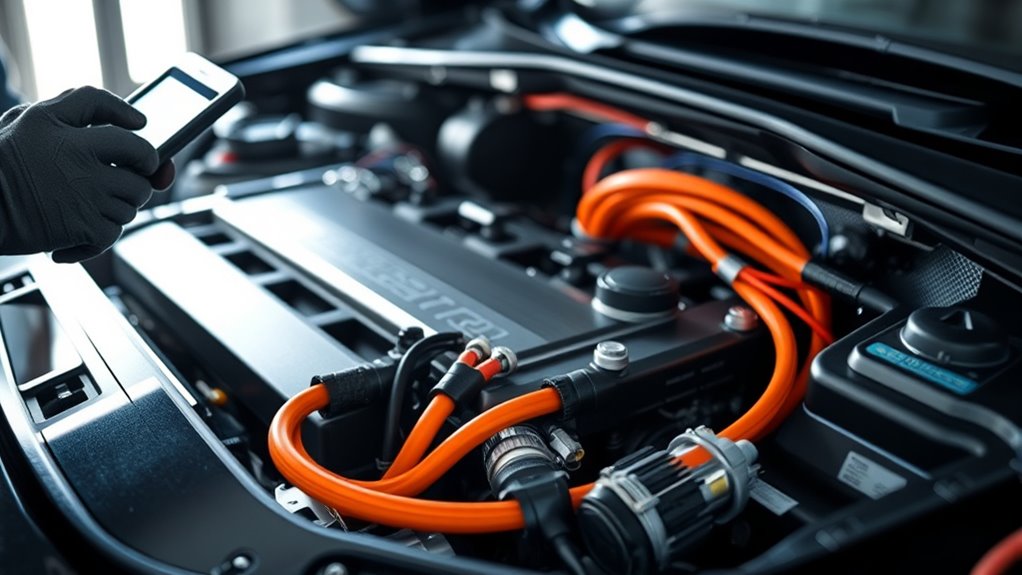
Tuning electric and hybrid cars can boost performance and customize your driving experience, but it also raises important warranty considerations. When you modify the vehicle’s software, you’re fundamentally changing how the car’s systems operate, which can have direct implications on your warranty coverage. Many manufacturers include clauses that specify any software modifications as grounds for voiding the warranty, especially if those changes lead to component failures or safety issues. It’s crucial to understand that software plays a critical role in managing everything from power delivery to safety features, so altering it without proper authorization could leave you unprotected if problems arise.
Battery management is another key aspect to contemplate. Electric and hybrid vehicles rely heavily on sophisticated battery management systems (BMS) to monitor and regulate battery health, charging, and discharging cycles. When you tune your vehicle, you might modify the BMS to improve performance or extend range, but those changes can interfere with the manufacturer’s designed parameters. This interference can trigger warranty voiding if the manufacturer determines that the modifications caused damage or accelerated battery degradation. Since the battery is one of the most costly components, any damage resulting from improper management or unauthorized modifications can lead to expensive repairs not covered under warranty.
If you’re thinking about tuning your electric or hybrid vehicle, it’s wise to review the manufacturer’s warranty policy thoroughly. Some automakers are stricter than others when it comes to software modifications and battery management changes. Before making any adjustments, consider consulting with the manufacturer or a qualified technician familiar with the vehicle’s systems. Professional tuning shops that specialize in electric and hybrid cars often have a better understanding of what’s permissible without voiding the warranty. They might offer approved modifications or software updates that align with warranty requirements, helping you enjoy enhanced performance without risking coverage.
Keep in mind that even seemingly minor modifications can have broader consequences. For example, changing software settings to boost power might increase stress on the battery or electrical systems, possibly leading to failures that the warranty would not cover. Manufacturers design these systems with specific limits for safety and longevity, so exceeding those limits through tuning can undermine your warranty protections.
Additionally, understanding the role of software in vehicle performance and safety can help you make informed decisions about modifications. Ultimately, if warranty coverage matters to you, you need to be cautious about how you approach tuning your electric or hybrid vehicle. Focus on authorized updates and consult professionals who understand the balance between performance enhancements and warranty preservation. By doing so, you can enjoy a more personalized driving experience while safeguarding your investment against unexpected repair costs.
Frequently Asked Questions
Can Tuning Improve Electric Car Performance Without Voiding Warranty?
Tuning can boost your electric car’s performance gains, but it often risks warranty coverage. If you modify your vehicle without proper expertise or approval, warranty risks increase, potentially voiding coverage for key components. To improve performance without jeopardizing your warranty, consult your manufacturer or a qualified professional. They can suggest safe upgrades or tuning options that minimize warranty risks while enhancing your electric car’s capabilities.
Do Hybrid Car Warranties Cover Aftermarket Tuning Modifications?
Hybrid car warranties generally don’t cover aftermarket modifications, as manufacturer warranties typically exclude damages caused by aftermarket tuning. If you modify your hybrid, it’s likely you’ll void parts of your warranty, especially if the changes affect the hybrid system or drivetrain. To avoid losing coverage, always check your manufacturer’s policies and consider consulting your dealer before making aftermarket modifications, ensuring you understand what’s protected under your warranty.
Are There Legal Limits to Tuning Electric and Hybrid Vehicles?
You can’t ignore the fact that there are legal limits to tuning electric and hybrid vehicles. Tuning regulations vary by region, and ignoring them can land you in hot water. Legal restrictions typically focus on safety, emissions, and noise levels. Before making modifications, you should check local laws—otherwise, you might find yourself rowing against the tide, risking fines or even voiding your vehicle’s warranty. Stay informed to keep your car on the right side of the law.
How Does Tuning Affect Battery Lifespan and Warranty Coverage?
Tuning your electric or hybrid car can accelerate battery degradation, which may reduce its lifespan. If the tuning causes significant damage or premature failure, your warranty could be voided, leaving you responsible for repairs. Manufacturers often view tuning as altering the original setup, so it’s essential to understand that warranty coverage might not protect you from issues related to battery degradation caused by modifications.
What Are the Risks of Tuning Electric and Hybrid Vehicles?
Tuning electric and hybrid vehicles carries risks, much like stepping into the wild west. You could accelerate battery degradation, leading to reduced lifespan and costly repairs. Software updates may become unreliable or incompatible after tuning, causing system malfunctions. Additionally, tuning can void warranties, leaving you unprotected if issues arise. Always weigh these risks carefully before modifying your vehicle, as the potential for hidden problems is significant.
Conclusion
Tuning your electric or hybrid car might seem like a quick fix, but it often comes with hidden risks that could void your warranty. While it’s tempting to boost performance or efficiency, keep in mind that even small modifications can unexpectedly affect your vehicle’s coverage—sometimes just by coincidence. So, before you make any changes, weigh the potential benefits against the chance that your warranty could slip away when you least expect it.