Aerodynamic mods like spoilers, splitters, and diffusers work together to improve your vehicle’s stability, handling, and speed. Spoilers disrupt airflow to generate downforce, keeping your car planted on the road during high-speed turns. Splitters manage airflow at the front, creating downforce and reducing drag, while diffusers are placed at the rear to boost stability by accelerating airflow underneath. Understanding how these elements work together can help you optimize your vehicle’s performance—keep exploring to learn more.
Key Takeaways
- Spoilers, splitters, and diffusers improve vehicle stability and handling by managing airflow and increasing downforce at high speeds.
- These aerodynamic parts reduce drag and enhance fuel efficiency while enabling higher top speeds.
- Splitters at the front create high-pressure zones, directing airflow and providing front-end downforce.
- Diffusers at the rear accelerate airflow underneath the car, generating low-pressure zones for better stability.
- Together, these mods optimize aerodynamic performance, improving safety, cornering, and overall driving dynamics.
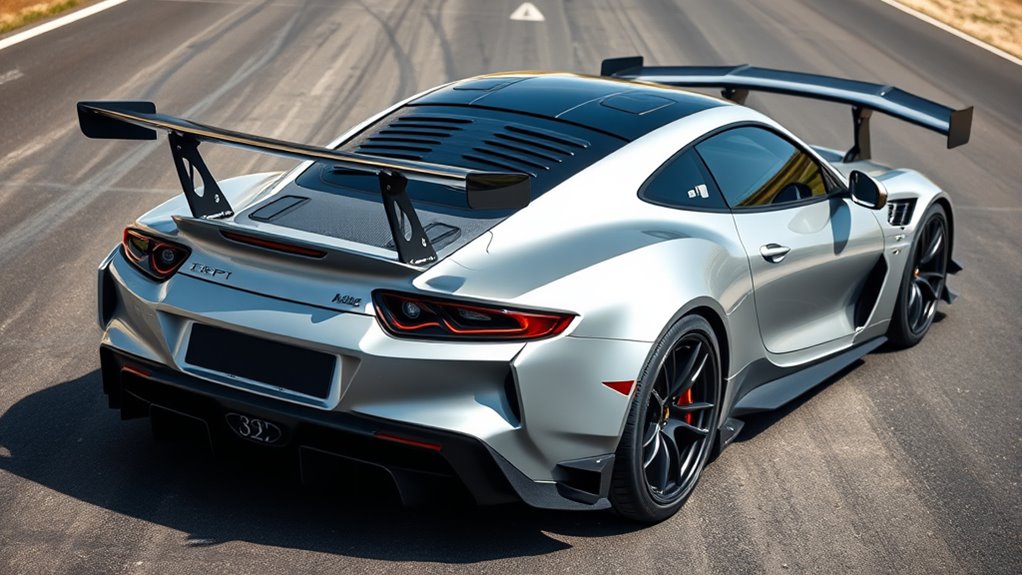
Aerodynamic modifications can substantially boost your vehicle’s performance by reducing drag and increasing stability at higher speeds. When you install components like spoilers, splitters, and diffusers, you’re actively working to optimize how air flows over and around your car. These parts are designed to manipulate airflow, leading to notable improvements in downforce enhancement and drag reduction. By increasing downforce, your vehicle sticks better to the road, which improves handling during high-speed turns and reduces the risk of losing control. At the same time, drag reduction helps your car cut through the air more efficiently, leading to higher top speeds and improved fuel economy.
Aerodynamic mods like spoilers, splitters, and diffusers boost speed, stability, and handling by reducing drag and increasing downforce.
Spoilers are perhaps the most recognizable aerodynamic mods. They work by disrupting airflow to generate downforce, pressing your car down onto the road. This added grip allows you to take corners at higher speeds with more confidence. Properly designed spoilers also help manage airflow behind your car, reducing turbulence and drag. When you choose a spoiler, consider its size and angle; a more aggressive angle increases downforce but can also add to drag if not carefully balanced. The goal is to find a setup that maximizes downforce without considerably increasing drag, keeping your vehicle stable and swift.
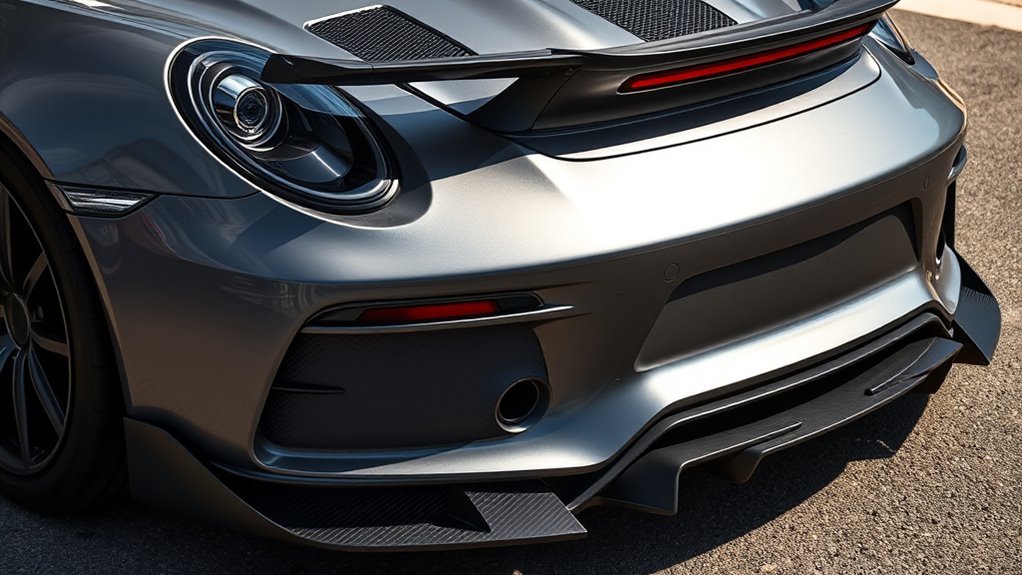
Splitters are installed at the front of your vehicle and are essential for managing airflow before it reaches the underbody. They create a high-pressure zone above the splitter while directing air underneath, helping to generate downforce at the front end. This front-end grip is vital for maintaining stability, especially during high-speed braking or cornering. A well-designed splitter can also aid in drag reduction by directing airflow smoothly around the sides of your vehicle, preventing turbulence that can slow you down. When selecting a splitter, pay attention to its material and mounting; it should be sturdy enough to withstand high speeds and aerodynamic forces. Additionally, choosing components that are compatible with your vehicle’s existing aerodynamics can lead to more effective results.
Diffusers, located at the rear underside of your car, are key for controlling airflow as it exits your vehicle. They accelerate the air leaving beneath your car, creating a low-pressure zone that pulls your car downward—another form of downforce enhancement. Diffusers also help to streamline airflow, minimizing wake turbulence and drag. Properly functioning diffusers can boost stability at high speeds, making your ride more predictable and safer. When choosing a diffuser, ensure it’s compatible with your vehicle’s design and installed correctly, as improper setup can negate the intended aerodynamic benefits. Understanding the principles behind aerodynamic efficiency can help you select the most suitable modifications for your vehicle’s performance goals.
Together, spoilers, splitters, and diffusers work in concert to improve your vehicle’s aerodynamic profile. By focusing on downforce enhancement and drag reduction, these mods allow you to enjoy higher speeds, better handling, and more efficient performance. Whether you’re racing or just want a sportier feel, these modifications can make a substantial difference in how your car performs at its limits.
Frequently Asked Questions
How Do Spoilers Affect Vehicle Downforce?
Spoilers increase vehicle downforce by disrupting airflow, which enhances grip and stability at high speeds. They work based on aerodynamic principles, creating a pressure difference that pushes the car downward. This added downforce improves vehicle stability, especially during sharp turns or rapid acceleration. By managing airflow effectively, spoilers help you maintain better control, reducing lift and ensuring your vehicle stays planted on the road or track.
Can Aftermarket Diffusers Improve Fuel Efficiency?
Aftermarket diffusers can improve your vehicle’s fuel efficiency by optimizing airflow underneath the car, reducing drag, and enhancing overall aerodynamics. When installed correctly, they help your engine work less to maintain speed, saving fuel. Keep in mind, not all diffusers offer the same benefits, so choosing quality aftermarket upgrades is essential. Properly fitted diffusers can make a noticeable difference in your car’s fuel economy over time.
What Materials Are Best for Aerodynamic Mods?
Think of choosing materials for aerodynamic mods like building a fortress—durability and strength matter most. You should go for lightweight aluminum or carbon fiber, as they combine durability with low weight, enhancing performance. These materials withstand the stresses of driving and resist weather damage. Proper installation techniques ensure these mods stay secure and perform well. So, pick high-quality materials and follow precise methods to maximize your aerodynamic upgrades’ effectiveness and longevity.
Are There Legal Restrictions on Aftermarket Spoilers?
Yes, there are legal restrictions on aftermarket spoilers, depending on your location. You need to verify local laws because some areas limit spoiler height, width, or visibility to ensure safety and compliance. Before installing an aftermarket spoiler, review your state’s vehicle regulations or consult with local authorities. Ignoring these restrictions could lead to fines, failed inspections, or safety issues, so always confirm the legal requirements first.
How Do Splitters Influence Front-End Grip?
Splitters enhance front-end grip by managing airflow effectively, which boosts front end stability. As you drive, the splitter redirects air away from the underside of your car, increasing downforce on the front wheels. This improved air flow management helps your vehicle stay planted during high-speed cornering, giving you more confidence and control. Properly designed splitters make a noticeable difference in handling, especially in aggressive driving or racing situations.
Conclusion
By adding spoilers, splitters, and diffusers, you’re basically giving your car a suit of armor that slices through the air like a knife through butter. These mods aren’t just about looks—they improve grip, stability, and overall performance. Think of them as your car’s secret weapons, turning a regular ride into a sleek, aerodynamic beast. So, if you want to tame the wind and own the road, don’t shy away from these game-changing upgrades.