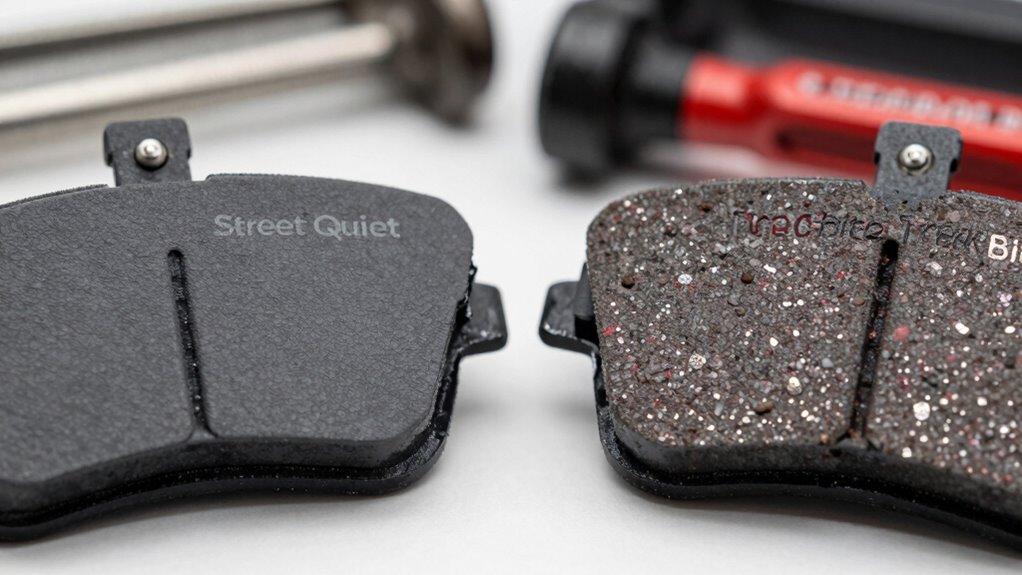

Choosing between street quiet and track bite brake pads depends on your driving style. Street pads, often ceramic, emphasize quiet operation, less dust, and longer lifespan, making them ideal for daily driving. Track pads, usually metallic, provide aggressive bite and high heat resistance for maximum stopping power but tend to be noisier and generate more dust. Understanding these differences helps you balance comfort and performance—if you want to learn more about how each type performs, keep exploring further.
Key Takeaways
- Street quiet brake pads typically use ceramic compounds for smooth, low-noise, dust-minimizing performance suitable for daily driving.
- Track bite brake pads often feature metallic compounds that provide higher friction and heat resistance for aggressive, high-performance braking.
- Ceramic brake pads offer consistent modulation and quieter operation but may have less initial bite compared to metallic pads.
- Metallic performance pads deliver immediate, powerful stopping force ideal for track use, but produce more noise and dust in daily driving.
- Choosing between street quiet and track bite compounds depends on driving style, with ceramics prioritizing comfort and metallics emphasizing performance.
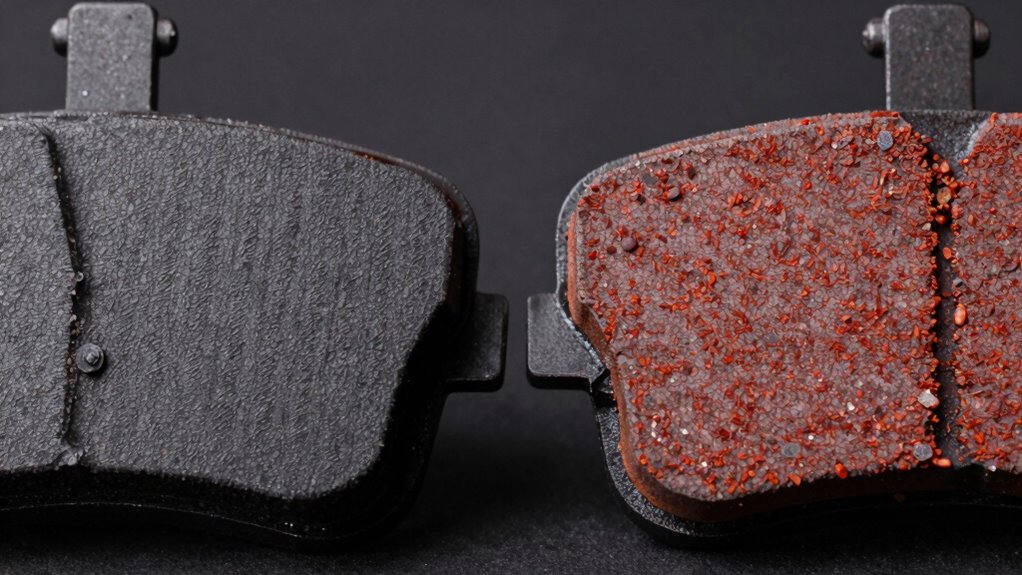
Have you ever wondered what makes brake pads effective? It all comes down to their composition, which influences how well they perform in different driving situations. When choosing brake pads, understanding the differences between various compounds helps you make the right decision for your needs. For example, ceramic pads are known for their ceramic durability, making them a popular choice for daily driving. These pads provide a smooth, quiet operation and produce less dust, which keeps your wheels cleaner. Their ceramic durability ensures they last longer and maintain consistent performance over time, even with regular use. On the other hand, metallic performance refers to pads that incorporate metal fibers, offering enhanced heat dissipation and stopping power. These pads excel in high-stress conditions, such as spirited driving or track days, where brake performance needs to be immediate and reliable. Metallic compounds tend to generate more noise and dust, but their performance benefits often outweigh these drawbacks for enthusiasts and professionals.
Understanding how these materials behave under different conditions helps you decide what suits your driving style. Ceramic pads are excellent for everyday street driving because they deliver a quiet, comfortable ride and minimal brake fade. Their ceramic durability means they resist cracking and wear evenly, which prolongs their lifespan. This durability makes them particularly suitable if you prioritize a smooth, low-maintenance braking experience. Additionally, vetted information indicates that ceramic compounds tend to be more consistent in their performance over time. Conversely, if you’re into aggressive driving or need brakes that can handle high temperatures without losing effectiveness, metallic pads might be better. Their metallic performance allows them to resist fade during intense use, making them more dependable on the track or during spirited drives. However, that performance comes with increased noise and dust, which might not be ideal for daily city commuting or if you prefer a quieter ride.
Choosing between these compounds depends on your driving habits and priorities. If you value longevity, comfort, and minimal maintenance, ceramic pads are a solid choice thanks to their ceramic durability. But if you’re focused on maximum stopping power and heat resistance, metallic performance is hard to beat. Keep in mind that each type has its trade-offs: ceramics tend to cost more upfront but last longer, while metallic pads can be less expensive but may wear faster and generate more noise. Ultimately, knowing how each compound behaves helps you weigh what’s most important for your driving experience. Whether you prefer the quiet reliability of ceramic or the aggressive performance of metallic pads, understanding their composition allows you to choose the right brake pads for your vehicle and driving style.
Frequently Asked Questions
How Do Brake Pad Compounds Affect Brake Fade?
You’ll notice that brake pad compounds directly impact brake fade by influencing thermal expansion and wear resistance. High-performance compounds, like those used on track, resist thermal expansion better, reducing fade during intense braking. In contrast, street compounds prioritize wear resistance and quieter operation but may fade quicker under heavy use. Choosing the right compound means balancing these factors to maintain effective braking and minimize fade in your driving conditions.
Are Ceramic Brake Pads Better for Everyday Driving?
Yes, ceramic brake pads are better for everyday driving because they offer excellent durability and noise reduction. You’ll notice less brake dust and quieter operation, making your drives more comfortable. Their ceramic durability guarantees they last longer, even with frequent use. Plus, they perform well in most weather conditions, providing reliable stopping power without the squeal or excessive dust associated with other pad types, making them a popular choice for daily drivers.
Can Switching Compounds Improve My Car’s Braking Performance?
Switching compounds can dramatically improve your car’s braking performance, making your stops feel like hitting a wall of force. By choosing the right material compatibility, you guarantee ideal interaction between pads and rotors. If noise reduction is a priority, opt for compounds designed for quiet operation. Upgrading brake pads allows you to tailor braking feel and performance, transforming your driving experience from ordinary to extraordinary with just a simple switch.
How Long Do Street Quiet Brake Pads Typically Last?
Street quiet brake pads typically last between 30,000 to 70,000 miles, depending on abrasion resistance and driving habits. You’ll notice they produce lower noise levels, making your rides more comfortable. To maximize their lifespan, avoid aggressive braking and guarantee proper installation. Keep in mind that driving conditions and brake maintenance also impact how long these pads remain effective, so regular inspections are essential for ideal performance.
Do Track Bite Compounds Require More Maintenance?
Track bite compounds do require more maintenance because they have lower abrasion resistance and higher heat tolerance. This means they wear faster and may need more frequent pad replacements. On average, they last about 15-20% less than street quiet pads, especially with aggressive use. You’ll notice increased wear and potential glazing if you don’t check and replace them regularly, ensuring ideal performance and safety during high-performance driving.
Conclusion
So, whether you crave the quiet of city streets or the fierce bite of the track, your brake pad choice has you covered. Ironically, what keeps you safe might also keep you from enjoying a peaceful drive or a thrilling race. In the end, it’s all about balancing your needs—because nothing says “perfect” like choosing the right pad that might just “bite” back when you least expect it. Happy braking!