
To handle increased torque, upgrading your clutch is essential. Choose a high-performance pressure plate to boost clamping force and prevent slipping under stress. Opt for stronger disc materials like ceramic or metallic options that tolerate higher heat and power transfer. Upgrading both components together guarantees a more reliable and durable clutch system, improving acceleration, control, and confidence under demanding conditions. Keep exploring to discover more about making your clutch even more effective for your power needs.
Key Takeaways
- Upgrading pressure plates increases clamping force to handle higher torque without slipping.
- Selecting high-performance disc materials like ceramic or steel improves heat dissipation and durability under increased stress.
- Combining upgraded pressure plates and robust discs ensures reliable power transfer and reduces clutch fade.
- Additional modifications, such as a stronger flywheel, can optimize the clutch system for high-torque applications.
- Proper installation and compatible performance kits maximize clutch lifespan and ensure smooth, consistent engagement.
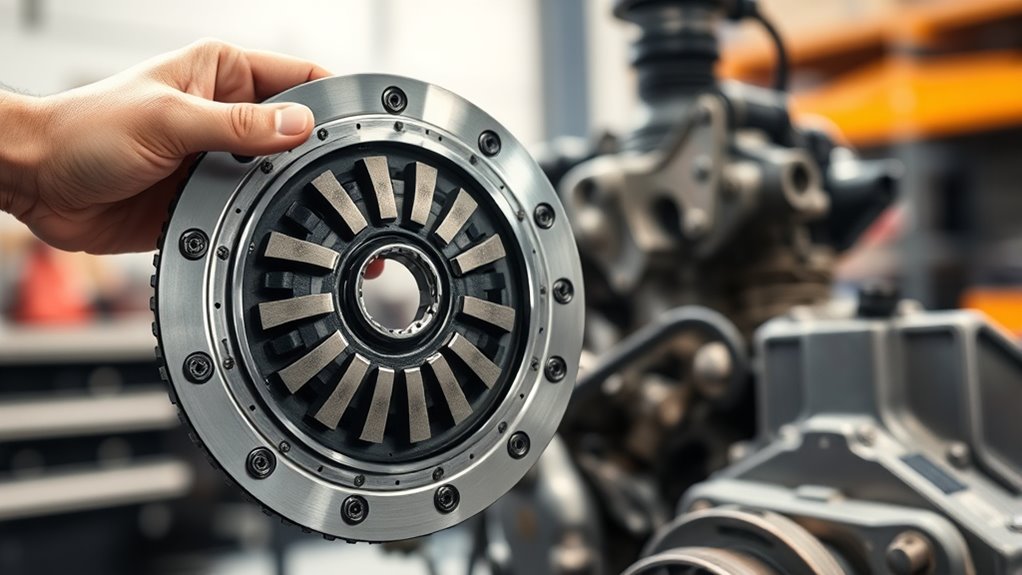
Upgrading your clutch can substantially improve your vehicle’s performance and driving experience. When you’re handling increased torque, especially from modifications like turbocharging or engine swaps, your stock clutch might struggle to keep up. That’s where pressure plate upgrades come into play. By selecting a high-performance pressure plate, you can enhance clamping force, reducing slip and ensuring that power is effectively transferred to the wheels. A stronger pressure plate can resist the higher stresses caused by increased torque, giving you more confidence on the road or track.
But it’s not just about the pressure plate; disc material options are equally critical in handling added power. Different materials offer distinct benefits—ceramic discs, for example, are excellent at handling high temperatures and provide better heat dissipation, making them ideal for aggressive driving or racing conditions. Organic discs, on the other hand, deliver smoother engagement and quieter operation, but they might wear faster under extreme torque. Steel or metallic discs are known for their durability and ability to withstand harsh conditions, making them suitable for high-torque applications. Choosing the right disc material depends on your driving style and performance goals, but upgrading to a more robust material will generally improve your clutch’s ability to handle increased power without slipping or fading.
Additionally, considering performance kits that include upgraded clutch components can simplify the upgrade process and ensure compatibility with your vehicle’s modifications. When you decide to upgrade your clutch, you’ll want to take into account both pressure plate upgrades and disc material options in tandem. A high-performance pressure plate, paired with the right disc material, creates a more reliable clutch system that can handle the added stress of increased torque. This combination ensures smoother engagement, reduces the risk of clutch slip, and extends the lifespan of your clutch components. Keep in mind that these upgrades often require careful installation and sometimes additional modifications, like a stronger flywheel, to maximize their benefits.
Ultimately, investing in the right pressure plate and disc material options can transform your driving experience. Whether you’re aiming for better acceleration, more control at the track, or just a more responsive feel, these upgrades allow your vehicle to handle increased torque confidently. You’ll notice improved power transfer, less slippage, and a more consistent clutch feel, even under demanding conditions. So, when you’re looking to boost your car’s performance, don’t overlook the importance of these key clutch components. They’re essential for handling the extra power and giving you a more engaging, reliable driving experience.
Frequently Asked Questions
How Do I Know if My Clutch Is Failing Under Increased Torque?
You’ll know your clutch is failing under increased torque if you notice slipping during acceleration or high RPMs, which means the clutch isn’t gripping properly. Additionally, pay attention to pedal engagement—if the pedal feels different, sticks, or engages too high or low, it’s a sign of trouble. These issues indicate your clutch is struggling to handle the extra power and may need inspection or replacement soon.
What Are Signs My Clutch Can’t Handle Higher Horsepower?
You might think your clutch’s feeling fine, but signs like a slipping clutch or a spongy clutch pedal feel reveal it can’t handle higher horsepower. Ironically, if your clutch engages too high or slips unexpectedly under load, it shows you’re pushing its limits. These slipping clutch symptoms warn you that your clutch is struggling, and ignoring them risks complete failure. Pay attention before you find yourself stuck.
Can Clutch Upgrades Improve Daily Driving Comfort?
Yes, clutch upgrades can improve your daily driving comfort. They often provide a more consistent clutch pedal feel, making it easier to engage and disengage the clutch smoothly. Upgraded clutches also enhance gear shifting smoothness, reducing jerks and hesitation. This results in a more comfortable and responsive driving experience, especially during stop-and-go traffic or city driving. Overall, a quality clutch upgrade makes your daily drives more enjoyable and less stressful.
How Much Does a Clutch Upgrade Typically Cost?
A clutch upgrade usually costs between $800 and $2,500, depending on your vehicle and chosen parts. You’ll want to take into account clutch material—ceramic or organic—to match your driving style. The upgrade benefits include better handling of increased torque, improved grip, and smoother engagement. Investing in a high-quality clutch ensures your car performs reliably under stress, making daily driving more enjoyable and your vehicle more durable.
Are Aftermarket Clutches Compatible With All Vehicle Models?
You’ll find that aftermarket clutches aren’t compatible with all vehicle models. Always check for aftermarket compatibility and verify the clutch is designed for your specific vehicle model fit. Manufacturers often produce models tailored to certain makes and years, so confirm fitment before purchasing. If you don’t, you risk poor performance or damage. Consulting your vehicle’s manual or a professional mechanic helps ensure you select the right clutch for your car.
Conclusion
By upgrading your clutch, you boost your vehicle’s capacity to handle higher torque, transforming your drive from delicate to dominant. Remember, the right upgrade isn’t just about power—it’s about perseverance, precision, and performance. So, stay savvy, select smart, and steer smoothly. Strengthen your setup, seize the road, and savor the superiority of a superb clutch. With the right upgrade, you’re not just shifting gears—you’re shifting gears smoothly toward greater greatness.