Electric turbochargers boost your engine’s performance by providing faster spool times, quick throttle response, and smoother acceleration. They operate independently of exhaust gases, making them effective at low engine speeds and improving fuel efficiency while reducing emissions. However, they require advanced electrical systems and durability considerations, posing challenges in cost and technology. If you’re curious about how these innovations will shape future automotive performance and efficiency, keep exploring the details below.

Get business pricing on garage and car supplies
- Business-only prices and quantity discounts
- Tax-exempt purchasing
- Multiple users, one account, clear invoices
Key Takeaways
- Electric turbochargers provide faster spool times, improved throttle response, and reduced turbo lag for better driving performance.
- They operate independently of exhaust flow, enabling boost at low engine speeds and during startup.
- Design flexibility allows for compact, lightweight configurations, enhancing vehicle efficiency and aerodynamics.
- Challenges include high costs, complex electrical systems, durability concerns, and reliance on advanced battery technology.
- Future advancements aim to improve efficiency, responsiveness, and environmental benefits, making them a promising technology in automotive engineering.
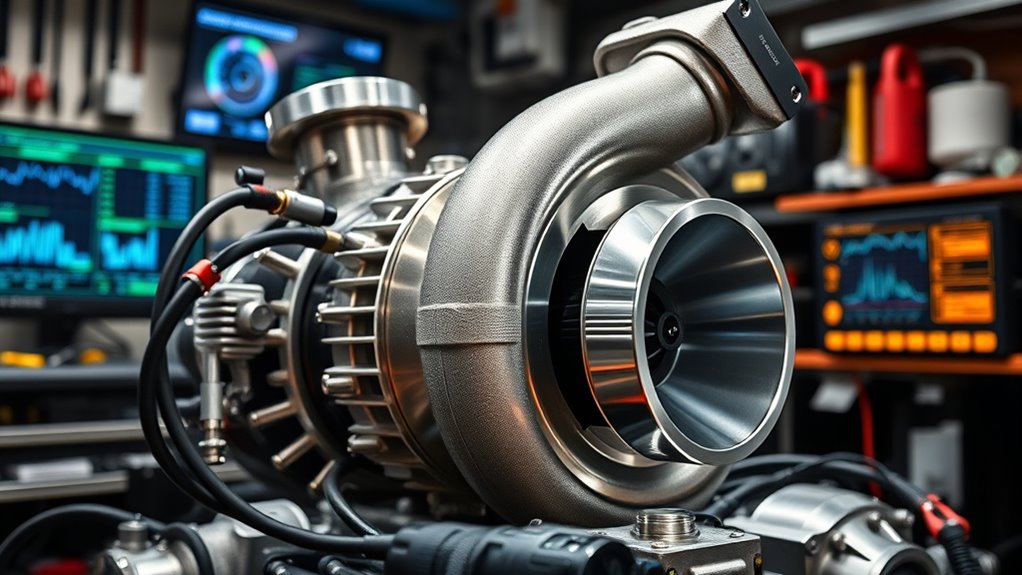
Have you ever wondered how modern turbochargers are becoming more efficient and responsive? The answer lies partly in the rise of electric turbochargers, a technology that’s transforming how engines deliver power. Unlike traditional turbochargers driven solely by exhaust gases, electric turbochargers use an electric motor to spin the turbine wheel. This innovation offers significant performance improvements, especially in reducing lag and providing immediate boost when you need it most. With electric turbochargers, you get a faster spool time, smoother acceleration, and enhanced throttle response, making driving more engaging and efficient.
Electric turbochargers boost response and reduce lag with instant electric motor power.
One of the key advantages of electric turbochargers is their ability to operate independently of exhaust flow. This means they can provide boost even at low engine speeds or during startup, where traditional turbos often struggle. As a result, your vehicle feels more responsive across a wider range of driving conditions. Performance improvements aren’t limited to just acceleration; electric turbochargers also help optimize fuel efficiency and reduce emissions. Because they can precisely control boost levels, they enable engines to run more efficiently, reducing waste and making your vehicle more environmentally friendly.
Furthermore, electric turbochargers open new possibilities for engine design and tuning. Since they don’t rely solely on exhaust gases, engineers can rethink turbo placement and size, leading to more compact and lightweight configurations. This flexibility improves overall vehicle weight distribution and aerodynamics. Additionally, the electric motor’s instant response allows for better integration with advanced engine management systems. You benefit from smoother power delivery and the ability to adapt quickly to different driving modes, whether you’re cruising on the highway or pushing for maximum performance.
However, integrating electric turbochargers isn’t without challenges. The primary hurdle is the need for a reliable, high-capacity electrical system to power the motor. This can add complexity and cost to vehicle design. Battery technology and energy management are critical factors, especially in hybrid or electric vehicles, where space and weight constraints come into play. Also, durability and heat management are concerns, as the motor and associated electronics must withstand demanding operating conditions. These hurdles mean that while electric turbochargers promise impressive performance improvements, their widespread adoption requires ongoing innovation and investment.
Despite these challenges, the potential benefits of electric turbochargers are compelling. They promise a future where engines are more responsive, efficient, and environmentally friendly. If you’re a performance enthusiast or someone keen on reducing your carbon footprint, electric turbochargers represent a significant step forward. They’re not just about boosting power—they’re about rethinking how engines operate for a better driving experience overall. Additionally, advancements in electric motor technology are crucial to overcoming current limitations and unlocking the full potential of electric turbochargers.
As an affiliate, we earn on qualifying purchases.
Frequently Asked Questions
How Do Electric Turbochargers Impact Fuel Economy?
Electric turbochargers boost your vehicle’s fuel efficiency by optimizing engine performance and reducing lag, which means you use less fuel overall. They also contribute to emission reduction, helping your car meet environmental standards. By providing quicker spool-up and better response, electric turbochargers enable you to drive more efficiently, saving money on fuel and lowering your carbon footprint. This technology ultimately makes your driving experience more eco-friendly and cost-effective.
What Are the Maintenance Requirements for Electric Turbochargers?
Imagine you’re maintaining an electric turbocharger in your vehicle. You should regularly check its lubrication needs to prevent wear and ensure smooth operation. Additionally, you must care for its electronic components by keeping them clean and free from moisture. Routine inspections, software updates, and monitoring for unusual noises are essential. Proper maintenance keeps your electric turbocharger efficient and prolongs its lifespan, saving you time and costly repairs.
Can Electric Turbochargers Be Retrofitted to Existing Engines?
Yes, you can retrofit electric turbochargers to existing engines, but you’ll face some challenges. Retrofitting challenges include compatibility issues with your engine’s design and control systems, which may require custom modifications. You’ll need to evaluate whether the electric turbocharger’s size and power requirements align with your engine’s specifications. Consulting with experts ensures a smoother upgrade, minimizing compatibility issues and optimizing performance.
How Do Electric Turbochargers Perform in Extreme Temperatures?
You’ll find electric turbochargers perform well in extreme temperatures thanks to their thermal resilience and material durability. They adapt quickly, maintaining efficiency whether it’s scorching heat or freezing cold. Their design ensures components withstand harsh conditions without faltering. This reliability means you can trust electric turbochargers to deliver consistent performance, even in the most challenging environments, making them a smart choice for diverse driving situations and extreme climates.
What Is the Lifespan of an Electric Turbocharger Compared to Traditional Ones?
You’ll find that electric turbochargers generally have a longer lifespan than traditional ones, thanks to durability testing that shows fewer moving parts and less wear. While traditional turbochargers often last around 150,000 miles, electric models can reach 200,000 miles or more with proper maintenance. Their durability makes them more reliable over time, reducing replacement costs and downtime, especially in demanding conditions.
Conclusion
Electric turbochargers are like a double-edged sword, offering quicker boosts and improved efficiency, but they also come with their own set of hurdles. As technology advances, you’ll find these devices transforming your driving experience, making engines more responsive and eco-friendly. However, just like a skilled juggler, balancing power, cost, and reliability remains a challenge. Embracing this innovation means riding the wave of change, steering toward a future where performance and sustainability go hand in hand.
Halloween Picks
halloween
As an affiliate, we earn on qualifying purchases.