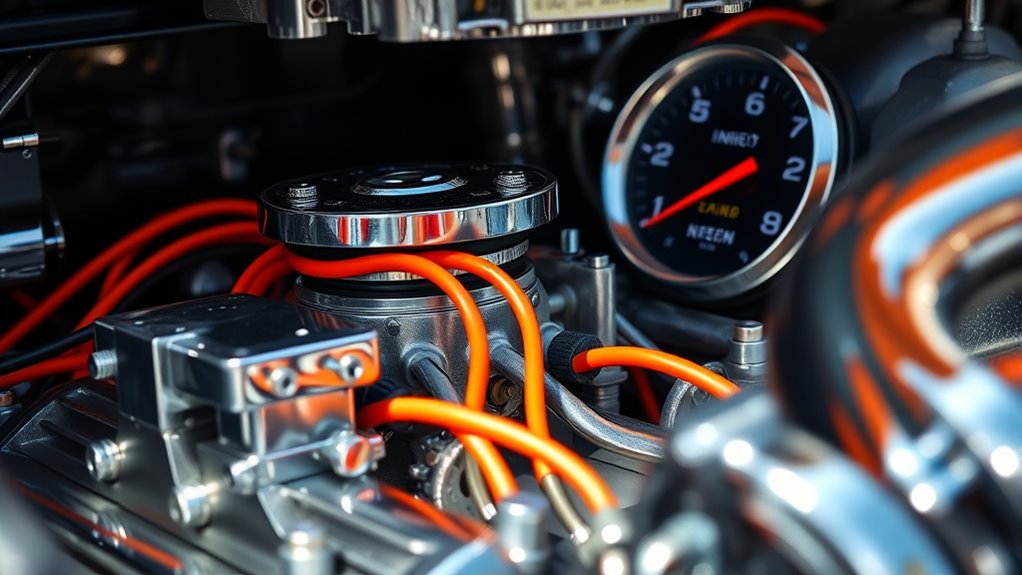
Your ignition timing directly impacts how efficiently your engine produces horsepower. When timed correctly, the spark ignites the fuel-air mixture at just the right moment, maximizing power and performance. If the timing is too early or too late, you’ll lose power, cause knocking, or even damage the engine. Getting it just right boosts throttle response and overall efficiency. Keep exploring, and you’ll discover how fine-tuning the ignition can release even more horsepower.

Get business pricing on garage and car supplies
- Business-only prices and quantity discounts
- Tax-exempt purchasing
- Multiple users, one account, clear invoices
Key Takeaways
- Proper ignition timing ensures the spark fires at the optimal moment for maximum combustion efficiency.
- Advancing or retarding timing affects how well the engine converts fuel into power.
- Correct timing maximizes pressure at TDC, increasing horsepower output.
- Incorrect timing causes knocking, reducing engine performance and potential damage.
- Fine-tuning ignition timing unlocks hidden horsepower and improves overall engine performance.
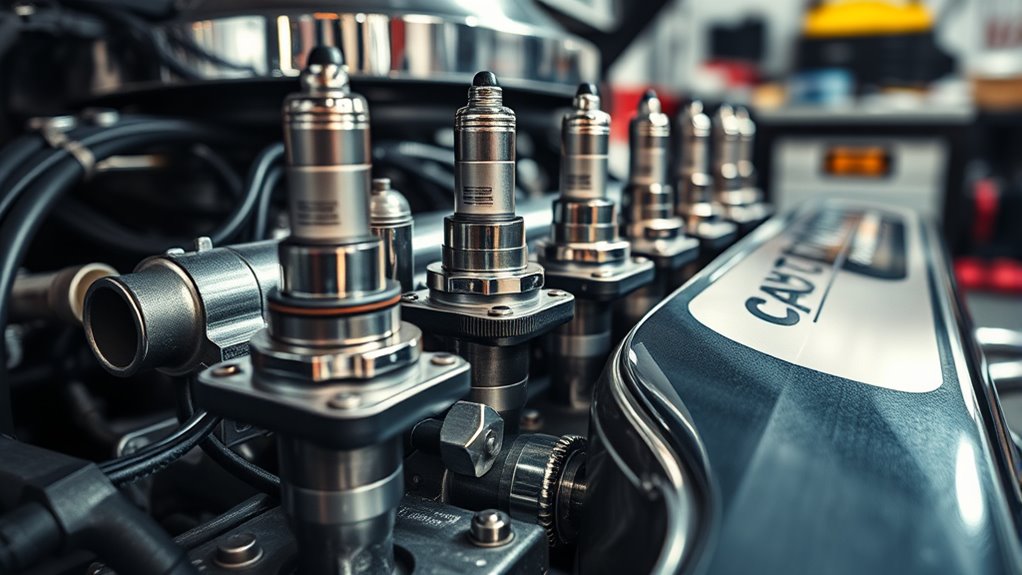
Proper ignition timing is vital for maximizing your engine’s horsepower. When your ignition system fires the spark at the right moment, your engine runs more efficiently, producing more power and better throttle response. If the timing is off, your engine might feel sluggish, waste fuel, or even suffer damage. The key to optimal performance lies in understanding the importance of spark advance and the ignition curve. Spark advance refers to how far before the piston reaches top dead center (TDC) the spark ignites the air-fuel mixture. Too much advance causes knocking and engine stress, while too little reduces power and efficiency. Striking the right balance through precise spark advance ensures your engine makes the most of each combustion cycle.
Proper ignition timing maximizes horsepower and efficiency by ensuring the spark fires at the optimal moment.
Your ignition curve is the pattern that defines how your spark advance changes with engine speed and load. It’s a carefully calibrated curve that ensures your engine gets the right spark timing across all RPM ranges. When you set your ignition curve correctly, it optimizes power delivery, fuel economy, and engine smoothness. Modern ignition systems often feature adjustable curves, allowing you to fine-tune the timing based on modifications, altitude, or driving style. Understanding how the ignition curve influences spark advance helps you make better adjustments. For example, at low RPMs, your engine might need less advance to prevent knocking, while at high RPMs, more advance can help generate maximum power.
Adjusting the ignition curve and spark advance isn’t just about increasing horsepower; it’s about creating a balanced setup that prevents knocking, reduces emissions, and prolongs engine life. When you advance the spark too early, you’re risking knocking, which can damage pistons and valves. Conversely, retarding the spark delays combustion, robbing your engine of power and responsiveness. The goal is to find that sweet spot where the spark fires just early enough to maximize pressure at TDC, pushing the piston down with maximum force. Properly tuning the ignition curve and spark advance can open the door to hidden horsepower, especially in modified engines or performance setups.
In essence, understanding and controlling your ignition timing is vital for extracting the best performance from your engine. By paying attention to how your ignition curve is configured and ensuring the spark advance is set correctly at various RPMs, you can markedly enhance horsepower and overall engine efficiency. It’s not just about turning a screw; it’s about mastering the timing to ensure your engine runs at its peak potential. When done right, proper ignition timing makes all the difference between a sluggish ride and a powerhouse that delivers every time you hit the gas.
As an affiliate, we earn on qualifying purchases.
Frequently Asked Questions
How Does Ignition Timing Affect Fuel Efficiency?
You might notice that proper ignition timing improves fuel efficiency by optimizing spark advance, which guarantees the fuel burns effectively in your engine. When the spark is too early or too late, your engine wastes fuel and loses power. By fine-tuning ignition timing, you help your engine run smoothly, reducing fuel consumption and enhancing overall fuel economy. Proper spark advance is key to getting the most out of every drop of fuel.
Can Improper Timing Cause Engine Knocking?
Improper timing, like incorrect spark advance, can definitely cause engine knocking. When the timing chain is loose or worn, it can throw off the ignition timing, leading to knocking sounds. If the spark fires too early or too late, the combustion process becomes uneven, creating knocking. You need to check and adjust the timing chain and make certain your ignition timing is precise to prevent knocking and protect your engine.
What Tools Are Best for Adjusting Ignition Timing?
To adjust ignition timing, you’ll need a timing light and a wrench for distributor adjustment. First, check your spark plug gaps and make certain they’re correct for your engine. Then, connect the timing light to your spark plug wire and aim it at the timing mark on your crank pulley. Use the wrench to rotate the distributor until the timing light shows the correct timing, guaranteeing ideal engine performance.
How Often Should Ignition Timing Be Checked?
You should check your ignition timing every 10,000 to 15,000 miles or when you notice engine performance issues. During this inspection, verify the timing belt is in good condition and replace it if worn. Also, examine the spark plugs for wear or damage, as they directly affect timing accuracy. Regular checks help optimize horsepower and prevent engine problems, keeping your vehicle running smoothly and efficiently.
Does Ignition Timing Impact Emissions?
You might wonder if ignition timing impacts emissions. It definitely does, because proper ignition advance guarantees the fuel burns efficiently, reducing unburned hydrocarbons and other pollutants. When timing is off, emissions control systems struggle to keep emissions within limits, leading to higher pollution levels. So, maintaining correct ignition timing helps your vehicle stay environmentally friendly and compliant with emissions standards, making a real difference in overall emissions performance.
Conclusion
Mastering ignition timing can make or break your engine’s horsepower, turning a decent ride into a roaring beast. When you get it just right, you unlock hidden power that feels like releasing a wild stallion on the open road. Don’t underestimate this small tweak—it’s the secret weapon that can elevate your performance from good to legendary. Get it right, and you’ll feel like you’re driving a rocket—because, honestly, that’s what it can become.
Halloween Picks
halloween
As an affiliate, we earn on qualifying purchases.