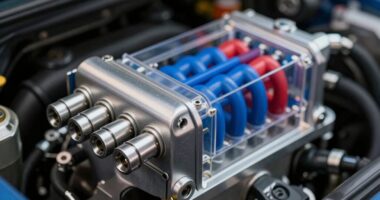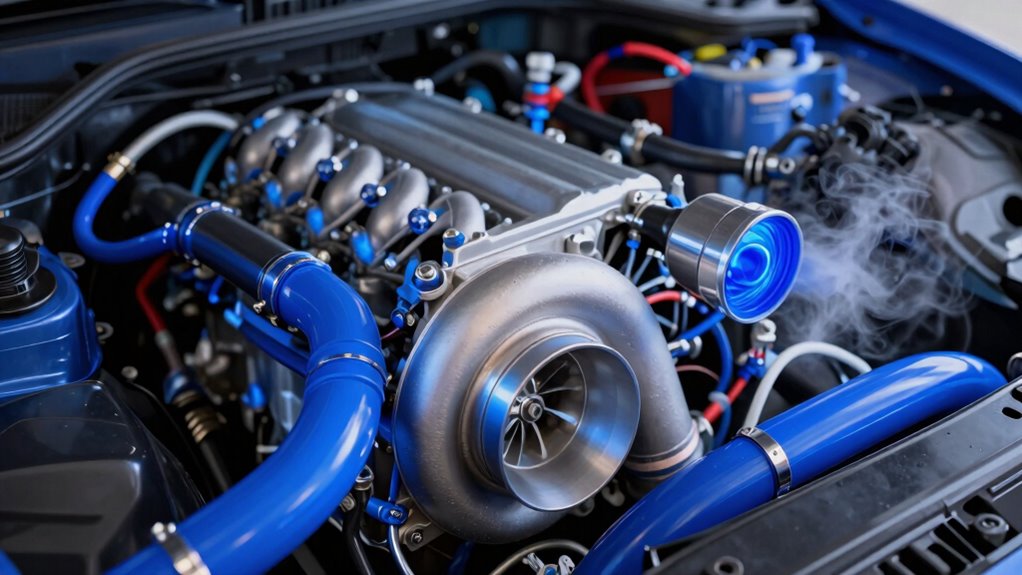

As you increase boost levels, intake temperature becomes more critical because hot air reduces air density, which lowers oxygen availability for combustion. This can decrease your engine’s power and efficiency, and even cause knocking or damage if not managed properly. Cooler intake air helps maximize performance and keeps your engine safer. Understanding how to control and measure intake temperature will help you get the most from your boost and avoid costly issues down the line.

Get business pricing on garage and car supplies
- Business-only prices and quantity discounts
- Tax-exempt purchasing
- Multiple users, one account, clear invoices
Key Takeaways
- Higher boost levels significantly increase intake air temperature, reducing air density and engine efficiency.
- Elevated intake temperatures at high boost can cause knocking, risking engine damage.
- Cooler intake air improves combustion and power output, especially under increased boost.
- Accurate sensor calibration is critical to monitor and manage rising intake temperatures effectively.
- Effective cooling strategies prevent overheating and maintain optimal performance during high-boost conditions.

When boost levels increase in your turbocharged engine, intake temperature becomes a critical factor that can’t be overlooked. As you push your engine harder, the air entering the system heats up more markedly, and this rise in temperature directly impacts airflow efficiency. Hotter air is less dense, meaning it contains less oxygen per volume, which hampers combustion and reduces overall power output. Maintaining ideal intake temperatures is essential to maximize performance, especially under high boost conditions. If intake air gets too hot, the engine’s efficiency drops, and you might notice decreased throttle response and lower power. That’s why understanding how intake temperature influences airflow efficiency is essential for tuning and maintaining your turbocharged setup. Proper sensor calibration plays a key role in managing intake temperature’s effects. Your engine relies on sensors to monitor air temperature, pressure, and other key parameters. When boost levels increase, these sensors must be precisely calibrated to provide accurate readings. If they’re off, the engine control unit (ECU) might make incorrect adjustments, leading to inefficient combustion or even detonation risks. Proper sensor calibration ensures that your ECU interprets intake temperature data correctly, allowing it to optimize fuel delivery and ignition timing. This calibration is especially important when operating at high boost levels, where small inaccuracies can cause considerable performance issues or potential damage. As boost rises, the interaction between intake temperature and airflow efficiency becomes even more pronounced. Elevated temperatures can cause the intake air to expand, reducing its density and making it harder for your engine to breathe efficiently. This results in less oxygen available for combustion, which can limit power gains from increased boost. To combat this, many enthusiasts opt for intercoolers or aftercoolers that cool the intake air, restoring its density and improving airflow efficiency. Properly calibrated sensors help these systems function effectively by providing real-time data, ensuring your engine maintains the right balance between boost pressure and temperature control. Additionally, sensor calibration is vital for detecting and responding to temperature fluctuations quickly, which is crucial for high-performance setups. Regularly monitoring intake air temperature is also critical to prevent overheating and maintain consistent engine performance. Implementing thermal management strategies can further enhance your engine’s ability to handle high boost levels safely. Upgrading to advanced cooling systems can further optimize intake temperature management in high-boost conditions. In high-boost scenarios, neglecting intake temperature management can lead to knocking, reduced power, and even long-term engine damage. That’s why paying attention to sensor calibration and cooling strategies is essential. Ensuring that your cooling system is functioning optimally and understanding thermal dynamics can help prevent potential issues before they arise. Adjusting your setup to keep intake temperatures in check ensures you get the most out of your turbocharged engine’s potential. When boost levels go up, every degree of intake temperature matters, and fine-tuning your system accordingly makes all the difference in achieving peak performance and reliability.
car intercooler for turbocharged engines
As an affiliate, we earn on qualifying purchases.
As an affiliate, we earn on qualifying purchases.
Frequently Asked Questions
How Does Intake Temperature Affect Engine Longevity?
Higher intake temperatures can harm your engine’s longevity by increasing the risk of knocking and overheating, which stresses engine parts. This can reduce fuel efficiency and make it harder to control emissions. When boost levels rise, managing intake temperature becomes essential, as cooler air improves combustion, protects engine components, and helps maintain ideal performance and emission standards, ultimately extending your engine’s lifespan.
Can Cooling Techniques Improve Intake Temperature at High Boost?
Did you know that cooling techniques can reduce intake temperatures by up to 50°F? Yes, cooling methods like intercoolers, water/methanol injection, and upgraded radiators greatly improve temperature management at high boost levels. These methods prevent heat soak, enhance performance, and protect your engine from knocking. By actively managing intake temperature, you guarantee more consistent power delivery and boost reliability, especially during demanding driving conditions.
What Are the Signs of High Intake Temperature?
You notice high intake temperature through signs like engine knocking, reduced power, and increased exhaust smoke. When intake temperature rises, your engine’s performance drops because hot air is less dense, leading to less efficient combustion. You might also see higher coolant temperatures or a check engine light. Monitoring intake temperature is vital, especially when boosting, because elevated levels can cause knocking and damage your engine if not managed properly.
Is Higher Intake Temperature Always Detrimental?
Higher intake temperature isn’t always detrimental, but it does raise efficiency concerns. When temperatures rise, air density drops, meaning your engine gets less oxygen for combustion. This can reduce power and fuel efficiency, especially at higher boost levels. If you’re pushing your turbocharged setup, a high intake temperature might cause performance issues or even engine damage over time. So, keeping temperatures in check guarantees ideal power and longevity.
How Do Aftermarket Parts Influence Intake Temperature?
Aftermarket parts can substantially influence your intake temperature by optimizing airflow and improving cooling. High-performance intakes and intercoolers help lower temperature, boosting efficiency and power, especially under high boost conditions. However, you need to make certain of proper sensor calibration; otherwise, your engine might receive inaccurate readings, leading to suboptimal performance. By focusing on airflow optimization and accurate sensor calibration, you can manage intake temperatures better and maximize your vehicle’s potential.
Conclusion
When boost levels rise, intake temperature becomes your engine’s silent partner—quietly influencing power and reliability. While you might focus on boosting performance, neglecting intake temperature is like ignoring a crack in your windshield; it may seem minor until it’s a bigger problem. As boost climbs, keeping intake temps in check isn’t just smart—it’s essential. Remember, in the race for performance, cool intake air is your secret weapon for both speed and longevity.
Fall Picks
fall essentials
As an affiliate, we earn on qualifying purchases.