If you neglect your intercooler or use the wrong setup, it can hurt your turbo response instead of helping it. Leaks, blockages, or dirty fins reduce heat transfer, raising intake temps and decreasing efficiency. An undersized or poorly designed intercooler can cause bottlenecks, while improper installation restricts airflow. Regular cleaning and correct installation are vital. Keep these mistakes in mind to avoid performance issues—and if you stick around, you’ll discover how to optimize your intercooler for better response.

Get business pricing on garage and car supplies
- Business-only prices and quantity discounts
- Tax-exempt purchasing
- Multiple users, one account, clear invoices
Key Takeaways
- Neglecting proper airflow and coolant circulation reduces intercooler cooling efficiency, raising intake temperatures and impairing turbo response.
- Using an undersized or mismatched intercooler causes heat buildup, decreasing power and throttle responsiveness.
- Failing to regularly clean and maintain the intercooler leads to dirt buildup, reducing heat transfer and turbo efficiency.
- Incorrect installation with sharp bends and poor sealing restricts airflow, diminishing cooling performance and response.
- Heat-related damage from neglected maintenance results in higher intake temps, negatively impacting engine power and turbo response.
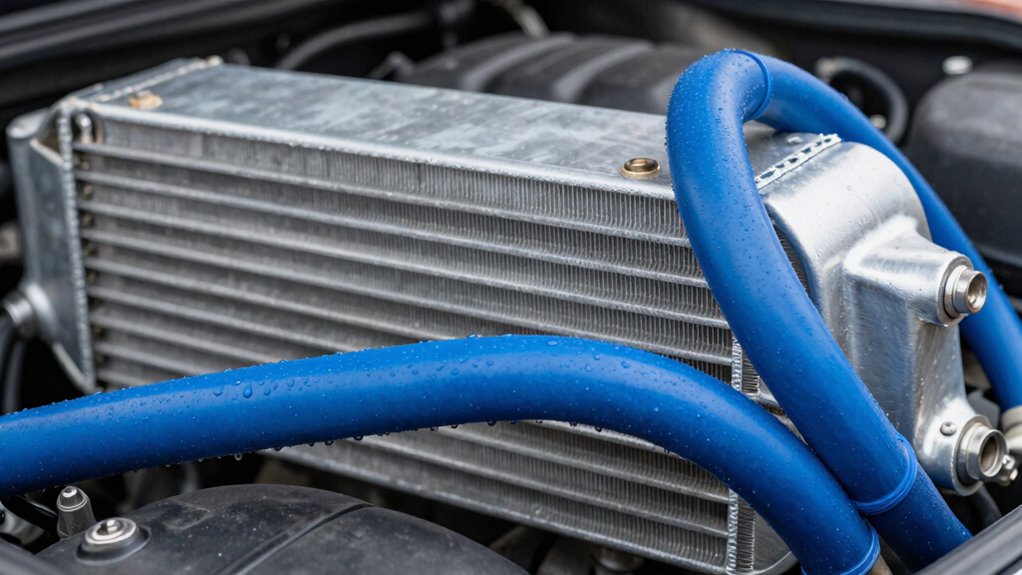
When it comes to turbocharged engines, your intercooler plays a crucial role in maintaining peak performance. It’s responsible for cooling the compressed air from the turbocharger before it enters the engine, which directly impacts your engine’s power and efficiency. A well-functioning intercooler keeps the intake temperature low, guaranteeing ideal combustion and preventing knocking. But, if you make certain mistakes with your intercooler, instead of helping, it can actually hurt your turbo response and overall performance.
A well-functioning intercooler is key to optimal turbocharged engine performance and efficiency.
One common mistake is neglecting the cooling system. Your intercooler relies on proper airflow and coolant circulation to dissipate heat effectively. If you don’t keep the cooling system in prime condition—such as ignoring leaks, blockages, or dirty fins—you impair the intercooler’s ability to reduce intake air temperature. When the cooling system isn’t functioning properly, the intercooler becomes less efficient, causing hotter air to reach the engine. This increases intake temperatures, reduces turbo efficiency, and hampers response, especially during hard acceleration or sustained high RPMs. Ensuring proper coolant circulation and airflow is vital for optimal heat dissipation.
Another mistake is choosing an undersized or poorly designed intercooler. An undersized intercooler can’t handle the volume of compressed air produced by your turbo, leading to higher intake temps. When the intercooler isn’t capable of keeping up, the air entering your engine heats up, decreasing power output and response times. Be sure to select an intercooler that matches your turbo size and power goals. A too-small unit causes bottlenecks, and a poorly designed one may have restricted airflow, both of which impair performance instead of enhancing it.
Failing to maintain or clean your intercooler regularly is another mistake that impacts turbo efficiency. Dirt, debris, and oil buildup can clog the fins and reduce heat transfer. When the intercooler gets dirty, it can’t effectively cool the compressed air, leading to higher intake temperatures. Regular inspection and cleaning ensure your intercooler functions properly and keeps response sharp. Neglecting maintenance not only diminishes cooling capacity but can also cause long-term damage to the fins and internal passages. Additionally, understanding the importance of intercooler efficiency can help you prioritize proper upkeep and upgrades. Proper cleaning techniques and scheduled inspections are essential to sustain peak performance.
Lastly, improper installation or routing can greatly impair your intercooler’s performance. If the piping is bent sharply or poorly sealed, airflow becomes restricted, and heat exchange efficiency drops. Proper routing ensures unrestricted airflow and ideal heat dissipation, maximizing turbo efficiency. Avoid shortcuts or cheap fittings that may cause leaks or turbulence. A correctly installed intercooler with good airflow paths helps maintain low intake temps and quick throttle response, rather than hampering your engine’s performance.
As an affiliate, we earn on qualifying purchases.
Frequently Asked Questions
How Do Intercooler Mistakes Impact Overall Engine Longevity?
Intercooler mistakes can considerably reduce your engine’s longevity by decreasing cooling efficiency, which causes higher temps and stress on engine components. Poorly maintained intercoolers may also lead to compressor surge, damaging the turbocharger and increasing wear. These issues can cause overheating, reduce performance, and accelerate part failure. To protect your engine’s lifespan, make sure your intercooler is properly maintained, clean, and functioning efficiently to keep temperatures in check and avoid compressor surge.
Are Aftermarket Intercoolers More Prone to Making These Mistakes?
Yes, aftermarket intercoolers are more prone to mistakes if not installed or chosen correctly. Many enthusiasts opt for intercooler upgrades to boost performance, but improper installation or selecting the wrong size can cause issues like poor airflow or increased pressure drops. These aftermarket modifications can lead to inefficiency or damage if you don’t guarantee compatibility and quality. Always research thoroughly and follow proper installation procedures to avoid costly mistakes.
Can Intercooler Errors Cause Sudden Engine Failure?
Intercooler errors can be like a ticking time bomb, potentially causing sudden engine failure. If your intercooler leaks or is blocked, it affects boost pressure and can lead to overheating. This strain may cause turbo lag and stress engine components, risking catastrophic damage. Regular checks help prevent these issues, ensuring your intercooler functions properly and keeps your engine running smoothly, avoiding unexpected failures.
What Signs Indicate Intercooler-Related Performance Issues?
If you notice decreased engine power, increased exhaust smoke, or higher intake temperatures, your intercooler might be having issues. Airflow obstruction can reduce cooling efficiency, while coolant leaks can lead to overheating. You might also hear hissing sounds or see puddles beneath your vehicle. Address these signs promptly, as ignoring them can cause further damage. Regular checks help guarantee your intercooler functions properly, maintaining peak engine performance.
How Often Should Intercooler Maintenance Be Performed?
You should perform intercooler maintenance every 20,000 to 30,000 miles or as recommended by your vehicle manufacturer. Regular checks help maintain peak cooling efficiency, preventing performance issues caused by debris buildup or leaks. During maintenance, clean the intercooler and inspect for damage or corrosion. Proper maintenance intervals ensure your intercooler functions effectively, prolonging its lifespan and keeping your engine running smoothly without risking overheating or reduced power.
Conclusion
Don’t let these intercooler mistakes turn your ride into a kind of Ford Pinto—more trouble than it’s worth. By avoiding common pitfalls, you keep your turbocharged performance sharp and your engine running smooth. Remember, even the best engineers from the days of the Model T knew the importance of a well-maintained cooling system. Stay vigilant, double-check your setup, and your response will be as quick as a cheetah—no time travel required.
Halloween Picks
halloween
As an affiliate, we earn on qualifying purchases.