
Limited slip differentials (LSDs) enhance your vehicle’s traction and handling by evenly distributing torque between wheels during turns or slippery conditions. They automatically detect wheel slip and activate clutches or locking mechanisms to transfer power to the wheel with better grip. This prevents wheel spin, improves stability, and offers a confident driving experience. Understanding how LSDs work can help you optimize your vehicle’s performance—stay with us to learn more about how they can benefit you.
Key Takeaways
- LSDs limit wheel slip by transferring torque to the wheel with better traction during turns or slippery surfaces.
- Clutch engagement in LSDs activates during wheel slip to provide resistance and distribute power effectively.
- They improve vehicle handling by ensuring more consistent power delivery and reducing wheel spin in challenging conditions.
- LSDs enhance traction for off-road driving, performance racing, and everyday safety in adverse weather.
- Different designs, including clutch packs and viscous mechanisms, adapt LSDs for various driving needs and conditions.
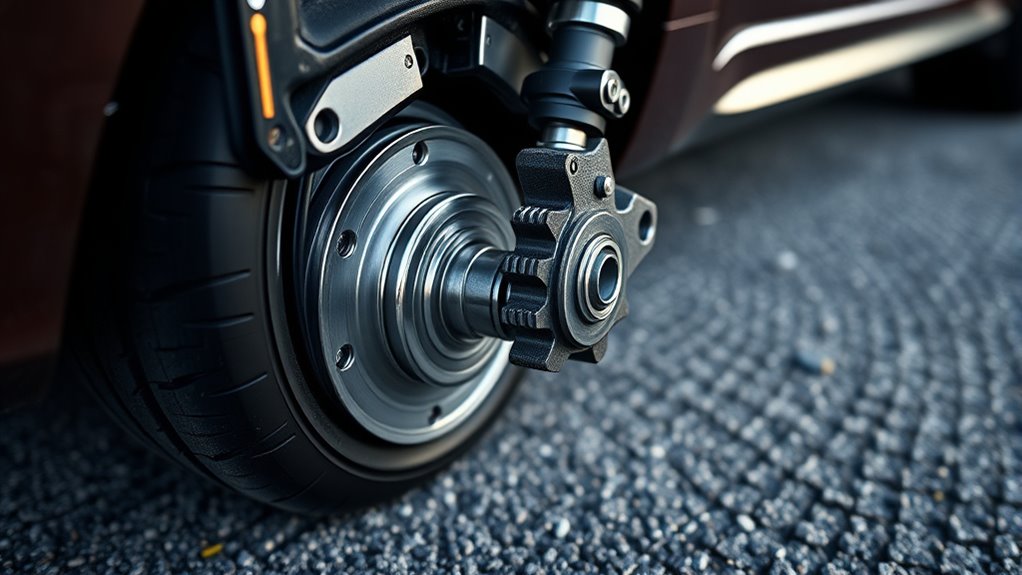
Have you ever wondered how your vehicle maintains traction during aggressive turns or on slippery surfaces? The secret lies in the way your differential manages power distribution to the wheels. When you’re pushing through a sharp corner or driving on slick pavement, your car’s ability to transfer torque smoothly and effectively is vital to maintaining control. That’s where limited slip differentials come into play, greatly enhancing traction and handling.
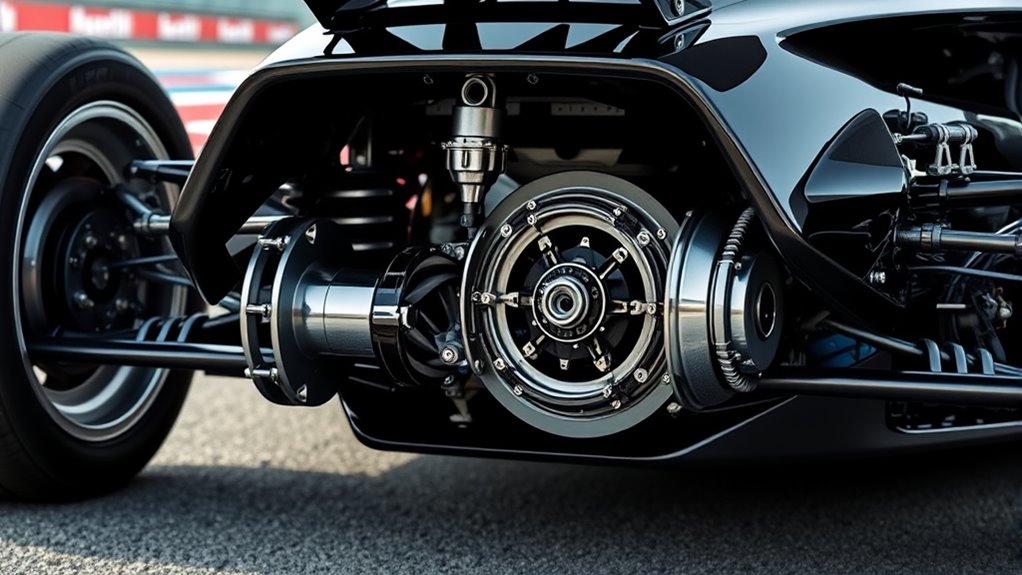
At the core of a limited slip differential’s operation is its unique differential design. Unlike open differentials, which allow wheel slip and can send power to the wheel with the least resistance, limited slip units are engineered to limit this slip. They achieve this by using clutch engagement mechanisms or other locking components that activate when a difference in wheel speed occurs. When one wheel begins to slip, the clutch engagement transfers more torque to the wheel with better traction, preventing it from spinning freely. This design ensures that power is distributed more evenly, especially during challenging driving conditions, giving you better grip and stability.
Limited slip differentials use clutch mechanisms to evenly distribute torque and prevent wheel slip during challenging driving conditions.
The clutch engagement within a limited slip differential is vital to its performance. When one wheel starts to slip, the clutches engage, applying resistance and transferring torque to the opposite wheel. This process happens seamlessly and quickly, providing a more consistent delivery of power. Instead of losing control or experiencing a loss of traction, you get a more predictable and confident driving experience. The clutch setup also allows for some slip, which is essential for smooth handling and preventing drivetrain stress, particularly during tight turns or sudden maneuvers.
The differential design of limited slip units can vary, but the principle remains the same: to limit wheel slip and distribute torque more effectively. Some designs employ clutch packs, while others might use viscous fluids or gears to achieve the same goal. Regardless of the specific type, the outcome is the same—improved traction during acceleration, cornering, or adverse conditions. This enhancement is especially valuable in performance driving, off-road adventures, or even everyday driving situations where safety and control matter.
Frequently Asked Questions
How Do Limited Slip Differentials Differ From Open Differentials?
Limited slip differentials differ from open differentials by providing better traction control. While open differentials allow wheels to spin freely when slipping, limited slip types transfer torque to the wheel with more grip. This improves handling, especially on slippery or uneven surfaces. You’ll notice improved stability and control during cornering or off-road driving, making limited slip differentials a preferred choice for drivers seeking enhanced traction and vehicle performance.
What Are the Signs of a Failing Limited Slip Differential?
You’ll notice signs of a failing limited slip differential through unusual differential noise, like whining or grinding sounds, especially during turns or acceleration. You might also see uneven tire wear, as the differential isn’t distributing power evenly anymore. If these issues occur, it’s a good idea to have your differential inspected, as ignoring them can lead to more serious drivetrain damage and costly repairs down the line.
Can Limited Slip Differentials Be Used in Front-Wheel Drive Vehicles?
Yes, you can use a limited slip differential in front-wheel drive vehicles. It enhances traction by preventing wheel slip during acceleration or on slippery surfaces. Installing a limited slip in your front-wheel drive car improves handling and stability, especially when cornering or driving on uneven terrain. Make sure to select a compatible limited slip model designed for front-wheel drive setups to guarantee proper function and durability.
What Maintenance Is Required for a Limited Slip Differential?
You need to regularly check and change the gear oil in your limited slip differential to guarantee smooth operation. If your vehicle has clutch plates, these may need inspection or replacement over time, especially if you notice unusual noises or decreased traction. Follow the manufacturer’s recommended maintenance schedule, and use the correct type of gear oil to keep the clutch plates lubricated and functioning properly. Proper maintenance extends the life of your differential.
Are Limited Slip Differentials Suitable for Off-Road Driving?
Yes, limited slip differentials are suitable for off-road driving because they enhance off-road traction by distributing power more evenly between wheels. They help prevent wheel spin during uneven terrain, offering better control compared to open differentials. While they don’t provide full differential locking, they improve handling in challenging conditions, making them a good choice for off-road adventures where maintaining traction is essential.
Conclusion
So, next time you think slipping up on the road is just a minor inconvenience, remember your limited slip differential’s secret weapon. It’s funny how a simple device can turn a potential disaster into a smooth, controlled ride. Ironically, by preventing wheel spin, it might just make you forget what losing traction feels like — until you hit a truly tricky patch. Truly, a small tech marvel keeping you confidently glued to the road.