High intake temps can kill your power by making the air less dense, so your engine gets less oxygen and slows down. To fight heat soak, try installing a cold air intake or using insulated tubing to keep air cooler. Adding an intercooler or venting the hood helps dissipate heat too. Better airflow and regular filter maintenance will also improve performance. Keep going to discover more simple ways to keep your engine cool and boost power.
Key Takeaways
- Install a cold air intake system to bring in cooler, denser outside air and reduce intake temperatures.
- Use heat shields or insulation around the intake to prevent heat transfer from the engine bay.
- Incorporate hood vents or cowl induction to improve airflow and draw in cooler ambient air.
- Add intercoolers or water-methanol injection to actively lower intake air temps in forced induction setups.
- Regularly maintain and clean filters and ducts to ensure unobstructed airflow and prevent heat buildup.
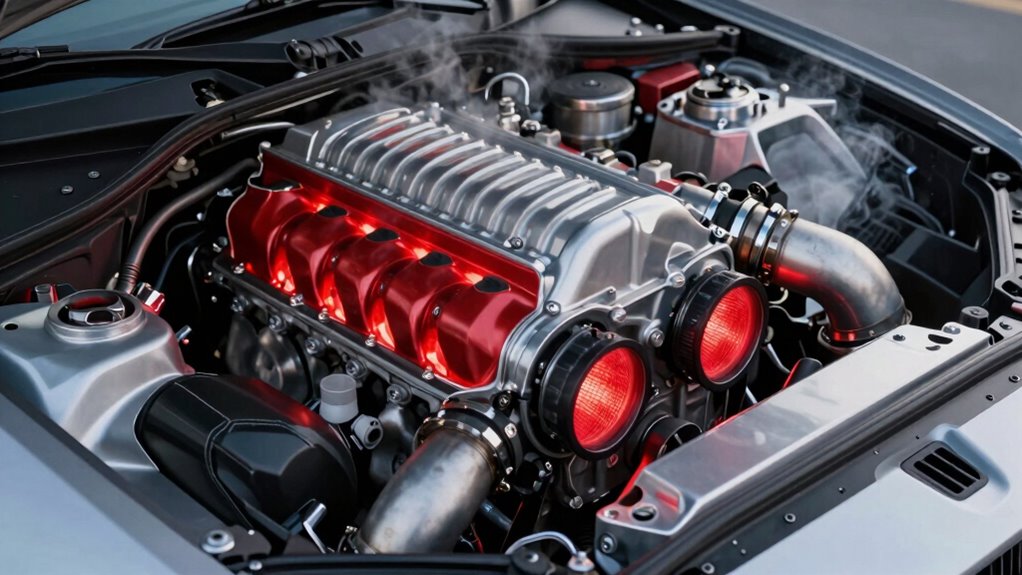
High intake temperatures can markedly reduce your engine’s power output. When the air entering your engine is hot, it’s less dense, meaning there’s less oxygen for combustion. This results in a noticeable drop in performance, fuel efficiency, and overall power. To combat this, you need effective cooling methods and airflow optimization strategies that keep intake temperatures low and air density high. By focusing on these areas, you can access more power from your engine and improve its responsiveness.
High intake temperatures reduce engine power and efficiency by decreasing air density and oxygen availability.
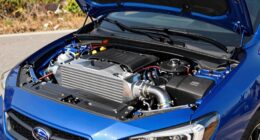
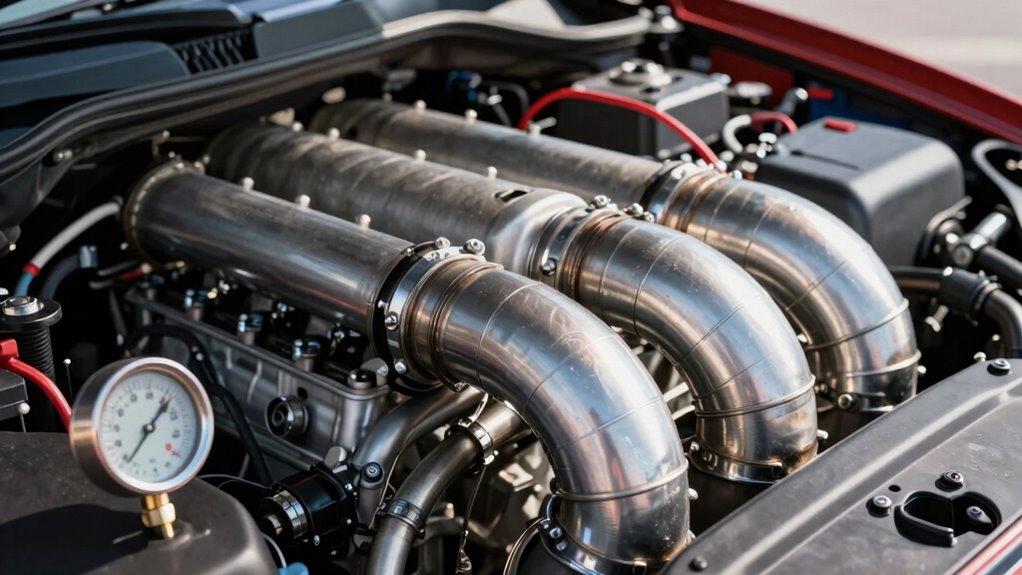
Cooling methods are essential in preventing heat soak, especially after high-speed runs or prolonged driving. One common approach is installing a cold air intake system. These systems draw in cooler, denser air from outside the engine bay, bypassing the hot air that’s often present under the hood. They typically feature insulated or heat-shielded tubing, which minimizes heat transfer from the engine bay to the intake air. Additionally, using an intercooler or water-methanol injection can further reduce intake temperatures, particularly in forced induction setups. These methods actively cool the incoming air, preserving its density and boosting power.
Flowing into the domain of airflow optimization, you want to guarantee that your intake system is designed to promote smooth, unrestricted airflow. Restrictive filters or poorly routed ducts can cause turbulence and increase air temperature, so upgrading to high-performance filters and ensuring proper duct routing makes a difference. Proper sealing of the intake system prevents hot air leaks, which can introduce unwanted heat into the intake charge. Furthermore, positioning the intake scoop or filter closer to the outside of the vehicle can help tap into cooler ambient air. Some racers even use hood vents or cowl induction systems to improve airflow and draw in fresher, cooler air directly from outside the engine bay.
Maintaining ideal airflow isn’t just about hardware upgrades; it also involves regular inspection and cleaning. Dirty filters or obstructed ducts can hinder airflow, causing the engine to work harder and generating more heat. Ensuring your intake components are free of debris maximizes efficiency and keeps intake temperatures in check. Additionally, engine bay ventilation plays a role—adding vents or fans can help dissipate heat build-up around critical components, reducing overall heat soak.
Frequently Asked Questions
How Does Heat Soak Specifically Impact Engine Performance?
Heat soak reduces your engine’s performance by raising intake temperatures, which decreases air density and limits power. When your cooling system isn’t enough, heat builds up, and thermal insulation can help prevent this. By keeping intake temps lower, you ensure cooler, denser air reaches the engine. This improves combustion efficiency, boosts horsepower, and maintains consistent performance, especially during extended or hard runs.
Can Aftermarket Parts Fully Eliminate Intake Heat Issues?
Like a knight of old wielding modern armor, aftermarket parts can help, but they won’t fully eliminate intake heat issues. Upgraded intake manifolds and air ducting can reduce heat transfer and improve airflow, yet heat soak still occurs, especially under intense driving. To really keep temps down, you’ll need a combination of high-quality parts and proper heat shielding, ensuring your engine stays cool and powerful.
What Are the Best Materials for Intake Systems to Reduce Heat Transfer?
You should choose intake materials with excellent thermal insulation and heat reflective properties to reduce heat transfer. Silicone hoses and ceramic-coated intakes are great options because they prevent heat from reaching your engine. Aluminum or carbon fiber components also reflect heat effectively, keeping intake temps lower. By using these materials, you can minimize heat soak, improve airflow, and boost your engine’s power and efficiency.
How Does Airflow Direction Influence Intake Temperature?
Did you know that optimizing airflow patterns can lower intake temperatures by up to 15%? When you focus on airflow direction, you influence how cool air enters your engine. Proper vent placement guides fresh air straight into the intake, reducing heat soak. By directing airflow efficiently, you keep the intake temperature lower, which boosts performance and power. So, plan your vent placement carefully to maximize airflow and keep your engine cooler.
Are There Any Simple DIY Methods to Lower Intake Temps?
You can lower intake temps easily by directing cold air into your engine. Use a simple DIY cold air intake or install a heat shield around your existing intake to block engine heat. These methods help keep the air cooler, boosting power. Also, positioning your intake away from hot components and adding insulation can further reduce heat soak, ensuring your engine gets the freshest, coolest air possible for peak performance.
Conclusion
Don’t let heat soak steal your power like a thief in the night. Keep your intake temps in check, and your engine will breathe easy, roaring stronger with every run. Think of it as a cool breeze on a hot day—refreshing and revitalizing. By reducing heat soak, you’re not just fighting the heat; you’re releasing the beast within. Stay sharp, stay cool, and let your power ride free, unstoppable and fierce.