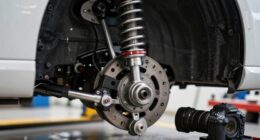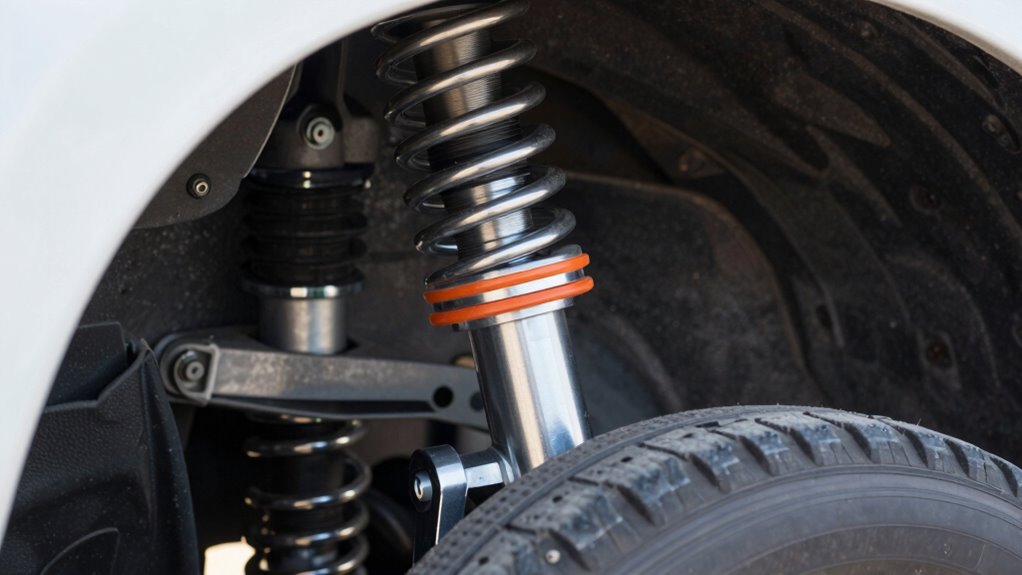

Your suspension system relies on the hidden triangle of bump stops, travel, and ride quality to perform well. Proper bump stops cushion impacts without limiting suspension movement, while sufficient travel ensures comfort and handling. Together, they influence ride smoothness and component durability. If bump stops are too stiff or travel is limited, your ride can become harsh or unsafe. To understand how balancing these elements can improve your vehicle’s performance, keep exploring.
Key Takeaways
- Bump stops prevent over-compression, protecting suspension components and ensuring ride comfort during large bumps.
- Suspension travel determines the extent of wheel movement, affecting ride smoothness and handling safety.
- Properly tuned bump stops and travel optimize ride quality by absorbing impacts and maintaining tire contact.
- An imbalance between bump stop firmness and travel can cause harsh rides or component damage.
- Balancing bump stops, travel, and ride quality is essential for vehicle safety, durability, and driving comfort.
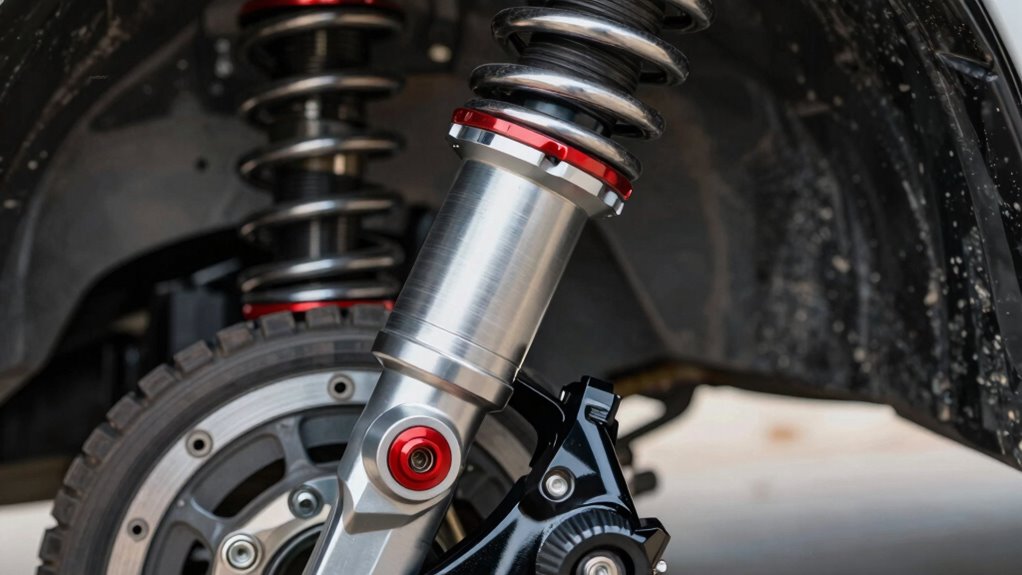
Understanding bump stops, travel, and ride quality is essential for maintaining a smooth and safe driving experience. These elements form a crucial part of your vehicle’s suspension system, directly influencing how well your car handles uneven terrain, absorbs shocks, and maintains stability. When you pay attention to suspension tuning, you can optimize these components for better performance while also ensuring component durability over time. Proper suspension tuning balances comfort and control, preventing premature wear or damage to key parts like shocks, springs, and bump stops.
Maintaining bump stops, travel, and ride quality ensures a smoother, safer driving experience and prolongs suspension component lifespan.
Bump stops act as a safeguard within your suspension, preventing the springs or shocks from over-compressing and causing damage. Think of them as a final line of defense that cushions the impact when you hit a large bump or pothole. If bump stops are too soft or worn out, your suspension may bottom out, leading to a harsh ride and potential damage to other components. Conversely, overly stiff bump stops can limit suspension travel, reducing ride comfort and compromising handling. That’s why selecting the right bump stop firmness, along with precise suspension tuning, is vital for maintaining component durability and ride quality.
Suspension travel refers to the amount of movement your suspension system allows as it absorbs bumps and dips in the road. If your suspension doesn’t travel enough, every pothole or uneven patch becomes a jarring experience, and your vehicle’s handling can suffer. Excessive travel might cause your tires to lose contact with the road, decreasing traction and safety. Achieving the right balance involves tuning the suspension so that it offers enough travel for comfort without sacrificing control or risking damage to parts. Properly calibrated suspension travel ensures your ride remains smooth, responsive, and safe, especially when navigating challenging terrains. Additionally, understanding natural pools and how they integrate with landscape design can inspire innovative backyard features that blend with your vehicle’s suspension for a seamless outdoor experience.
Ride quality is the overall comfort and stability you feel while driving. It’s closely tied to how well your suspension system manages bumps, vibrations, and weight transfer. When your suspension is correctly tuned, your vehicle absorbs road imperfections efficiently, providing a balanced ride that feels neither too soft nor too stiff. Good suspension tuning also prolongs component durability by reducing stress on parts, preventing premature wear and potential failure. Maintaining optimal ride quality involves regular inspection of bump stops, shocks, and springs, ensuring they work harmoniously to deliver a smooth, controlled ride.
In essence, understanding how bump stops, travel, and ride quality interact helps you make informed decisions about suspension tuning. This awareness allows you to optimize your vehicle’s performance, extend the lifespan of critical components, and enjoy a safer, more comfortable driving experience every time you hit the road.
Frequently Asked Questions
How Do Bump Stops Affect Overall Vehicle Handling?
Bump stops influence your vehicle’s handling by controlling suspension compression and preventing damage during impacts. Using high-quality bump stop materials guarantees they absorb shocks smoothly, maintaining stability. If bump stops are worn or incorrect, you might notice increased suspension noise and a rougher ride, which can compromise handling. Properly maintained bump stops help keep your suspension responsive, ensuring safer, more predictable handling during cornering and over uneven surfaces.
What Is the Ideal Suspension Travel for Daily Driving?
For daily driving, you should aim for about 2 to 4 inches of suspension travel, depending on your vehicle. Proper tire pressure helps maintain ideal handling and steering feedback, ensuring a smooth ride. If your suspension travel is too limited, you might feel every bump, reducing comfort and control. Keep an eye on your suspension components and tire pressure to stay balanced, safe, and comfortable on the road.
How Does Ride Quality Change With Different Bump Stop Types?
Imagine your ride as a dance—smooth and fluid. Different bump stop materials, like rubber or polyurethane, act as the dance partners, influencing ride comfort. Harder bump stops can cause a jarring feel, like stepping on a rocky path, while softer ones absorb shocks better. You’ll notice that bump stop type directly impacts how comfortable your vehicle feels over bumps, making your daily drive more or less pleasant.
Can Improper Bump Stop Installation Cause Suspension Damage?
Improper bump stop installation can definitely cause suspension damage. If you don’t use the right bump stop materials or follow proper installation techniques, it can lead to premature wear or even component failure. For example, poorly positioned or mismatched bump stops may not absorb impacts effectively, causing metal-on-metal contact or strain on suspension parts. Always guarantee you select appropriate materials and follow correct installation steps to protect your suspension system.
What Maintenance Is Required for Optimal Bump Stop Performance?
You should regularly inspect your bump stops for signs of wear or damage since materials like rubber or polyurethane can degrade over time. verify your suspension compression isn’t causing excessive stress on them, which might lead to premature failure. Lubricate if necessary, and replace bump stops promptly when they show cracks or deterioration. Proper maintenance keeps your suspension performing smoothly, preventing damage and ensuring your ride stays comfortable and safe.
Conclusion
Now that you see how bump stops, travel, and ride quality intertwine, you’ll realize there’s more beneath the surface of your suspension system than meets the eye. Every tweak, every choice, can dramatically change your driving experience—sometimes in ways you never expected. So, next time you hit the road, ask yourself: are you truly revealing your vehicle’s full potential? The secret’s in the details, and the real story is just waiting to be uncovered.