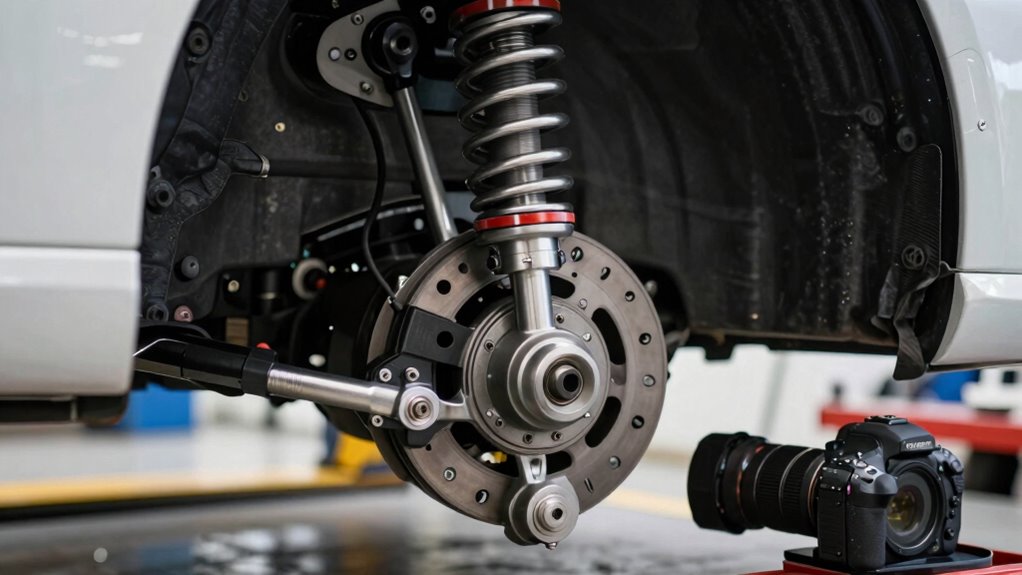

Bump steer happens when your suspension’s geometry causes your steering to pull or twitch after hitting bumps or uneven surfaces. You might notice your steering feels unpredictable, pulls to one side, or shifts unexpectedly over rough terrain. Worn parts like ball joints or misaligned components often cause it. Fixing bump steer involves checking and replacing worn parts, adjusting alignment angles, or fine-tuning suspension geometry. If you want to learn how to spot and correct it effectively, continue exploring the key details.

Get garage and car supplies delivered free — and shop member deals
- Fast, free delivery on millions of items
- Access to Prime Big Deal Days deals on October 6–7
- Prime Video, Amazon Music and more included
Key Takeaways
- Bump steer occurs when suspension movement causes unintended steering changes, often felt as pulling or twitchiness after hitting bumps.
- Signs include steering pulling to one side, unpredictability over uneven surfaces, and steering wheel movement without driver input.
- Causes include misaligned suspension components, worn parts, improper setup, or geometry issues affecting wheel and steering movement.
- To fix bump steer, check and replace worn parts, adjust alignment angles, and ensure suspension components are properly tightened.
- Proper suspension geometry improves steering feedback, reduces bump steer, and enhances vehicle stability and handling on rough terrain.
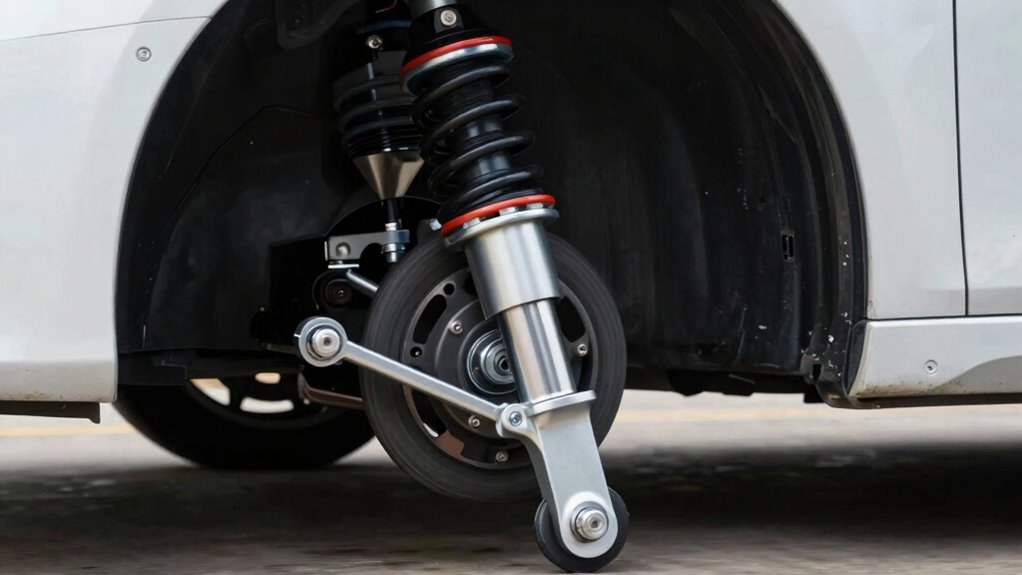
Bump steer is a common suspension phenomenon that can affect how your vehicle handles when driving over uneven surfaces. When your car encounters bumps or potholes, the wheels move up and down, but if the suspension geometry isn’t set correctly, this movement can cause the steering to jerk or pull unexpectedly. This is what’s known as bump steer, and it can make your driving feel unpredictable or unsafe. Understanding how suspension geometry influences bump steer helps you identify and fix the issue. Proper suspension setup ensures that as the wheels move vertically, they don’t unintentionally turn the steering wheel, which preserves smooth steering feedback and overall stability. When bump steer occurs, you might notice your steering wheel pulling to one side or feeling twitchy after hitting a bump. This happens because the suspension components, such as tie rods, control arms, or the steering rack, aren’t aligned correctly. If the geometry is off, vertical motion of the wheels translates into lateral movement of the steering linkage, causing that unwanted steering input. This loss of precise steering feedback makes it harder to feel connected to the road, especially when driving at high speeds or on rough terrain. The goal is to have suspension components that maintain consistent geometry, so vertical wheel movement doesn’t translate into steering wheel movement. You can often spot bump steer by paying close attention when driving over uneven surfaces. If your steering pulls or shifts without you turning the wheel, or if you notice a sudden tug after hitting a bump, bump steer may be at play. Checking the alignment and suspension geometry is a good first step. Look for worn or loose parts, such as ball joints and tie rod ends, which can exacerbate bump steer. Sometimes, simply adjusting the alignment angles—like toe or camber—and ensuring the suspension components are correctly positioned and tightened can dramatically reduce bump steer. Upgrading certain components, like adjustable tie rods or sway bar links, can also help fine-tune the suspension geometry for better steering feedback and more predictable handling. Fixing bump steer isn’t always complex but often requires a precise approach. You might need to have a professional realign your suspension or replace worn parts. Ensuring your suspension geometry is optimized will keep the wheels moving vertically without influencing steering input. Doing so restores accurate steering feedback, giving you better control and confidence on the road. When suspension geometry is set correctly, bump steer becomes a thing of the past, resulting in a smoother, more responsive driving experience that keeps you safe and connected to your vehicle’s handling. Proper suspension geometry can significantly reduce bump steer and improve overall ride quality.
adjustable tie rod ends for suspension
As an affiliate, we earn on qualifying purchases.
As an affiliate, we earn on qualifying purchases.
Frequently Asked Questions
Can Bump Steer Affect Vehicle Handling at High Speeds?
Yes, bump steer can considerably affect your vehicle handling at high speeds. It causes unpredictable changes in steering, which compromises vehicle stability and steering precision. When bump steer occurs, your car may pull or veer unexpectedly over bumps or uneven surfaces, making high-speed driving dangerous. To maintain control and safety, it is crucial to identify and fix bump steer issues promptly, ensuring smooth, predictable steering response and better overall handling.
What Are Common Signs Indicating Bump Steer Issues?
If you’re experiencing bump steer issues, you’ll notice alignment issues and steering vibrations when driving. You might feel the steering pull to one side or jerk unexpectedly as you go over bumps or uneven surfaces. These signs indicate that your suspension or steering components aren’t properly aligned, causing the wheels to change direction suddenly. Addressing these issues promptly can improve your vehicle’s handling and safety, preventing further damage.
Does Bump Steer Impact Tire Wear and Longevity?
Think of bump steer as a sneaky gremlin messing with your ride’s harmony. It definitely impacts tire wear and longevity by causing uneven contact between your tires and the road. When your suspension alignment isn’t spot-on, bump steer can make your tires scrub against the pavement, wearing down faster and unevenly. So, addressing bump steer helps keep your tires healthier, prolongs their life, and guarantees a smoother, safer drive.
Are Aftermarket Suspension Kits Effective in Reducing Bump Steer?
Yes, aftermarket suspension kits can be effective in reducing bump steer. These kits often include adjustable components that allow you to fine-tune your suspension geometry, minimizing bump steer and improving handling. By upgrading to high-quality aftermarket kits, you gain better control over bump steer reduction, which leads to a smoother ride and more precise steering. Make sure to choose a kit compatible with your vehicle for ideal results.
How Often Should Suspension Components Be Inspected for Bump Steer?
You should inspect your suspension components regularly—every 12,000 to 15,000 miles or during every alignment check. During these inspections, look for signs of wear, damage, or misalignment that could cause bump steer. Schedule suspension adjustments as needed to maintain proper alignment, improve handling, and prevent bump steer issues. Staying proactive guarantees your vehicle remains safe, responsive, and smooth on the road.
Conclusion
Now that you know what bump steer is and how to spot it, you’re one step closer to a smoother ride. Imagine the difference between feeling every bump and gliding seamlessly over uneven roads—it’s like night and day. Fixing bump steer might seem tricky at first, but with the right techniques, you’ll regain control and confidence behind the wheel. Don’t let steering issues hold you back—take action and enjoy a safer, more comfortable drive.
Fall Picks
fall essentials
As an affiliate, we earn on qualifying purchases.