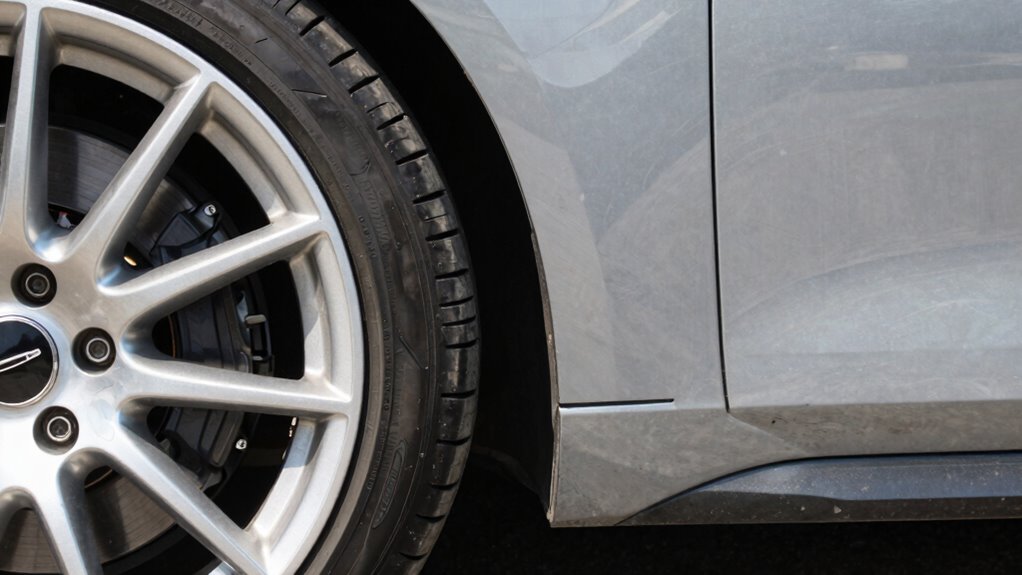

Choosing a tire compound that’s too soft for your suspension setup can cause instability and uneven handling, especially if your suspension is tuned for harder tires. Conversely, hard compounds may limit grip and responsiveness, making your suspension feel less effective. The wrong pairings can lead to excessive tire wear, compromised safety, and reduced performance. To avoid these issues, you need to match tire compound to your driving style and suspension tuning—continue to discover how to make the best choice.

Get business pricing on garage and car supplies
- Business-only prices and quantity discounts
- Tax-exempt purchasing
- Multiple users, one account, clear invoices
Key Takeaways
- Using overly soft tires on a suspension tuned for harder compounds can cause instability and uneven handling.
- Pairing hard tires with a suspension optimized for soft tires may reduce grip and compromise responsiveness.
- Mismatched tire softness and suspension tuning can lead to increased tire wear and safety risks.
- Selecting tires with a different compound than suited for driving conditions can strain suspension components.
- Inappropriate tire compounds can diminish suspension effectiveness, causing reduced control and handling performance.
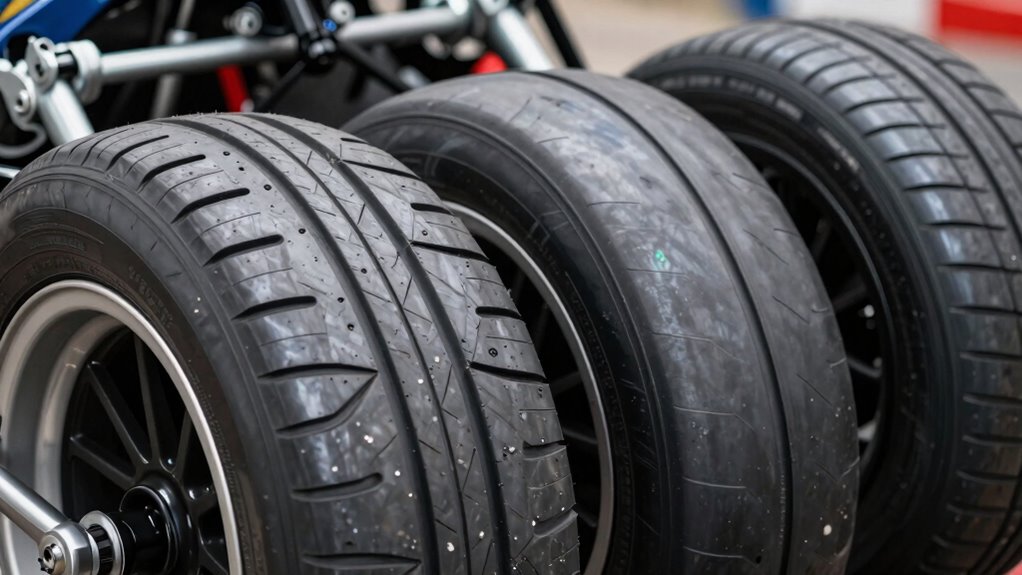
Choosing the right tire compound is essential because it directly impacts your vehicle’s performance, safety, and durability. The compound you select influences how well your tires grip the road, how long they last, and how they perform under different conditions. Understanding the impact on grip and balancing durability versus performance is key to making an informed choice that complements your suspension setup.
Choosing the right tire compound is crucial for optimal safety, performance, and longevity, aligning with your driving style and conditions.
Tire compounds with a softer rubber blend typically offer better grip. When your tires have a high grip, your car responds more precisely to steering inputs, especially during cornering or sudden maneuvers. This improved traction can enhance handling and safety, giving you confidence in challenging driving situations. However, softer compounds tend to wear out faster because they’re less resistant to heat and abrasion, which means you’ll need to replace them more often. If you’re pushing your vehicle hard on the track or spirited driving, a softer compound might seem attractive, but it can also strain your suspension if it’s not tuned for such tires.
On the other hand, harder tire compounds prioritize durability over grip. These tires last longer and resist heat buildup better, making them suitable for everyday driving or long-distance trips. But the trade-off is that they often lack the same level of traction, especially in wet or aggressive cornering conditions. If your suspension setup is tuned for high grip tires, switching to a harder compound can create a mismatch. You might find that the suspension, which was calibrated for more grip, becomes less effective because the tires aren’t providing the same level of traction. This disconnect can lead to uneven handling, increased tire wear, and potentially compromise safety. Additionally, the tire compound’s influence on vehicle dynamics can significantly affect how your suspension responds to different driving conditions. Understanding the material composition of tire rubber can help you better predict how the tires will perform over time and under stress.
Choosing the appropriate tire compound’s impact on vehicle dynamics is crucial because it can determine how well your suspension can perform under various loads and speeds. The challenge lies in balancing the two: choosing a tire compound that matches your driving style and the conditions you face regularly. If you’re racing or engaging in aggressive driving, softer compounds can maximize your suspension’s capabilities but require careful maintenance and frequent replacements. For daily driving, durable, harder compounds might seem safer and more economical, but they could limit your suspension’s potential to deliver precise handling. When selecting a tire compound, you need to consider how it will work with your suspension setup—too soft, and you risk excessive grip that causes instability; too hard, and you may sacrifice the responsiveness and control you need. Additionally, considering tire pressure and alignment can further optimize how your chosen compound interacts with your suspension for better overall performance.
Ultimately, your choice should align with your driving needs, balancing the impact on grip with the longevity of the tires. It’s also important to consider how tire compound choices can influence your vehicle’s overall safety and handling. Remember, the wrong compound can ruin an otherwise perfect suspension setup, leading to compromised handling and safety. It’s worth investing time in understanding your driving habits and conditions to pick a tire compound that enhances, rather than detracts from, your vehicle’s performance.
performance tire compound for sports cars
As an affiliate, we earn on qualifying purchases.
As an affiliate, we earn on qualifying purchases.
Frequently Asked Questions
How Do Tire Compounds Affect Overall Vehicle Handling?
You’ll notice that tire compounds greatly affect your vehicle’s handling by influencing tire temperature and road grip. Softer compounds generate more grip but heat up quickly, offering better traction in corners. Harder compounds stay cooler and last longer but may reduce your overall control. Choosing the right compound depends on balancing tire temperature and road grip, ensuring your suspension setup performs best without compromising safety or performance.
Are There Specific Tire Compounds Better for Certain Suspension Types?
Yes, certain tire compounds suit specific suspension types better. For example, softer compounds provide better grip for sport suspensions but wear faster, creating uneven tire wear patterns. Harder compounds offer durability and consistent performance with more robust suspensions, reducing tire wear issues. Choosing the right compound involves balancing tire wear patterns and compound durability to optimize handling based on your suspension setup. Always match your tire compound to your suspension for best results.
Can Changing Tire Compounds Improve Ride Comfort?
Yes, changing tire compounds can improve ride comfort. Softer compounds offer better tire grip, providing a smoother ride and improved handling, while also absorbing road imperfections better. However, they may wear faster, affecting compound durability. Conversely, harder compounds last longer but might reduce comfort due to less grip. Balancing these factors helps you choose the right tire compound for a more comfortable driving experience without compromising performance.
How Often Should Tire Compounds Be Replaced for Optimal Performance?
You should replace your tire compound every 6,000 to 8,000 miles, as tire wear greatly impacts performance. An interesting statistic shows that improper compound selection can reduce lifespan by up to 30%. Regularly check for uneven wear or cracks, and consider your driving habits when choosing compounds. Swapping out tires at ideal intervals ensures you maintain grip, comfort, and safety, preventing premature wear from compromising your suspension setup.
What Are the Signs of Incompatible Tire Compounds With Suspension?
You’ll notice signs of incompatible tire compounds through decreased tire longevity and compromised road grip. If your tires wear unevenly, feel less responsive, or slide more during turns, it indicates a mismatch with your suspension setup. You might also experience increased vibrations or noise. These issues suggest the tire compound isn’t working harmoniously with your suspension, reducing overall performance and safety. Addressing this mismatch improves handling and extends your tires’ lifespan.
Conclusion
So, next time you’re tempted to pick a softer tire compound for that extra grip, remember—it might just be the one thing that sabotages your perfect suspension setup. All that tuning and fine-tuning, only to be undone by a seemingly small choice. Ironically, what seems like an upgrade could be your biggest downfall. Sometimes, the simplest decision can turn your smooth ride into a bumpy, frustrating mess—proof that not every good idea leads to greatness.
Halloween Picks
halloween
As an affiliate, we earn on qualifying purchases.