As a track-day driver, you quickly learn that understanding tire pyrometer data is key to improving grip and consistency. You focus on real-time temperature readings across your tires to adjust pressure and driving style for best performance. Recognizing how road and track conditions influence tire heat helps you make fast, data-driven decisions that boost your lap times. Keep exploring, and you’ll discover even more ways to master thermal insights for a competitive edge.
Key Takeaways
- Track-day drivers quickly learn to interpret tire temperature patterns for immediate grip and handling adjustments.
- Monitoring tire temps helps identify under- or over-inflation issues affecting performance.
- Recognizing temperature differences across tire sections guides optimal pressure and driving style changes.
- Drivers understand that consistent tire temps indicate proper setup, boosting confidence during sessions.
- Real-time thermal data enables rapid responses to track conditions, improving lap times and tire longevity.
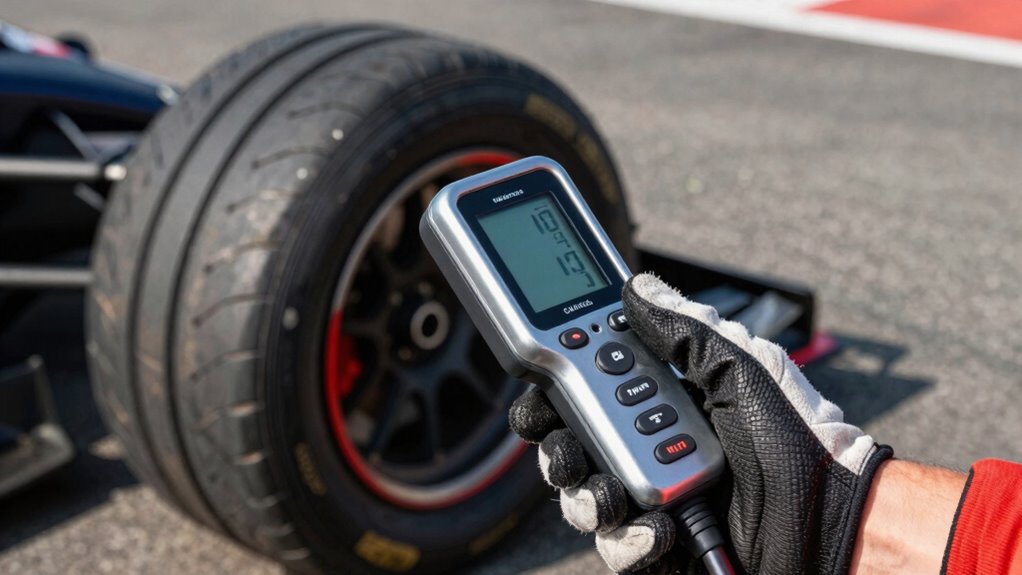
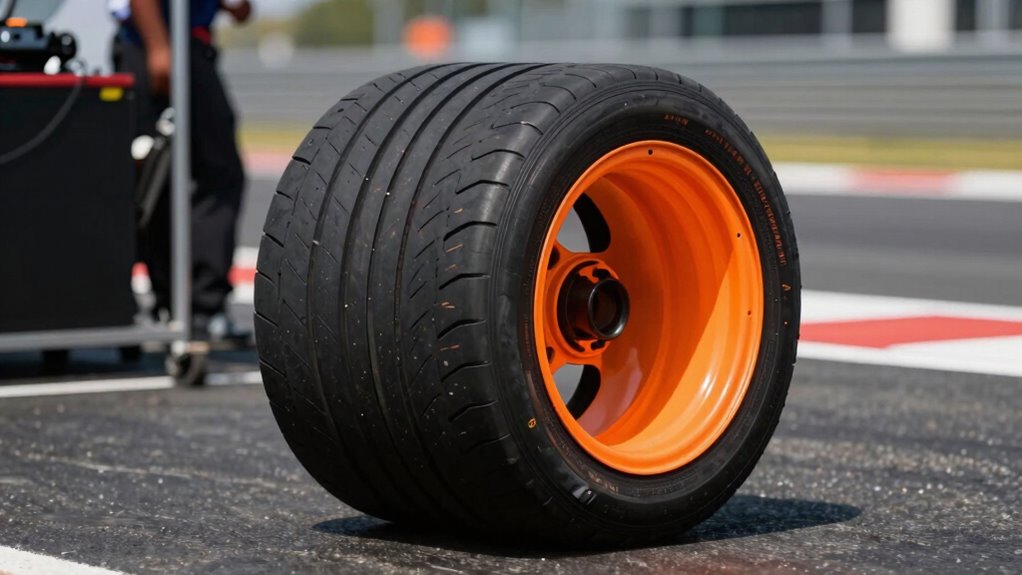
If you want to maximize your performance on the track, understanding how to use a tire pyrometer is essential. This device gives you real-time data on tire temperature, which is crucial for optimizing grip and handling. When you’re pushing your car through corners at high speeds, tire temperature indicates how well your tires are performing. The key is to monitor tire pressure and road temperature, as these factors directly influence tire temperature and overall performance.
You’ll quickly learn that tire pressure affects how heat builds up in your tires. Underinflated tires tend to generate more heat because they flex more, which can lead to uneven wear and reduced grip. Overinflated tires, on the other hand, don’t flex enough, causing cold spots and less contact with the road. Using a tire pyrometer helps you find the ideal pressure by measuring the temperature across different parts of the tire. When you see consistent, balanced temperatures, it means the pressure is just right. If one side or part is significantly hotter, you know you need to adjust the pressure accordingly.
Road temperature also plays a vital role in how your tires behave. As the asphalt heats up during a session, it affects how your tires heat up and cool down. A hot track can cause your tires to reach higher temperatures more quickly, which may increase grip initially but also risks overheating and losing performance later. By measuring tire temperature with a pyrometer, you gain insight into how the road temperature impacts your tires’ grip. This knowledge allows you to adapt your driving style, such as easing off in hotter conditions to prevent tire degradation or pushing harder when temperatures are optimal. Understanding the thermal properties of tires can help you better interpret pyrometer readings and make informed adjustments. Additionally, being aware of the tire compound can influence how quickly your tires heat up and cool down, affecting your overall strategy. Incorporating an understanding of tire wear patterns can further enhance your ability to optimize tire performance over a session. Recognizing the impact of environmental factors on tire behavior can also help refine your approach to track conditions.
Learning to interpret tire pyrometer readings is a fast track to better lap times. You’ll start noticing patterns—like which sections of the tire run hotter—and adjust your pressure and driving accordingly. It’s not just about hitting the perfect tire pressure once; it’s about understanding how tire temperature fluctuates during a session and responding in real time. This feedback loop helps you develop a more consistent tire setup, leading to improved grip, better cornering, and faster laps.
Recognizing the importance of biodiversity and sustainable practices on the track can also contribute to a more environmentally conscious approach to racing. In the end, mastering the use of a tire pyrometer means you’re constantly fine-tuning your setup based on tire pressure and road temperature data. It’s a straightforward but powerful tool that turns guesswork into precision, giving you the edge on the track. The faster you learn to read and react to these thermal signals, the more confident and competitive you’ll feel behind the wheel.
As an affiliate, we earn on qualifying purchases.
Frequently Asked Questions
How Often Should I Check Tire Temperatures During a Track Day?
You should check tire temperatures frequently during a track day, ideally every few laps, to monitor tire pressure and prevent uneven tire wear. Keep an eye on your tire pressure to guarantee consistent grip and safety. Regular temperature checks help you identify hot spots that could cause tire degradation. By staying attentive, you optimize performance, extend tire life, and maintain better control throughout your session.
Can Tire Pyrometers Be Used for Street Driving?
Yes, you can use tire pyrometers for street driving to monitor tire temperature and guarantee even tire wear, which improves safety and prolongs tire life. Maintaining temperature consistency helps prevent uneven wear and reduces the risk of blowouts. While they’re more common on track days, using a pyrometer during regular driving can help you identify hot spots or inconsistent tire temperatures, keeping your tires in perfect condition and enhancing overall driving performance.
What Is the Ideal Temperature Range for Racing Tires?
You want your racing tires to hit the sweet spot, usually between 150°F and 170°F, for peak grip. If you go too high, the rubber compound gets too soft, risking a blowout; too low, and you’ll lose traction. Keep an eye on tire pressure, as it influences temperature and performance. When you find that perfect range, you’re really cooking—just don’t let it slip through your fingers.
How Does Ambient Temperature Affect Tire Temperature Readings?
Ambient temperature impacts your tire temperature readings by influencing tire pressure and rubber composition. When it’s hot outside, your tires tend to run hotter, causing increased tire pressure, which can mislead your pyrometer readings. Conversely, cold weather cools the rubber, lowering tire pressure and temperature readings. Understanding this, you adjust your tire pressure accordingly and consider rubber’s thermal properties to get accurate tire temperature insights for best grip and safety.
Are All Tire Pyrometers Equally Accurate?
Did you know that not all tire pyrometers are equally accurate? The accuracy largely depends on tire material and sensor calibration. Different tire compounds transfer heat differently, affecting readings. Proper calibration guarantees your pyrometer provides reliable results, especially when monitoring specific tire conditions on the track. So, when choosing a pyrometer, consider these factors carefully—it’s key to getting precise data that can improve your driving performance.
Conclusion
Now that you’ve deciphered the secret language of tire pyrometers, you’re no longer flying blind on the track. Think of your tires as your car’s heartbeat—reading their temperature is like tuning into their rhythm. With each session, you’ll become a maestro, orchestrating perfect grip and control. So, keep your eye on those numbers, and let your tires tell you when they’re ready to dance. The track is yours—listen closely, and lead the way.