To safely increase boost on your G16E-GTS in the GR Yaris without internal modifications, focus on upgrading to a quality, properly sized turbo and ensuring precise fuel tuning with ECU remapping. Keep boost within the engine’s safe limits, and add supporting parts like a larger intercooler and improved exhaust to manage heat and airflow. This approach balances power gains with engine reliability, and exploring further will help you optimize your setup even more effectively.
Key Takeaways
- Upgrade to a high-quality, appropriately sized turbo for improved airflow without stressing stock internals.
- Carefully tune the ECU to adjust fueling and AFR, preventing lean conditions at increased boost levels.
- Install an upgraded intercooler to manage intake temperatures and prevent heat soak during boost increases.
- Increase boost gradually within the engine’s safe limits, avoiding internal modifications for moderate power gains.
- Monitor engine parameters closely to ensure reliability and prevent potential damage when raising boost.

If you’re considering boosting your GR Yaris G16E-GTS without upgrading the internals, you’ll be pleased to know that it can handle increased power levels quite well. The stock internals are sturdy enough to support moderate boost increases, provided you approach the modification thoughtfully. The key to safely raising boost is a well-planned turbo upgrade combined with precise fuel tuning. Instead of rushing into major internal work, you can focus on optimizing the turbo system to extract more power without risking reliability.
Stock internals of the GR Yaris G16E-GTS support moderate boost increases with proper turbo and fuel tuning.
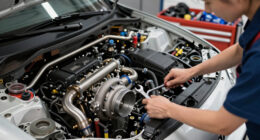
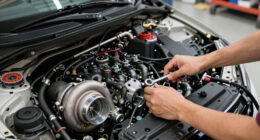
A turbo upgrade is your first step. Opting for a high-quality, properly sized turbocharger allows you to increase boost pressure while maintaining responsiveness and driveability. Many enthusiasts choose hybrid turbos or upgraded units designed specifically for the G16E-GTS, which can deliver more air to the engine efficiently. Remember, the goal isn’t just to boost higher but to do so within the engine’s safe limits. Properly matching your turbo with the stock fueling system ensures that you gain power without causing excessive stress on the internals.
Fuel tuning plays a critical role alongside your turbo upgrade. As you increase boost, fueling must be adjusted to prevent lean conditions that could damage the engine. A professional ECU remap or piggyback system allows you to optimize fuel delivery precisely. This ensures you maintain safe air-fuel ratios under higher boost pressures. Proper fuel tuning also helps improve throttle response, torque, and overall engine efficiency. It’s essential to monitor AFR (air-fuel ratio) closely during tuning sessions to avoid over-leaning, which is a common risk when increasing boost.
While increasing boost, don’t overlook the importance of supporting modifications. Upgrading your intercooler can help manage intake temperatures, preventing heat soak that can reduce power and increase stress on internal components. Additionally, a good exhaust system can improve airflow and complement your turbo upgrade, ensuring your engine breathes better under increased boost.
G16E-GTS turbocharger upgrade
As an affiliate, we earn on qualifying purchases.
As an affiliate, we earn on qualifying purchases.
Frequently Asked Questions
What Are the Long-Term Reliability Concerns With Increased Boost?
When you increase boost, you face long-term reliability concerns like heightened detonation risks, which can damage pistons and valves, and lubrication concerns, as higher pressure strains oil flow. These issues can lead to faster wear and potential engine failure if not managed properly. To protect your engine, make certain proper tuning, use quality oil, and monitor boost levels carefully, avoiding excessive increases that could compromise durability over time.
How Does Boost Level Affect Fuel Economy?
When you increase boost, your turbo lag might get worse, and fuel efficiency can decline because the engine works harder to produce more power. Higher boost levels often lead to more fuel consumption, especially during aggressive driving. If you’re aiming for better fuel economy, keeping boost levels moderate helps, reducing turbo lag and maintaining a balance between power and efficiency. This way, you enjoy a responsive ride without sacrificing too much fuel economy.
Can Stock Internals Handle Future Power Upgrades?
You might worry that stock internals can’t handle future power upgrades, but with proper engine cooling and transmission durability measures, they often can. While increasing boost adds stress, maintaining ideal cooling prevents overheating, and a strong transmission ensures reliable power transfer. Upgrades like upgraded intercoolers or clutch components can help, making it possible to safely boost power without immediately replacing internals. Just keep a close eye on cooling and transmission health.
What Are the Signs of Internal Engine Stress?
You’ll notice internal engine stress through signs like increased engine wear and oil degradation. If your oil becomes dark and gritty quickly, it indicates excessive wear, which can cause parts to struggle under stress. Listen for unusual knocking or knocking sounds, and monitor for higher-than-normal engine temperatures. These signs suggest your engine is under strain, so keep an eye on oil quality and engine performance to prevent potential damage.
How Does Ambient Temperature Impact Boost Performance?
Imagine you’re tuning your car for summer track days. Higher ambient temperature can decrease boost consistency because warmer air is less dense, making it harder for your turbo to generate the same boost levels. Conversely, cooler ambient temperatures improve airflow, enhancing boost performance. You notice that in colder weather, your turbo spools faster and provides more consistent boost, demonstrating how ambient temperature directly impacts your engine’s efficiency and reliability.

28" x 7" x 2.5" Universal Turbo Intercooler Kit with Intercooler + 8pcs Bent Pipes + 6pcs Straight Couplers + 2pcs 90 Degrees Elbow Couplers + 16pcs Clamps Black (8Pcs Black)
This 2.5 Inch intercooler tube kit is universal,fits for all the turbo car's upgrade and replacement.The pipe kit…
As an affiliate, we earn on qualifying purchases.
As an affiliate, we earn on qualifying purchases.
Conclusion
By safely raising boost on your GR Yaris G16E-GTS’s stock internals, you reveal impressive performance gains without compromising reliability. Did you know that the G16E-GTS engine can handle up to 1.2 bar of boost with proper tuning? This statistic highlights just how much potential your stock setup holds when optimized correctly. With careful adjustments, you can enjoy increased power while maintaining the engine’s durability—making your Yaris a true powerhouse on the road.
performance ECU remap for G16E-GTS
As an affiliate, we earn on qualifying purchases.
As an affiliate, we earn on qualifying purchases.

Northeastern Exhaust | Stainless Steel EPA-Approved Catalytic & Resonator Pipe Exhaust System Kit Compatible for Toyota Yaris 2007-2011 1.5L | Sedan | Includes Gaskets, Sleeve, and Spring Bolt kit
STAINLESS STEEL 409 GRADE: Our catalytic is EPA-approved is meticulously engineered from durable stainless steel, ensuring durability and…
As an affiliate, we earn on qualifying purchases.
As an affiliate, we earn on qualifying purchases.