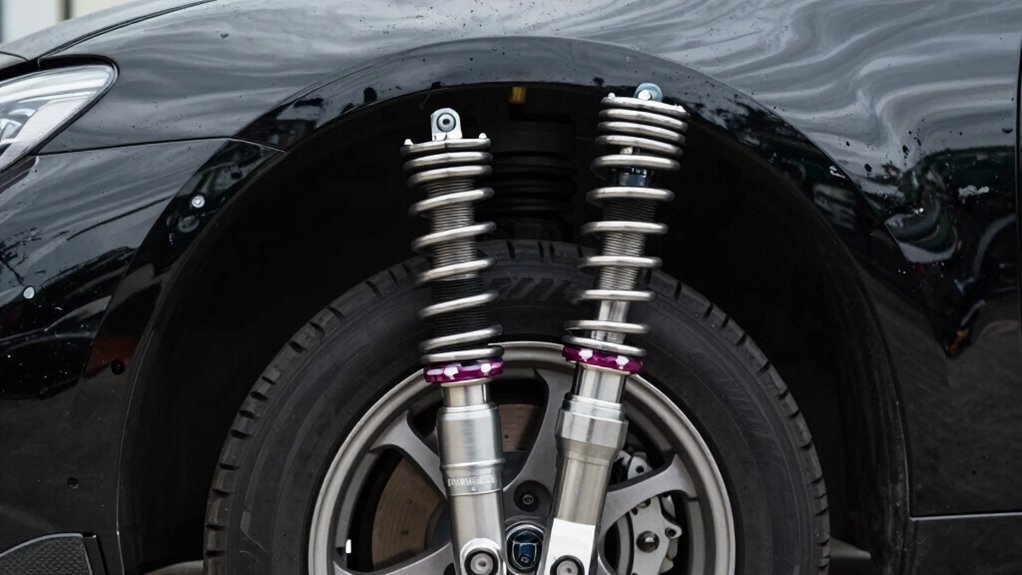
When comparing lowering springs and coilovers, it’s easy to focus on initial costs, but long-term expenses play a big role. Lowering springs are cheaper and easier to install, but may wear out faster and limit ride comfort. Coilovers cost more upfront but offer adjustable suspension for better handling and durability. Choosing the right option depends on your driving style and budget. Keep going to discover how these choices impact your car’s performance and your wallet over time.

Get garage and car supplies delivered free — and shop member deals
- Fast, free delivery on millions of items
- Access to Prime Big Deal Days deals on October 6–7
- Prime Video, Amazon Music and more included
Key Takeaways
- Lowering springs are cheaper upfront and easier to install but may wear out faster and cause uneven tire wear.
- Coilovers require higher initial investment and installation effort but offer adjustable damping and better long-term performance.
- Cheap coilovers can lead to uncomfortable rides and improper handling if not properly set up.
- Lowering springs provide a simple, cost-effective fix but lack customization for different driving conditions.
- Investing in quality coilovers can improve handling, comfort, and durability, making them more cost-effective over time.

Are you trying to decide between lowering springs and coilovers for your vehicle? If so, you need to consider not just the cost but also how each option impacts your driving experience. One key difference lies in installation complexity. Lowering springs are relatively straightforward; they often bolt onto your existing suspension with minimal fuss. If you’re DIY-savvy, you might find installing lowering springs to be a manageable weekend project, saving you some labor costs. Coilovers, on the other hand, are more complex. They require precise adjustments and often involve removing the entire suspension assembly. Unless you’re experienced or have professional tools at hand, installing coilovers can be time-consuming and tricky, leading to higher labor costs if you opt for a shop.
Lowering springs are easier to install, while coilovers require more time and expertise.
Ride comfort is another critical factor. Lowering springs tend to stiffen your suspension slightly, reducing body roll and improving handling, but they usually maintain a decent level of comfort for daily driving. However, because they don’t offer adjustable damping, your ride might feel harsher than stock, especially on rough roads. Coilovers excel here because many models feature adjustable damping and ride height. This means you can fine-tune the suspension to your liking—whether you want a sporty feel for weekend drives or a smoother ride for daily commutes. While coilovers can provide superior customization, they often come with a trade-off: if not set up properly, they might feel overly stiff or uncomfortable, especially if you’re pushing the limits on rougher terrain.
Cost-wise, lowering springs are generally the cheaper route upfront. They’re less expensive to purchase and easier to install, making them appealing if you’re on a budget. But beware of the long-term implications; cheap parts may wear out faster or cause uneven tire wear, potentially leading to more expenses down the line. Coilovers tend to cost more initially, both for the parts and installation, but they offer better performance and flexibility. If you’re aiming for a balanced approach—improved handling without sacrificing too much comfort—coilovers might be worth the extra investment.
Ultimately, your choice hinges on what you value most: a simple, cost-effective upgrade or a more customizable, performance-oriented suspension. Lowering springs can give you a sporty look with less hassle, but they might compromise comfort and longevity. Coilovers, while more complicated and expensive, provide the versatility to tailor your ride and handle the road more precisely. Weigh these factors carefully to find the suspension upgrade that best fits your driving style and expectations.
As an affiliate, we earn on qualifying purchases.
Frequently Asked Questions
How Do Suspension Upgrades Affect Vehicle Insurance Rates?
Suspension upgrades can increase your insurance premiums because insurers often view them as modifications that raise risk. You might face higher coverage implications, especially if the upgrade affects vehicle handling or safety features. Always inform your insurer about suspension changes to avoid claim issues later. While upgrading improves performance, be aware that it can lead to higher insurance costs and potential coverage adjustments, so weigh these factors before making modifications.
Can Lowering Springs Improve Ride Comfort?
Thinking of smoothing your ride? Lowering springs can subtly tune your vehicle’s spring stiffness, leading to a firmer feel that might improve handling. However, they often sacrifice some ride quality, making bumps feel sharper and less cushioned. If you crave comfort over aggressive cornering, they might not be the best choice. For a truly balanced ride, consider options like coilovers that fine-tune spring stiffness without sacrificing comfort.
Are Coilovers Suitable for Off-Road Use?
Yes, coilovers can be suitable for off-road use if they’re designed for durability. Look for models with enhanced off-road durability and increased suspension travel to handle rough terrains. They offer adjustable ride height and damping, giving you better control off-road. However, not all coilovers are built for heavy-duty off-road conditions, so choose ones specifically engineered for off-road durability to guarantee they withstand tough terrains and maintain performance.
How Long Do Cheap Suspension Components Typically Last?
Cheap suspension components typically deteriorate quickly, often lasting only 20,000 to 50,000 miles. Poor material quality and limited warranty coverage mean you might experience early wear and frequent failures. You’ll want to weigh the worth of cheap costs against the costly consequences, as compromised quality can cause creaks, leaks, and crashes. Investing in better materials and extended warranties guarantees longer-lasting performance, providing peace of mind on every drive.
Is Professional Installation Necessary for Coilovers?
You should get professional installation for coilovers because of their installation complexity and alignment requirements. Unlike lowering springs, coilovers involve more precise setup, including adjusting ride height and damping. A professional ensures proper installation, prevents damage, and guarantees ideal performance. Plus, they’ll handle the alignment so your vehicle handles correctly and wears tires evenly, saving you money and time in the long run.
Conclusion
So, while lowering springs might seem like a quick fix, they often end up costing you more in the long run. Coilovers, though pricier upfront, offer better performance and durability, saving you from headaches down the road. Don’t let the grass appear greener on the cheap side; sometimes, you get what you pay for. Investing in quality suspension is like putting your best foot forward—trust me, it’s worth every penny in the end.
Evergreen bestsellers Picks
bestsellers
As an affiliate, we earn on qualifying purchases.