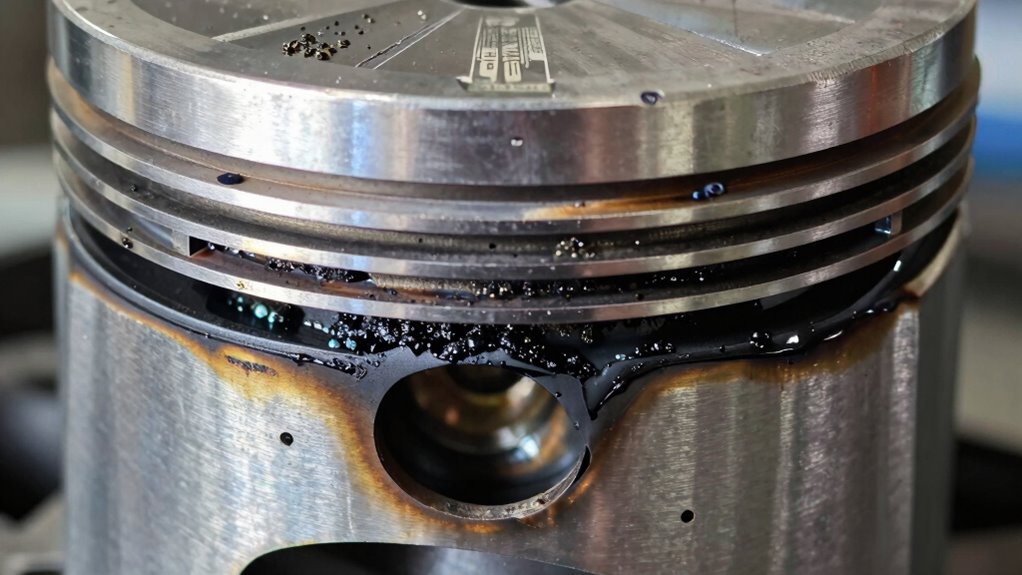

Maintaining the right air-fuel ratio (AFR) is essential for your engine’s safety and performance. Going too lean (less fuel) can make pistons overheat and melt, while a too-rich mixture can foul spark plugs and cause carbon buildup. Small mistakes in tuning can quickly lead to serious damage. To avoid these pitfalls, it’s important to target an ideal AFR and monitor it closely. If you continue your exploration, you’ll uncover more ways to protect your engine effectively.
Key Takeaways
- Running too lean (high AFR) increases combustion temperatures, risking piston melting and engine damage.
- Excessively rich mixtures (low AFR) cause soot buildup and inefficient combustion, potentially harming pistons.
- Inaccurate AFR calibration can lead to dangerous lean conditions that generate excessive heat.
- Small AFR tuning mistakes can cause piston warping or melting over time.
- Proper AFR targeting and monitoring prevent piston damage by maintaining optimal combustion conditions.
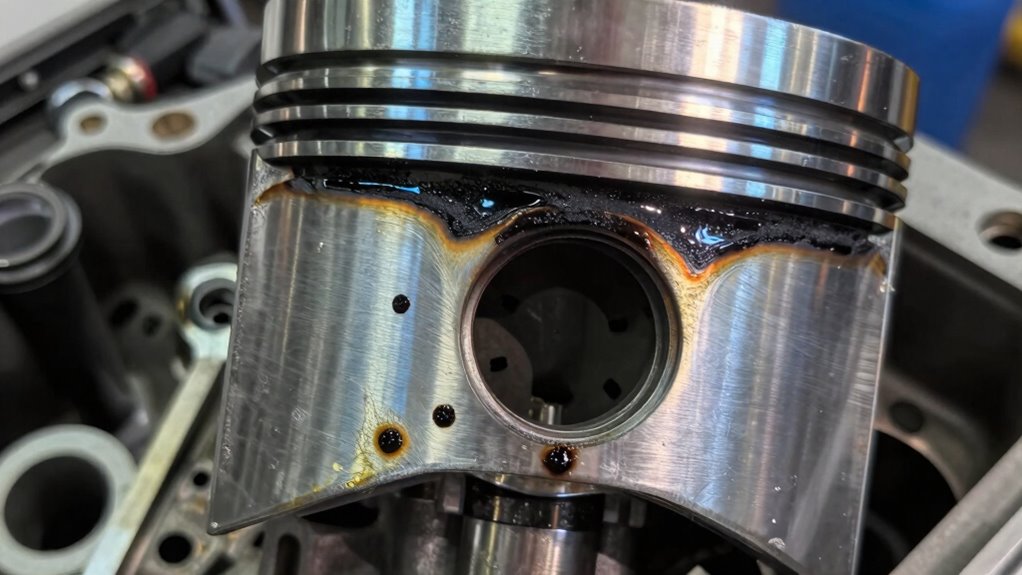
Have you ever wondered how engine performance and efficiency are optimized? It all comes down to precisely managing the air-fuel ratio, a vital factor that directly impacts how your engine runs. When you’re trying to hit the right AFR targets, the goal is to achieve the perfect balance between air and fuel in the mixture. This isn’t just about keeping the engine running smoothly; it’s about maximizing power, reducing emissions, and preventing costly damage. If the fuel mixture isn’t dialed in correctly, you risk serious consequences—most notably, melting pistons. That’s where tuning accuracy becomes essential. Small deviations from the ideal AFR can cause excessive heat and stress inside the combustion chamber, leading to piston damage and even engine failure.
Understanding the importance of accurate tuning helps you see why precise AFR targets matter so much. When you’re adjusting your engine’s fuel delivery, every percentage point counts. If your fuel mixture leans too much—meaning you have less fuel relative to air—you might get a slight increase in power, but you also risk running too hot. This lean condition causes elevated combustion temperatures that can cause pistons to melt or warp over time. Conversely, if your mixture is too rich, with too much fuel, you’ll generate more soot and carbon buildup, but the risk of melting pistons decreases. However, an overly rich mixture can still cause other issues like fouled plugs, sluggish response, and wasted fuel. Achieving the right AFR is a delicate balancing act that demands meticulous attention to tuning precision.
Your goal should be to target an AFR that provides maximum combustion efficiency without pushing the engine beyond its safe limits. Typically, for most gasoline engines, a stoichiometric mixture around 14.7:1 is ideal for efficiency and emissions, but performance tuning often calls for slightly richer or leaner mixtures depending on conditions. When you’re fine-tuning, you need precise measurements and adjustments—small tweaks to fuel delivery rates, sensor calibrations, and ignition timing. Modern engine management systems help you monitor AFR in real time, but understanding the fundamentals of tuning accuracy ensures you can interpret the data correctly. Proper calibration is essential for preventing dangerous lean conditions that melt pistons and ensures your engine runs reliably and efficiently. When done properly, this process prevents dangerous lean conditions that melt pistons and ensures your engine runs reliably and efficiently. Neglecting this precision puts your engine at risk, making it vital to focus on accurate fuel mixture adjustments to safeguard your investment and maximize performance.
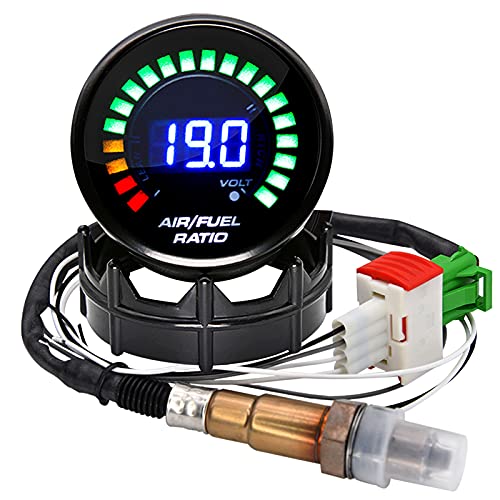
ARTILAURA 2-1/16" 52mm Air/Fuel Ratio Gauge LED Digital Display with Narrowband O2 Oxygen Sensor Car Gauge for 12V Car
- Clear LED Digital Display: Easy to read in darkness
- 52mm Gauge Size: Fits standard 2-1/16 inch dashboards
- Air/Fuel Ratio Range: 10.00 to 20.00 AFR
As an affiliate, we earn on qualifying purchases.
As an affiliate, we earn on qualifying purchases.
Frequently Asked Questions
How Do AFR Targets Vary for Different Engine Types?
You should adjust AFR targets based on engine type variations, as each engine demands different tuning adjustments for ideal performance. For example, turbocharged engines often need richer AFRs under boost, while naturally aspirated engines favor leaner mixes for efficiency. By understanding these differences, you can fine-tune your setup to prevent issues like knocking or overheating, ensuring your engine runs smoothly and efficiently across various conditions.
What Signs Indicate Afr-Related Piston Damage?
Imagine your engine’s piston whispering trouble—signs of AFR mishaps. You’ll notice knocking sounds, excessive smoke, or a loss of power, revealing a problematic fuel mixture. Piston corrosion may cause uneven wear or visible scoring. If you see these signs, it’s a red flag that your AFR is off, risking piston damage. Stay alert, and keep your fuel mixture balanced to prevent costly repairs.
Can Improper AFR Settings Cause Long-Term Engine Wear?
Yes, improper AFR settings can cause long-term engine wear. When your fuel mixture isn’t properly tuned, it leads to incomplete combustion, increased engine stress, and deposits that damage components over time. Poor tuning precision results in excessive heat and friction, accelerating wear on pistons, valves, and other parts. To prevent this, guarantee your AFR targets are correctly set, and regularly monitor your engine to maintain ideal performance and durability.
How Often Should AFR Calibration Be Checked?
You should check your fuel injection system’s AFR calibration at least every 3,000 to 5,000 miles, or sooner if you notice performance issues. Regular sensor calibration ensures accurate readings, helping you maintain ideal air-fuel ratios. Keep an eye on your engine’s behavior and schedule calibration more frequently if you upgrade components or experience rough idling, misfires, or decreased fuel efficiency, to prevent damage and ensure smooth operation.
Are There Safety Risks With Incorrect AFR Tuning?
Ignoring correct AFR tuning can be as dangerous as walking a tightrope over a volcano. You risk engine damage, like melted pistons, and increased exhaust emissions that pollute the environment. An incorrect fuel mixture causes inefficient combustion, which can lead to overheating and potential failure. Always double-check your AFR settings to keep your engine safe and guarantee your emissions stay within legal limits. Don’t gamble with your engine’s health!
Conclusion
Getting your air-fuel ratio right isn’t just a tweak—it’s the heartbeat of your engine’s health. When you ignore the correct AFR targets, it’s like steering a ship into a storm, risking severe damage that’s hard to fix. Pay close attention to those numbers, and you’ll steer clear of the fiery wrecks that melt pistons. Mastering this balance keeps your engine running smoothly, a well-tuned symphony rather than a chaotic crash.