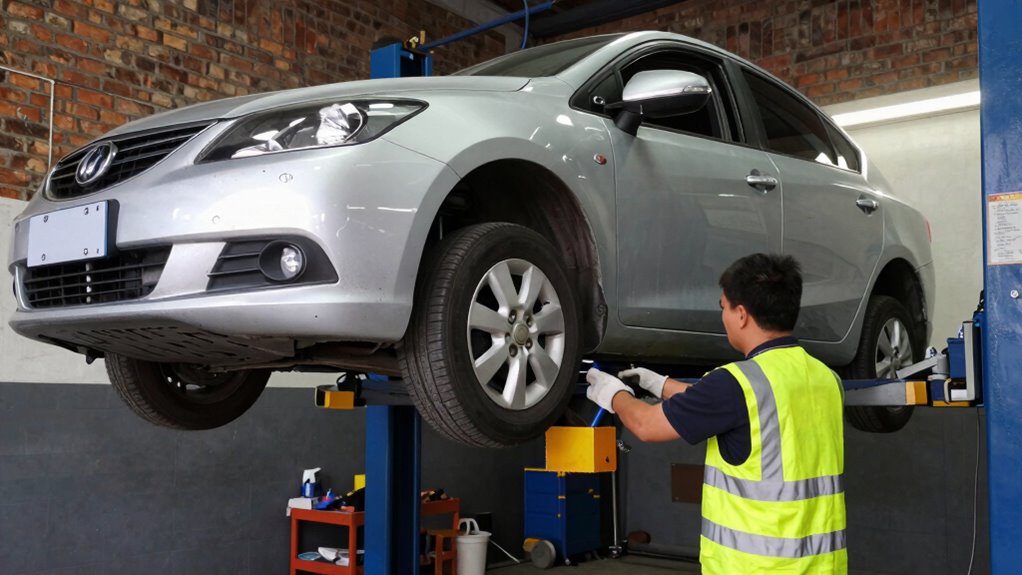

To safely raise a lowered car in a tight garage, start by parking on a level surface and engaging the parking brake. Use wheel chocks to prevent movement and choose a low-profile hydraulic jack suited for limited space. Always position the jack at manufacturer-specified lift points, lift slowly, and support the car with rated jack stands before working underneath. For more tips on creating a secure space and choosing the right equipment, keep going.
Key Takeaways
- Use a low-profile hydraulic jack positioned at proper lift points to accommodate limited ceiling height.
- Ensure the vehicle is on a level surface and securely chocked before lifting.
- Support the car with appropriately rated jack stands before working underneath.
- Clear surrounding space and store tools to maximize safety and movement in tight areas.
- Lift gradually, monitor stability, and verify the vehicle is secure before beginning repairs.
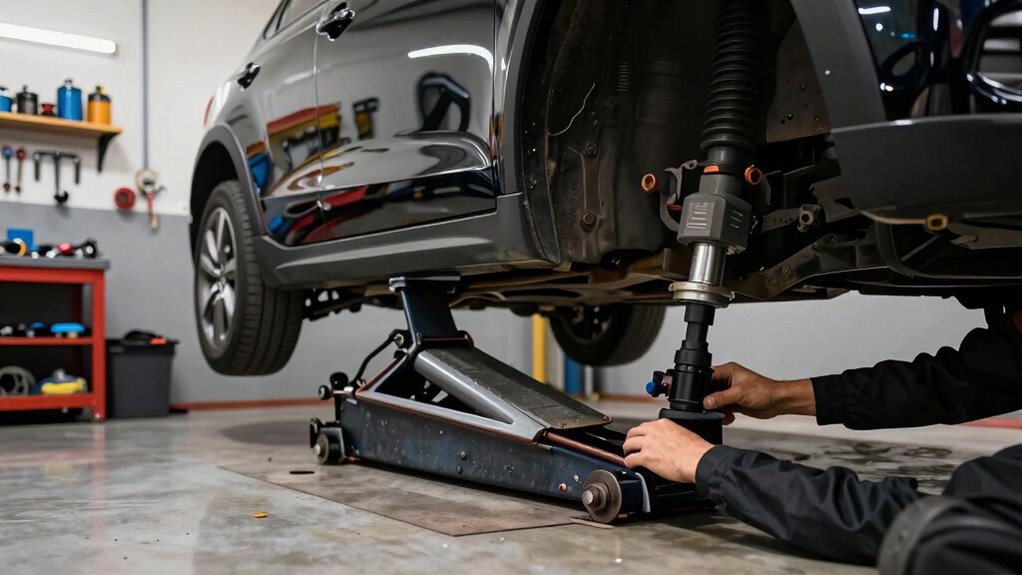
Raising a lowered car in a tight garage can be challenging, but with the right approach, you can do it safely and efficiently. The key is understanding car jack safety and optimizing your garage space. When working in a confined area, you need to prioritize stability and control to prevent accidents. First, confirm your car is on a level surface, and engage the parking brake firmly. Chock the wheels that will stay on the ground to prevent any unintended movement. These basic safety steps set the foundation for a secure lift.
Ensure a safe lift by securing your vehicle on a level surface and chocking wheels before raising in a tight garage.
Next, select the appropriate car jack for your vehicle and the task. Since your garage is tight, a hydraulic floor jack with a low profile might be your best choice, as it can slide under the lowered chassis easily. Always inspect your jack for any damage or leaks before use. Using the correct jack points specified by your vehicle manufacturer is crucial for car jack safety; placing the jack in the wrong spot can cause it to slip or damage the frame. Once positioned correctly, slowly raise the car, keeping an eye on the stability of the lift. Never crawl under a car supported only by a jack—use jack stands to support the vehicle once it’s elevated.
Garage space optimization comes into play here. To maximize your limited space, clear the area around the vehicle beforehand. Move any tools or obstacles out of the way to create a safe workspace. If your garage is too narrow for full-length tools, opt for compact or foldable equipment. When raising a lowered car, consider how you’ll store the jack after use—keeping it in a designated spot prevents clutter and makes future jobs easier. Also, check your ceiling height; you might need a portable or scissor jack if a floor jack won’t fit comfortably. Additionally, understanding car lift safety is essential to avoid mishaps during the process. Familiarizing yourself with proper lifting techniques can further reduce the risk of accidents or damage. Proper planning and awareness of garage organization can make the entire process smoother and safer.
Furthermore, understanding vehicle weight limits and ensuring your equipment can handle the load is crucial for safe lifting. After raising the vehicle, double-check its stability before working underneath. Use wheel chocks for the wheels that remain on the ground, and support the car with jack stands rated for your vehicle’s weight. Always work within your comfort zone and avoid rushing. When lowering the vehicle, do so slowly to prevent sudden drops that can cause injury or damage. Properly storing your equipment after completing the task ensures your garage remains organized and safe for future projects.
low profile hydraulic floor jack for cars
As an affiliate, we earn on qualifying purchases.
As an affiliate, we earn on qualifying purchases.
Frequently Asked Questions
What Tools Are Essential for Raising a Lowered Car Safely?
You need a hydraulic jack suitable for your lowered car, guaranteeing it can handle the weight safely. Focus on proper lift pad placement to avoid damage and ensure stability. Use jack stands that match your vehicle’s weight capacity for added safety. Always double-check the jack’s position before lifting and work on a flat surface. These tools and steps help you raise your lowered car securely in a tight garage.
How Do I Prevent Damage to My Garage Floor?
To prevent damage to your garage floor, focus on garage organization and floor protection. Use rubber mats or thick plywood under your jack and stands to distribute weight evenly and shield the surface from scratches or dents. Keep your tools organized to avoid accidental impacts. Regularly inspect and clean the floor, and consider applying a protective coating or sealant for added durability. These steps help maintain your garage’s integrity during vehicle maintenance.
Is It Safe to Use DIY Lifts for Lowering Cars?
Using DIY lifts for lowering cars can be risky if you don’t follow proper car lift safety and DIY lifting tips. It’s essential to guarantee your lifting equipment is sturdy, correctly rated, and placed on a flat surface. Always double-check stability before working under the vehicle. If you’re unsure, consider professional help instead of risking accidents or damage. Prioritize safety to prevent injuries or costly mistakes.
What Are Common Mistakes to Avoid During the Process?
Don’t forget to double-check your vehicle alignment before you start, or you’ll end up driving sideways like a crab on roller skates. Avoid neglecting hydraulic fluid levels, or your lift might turn into a glorified paperweight. Also, don’t rush—tight space mistakes, like improper jack placement or forgetting wheel chocks, can turn your DIY project into a comedy of errors. Stay safe, stay precise, and keep that car steady!
How Can I Ensure Stability After Lifting the Car?
To guarantee stability after lifting your car, you should double-check the vehicle’s alignment and suspension integrity. Use quality jack stands positioned on solid, level surfaces, and never rely solely on a hydraulic jack. Once elevated, gently shake the vehicle to confirm it’s secure. Regularly inspect the stands for any signs of wear or instability, and avoid sudden movements that could compromise your safety.
Conclusion
By following these safe lifting techniques, you can confidently work on your lowered car even in a tight garage. Imagine a DIY enthusiast who ignored proper procedures and ended up damaging their suspension or risking injury. Now, picture someone else who took the time to use the right tools and safety steps—saving time, money, and avoiding accidents. Prioritize safety always; it’s the key to keeping your car and yourself protected in tight spaces.