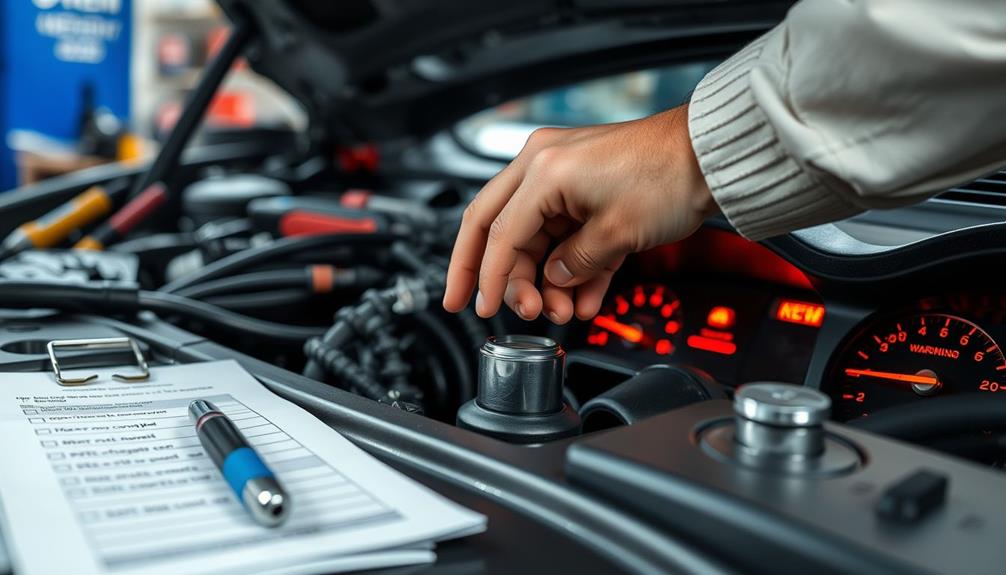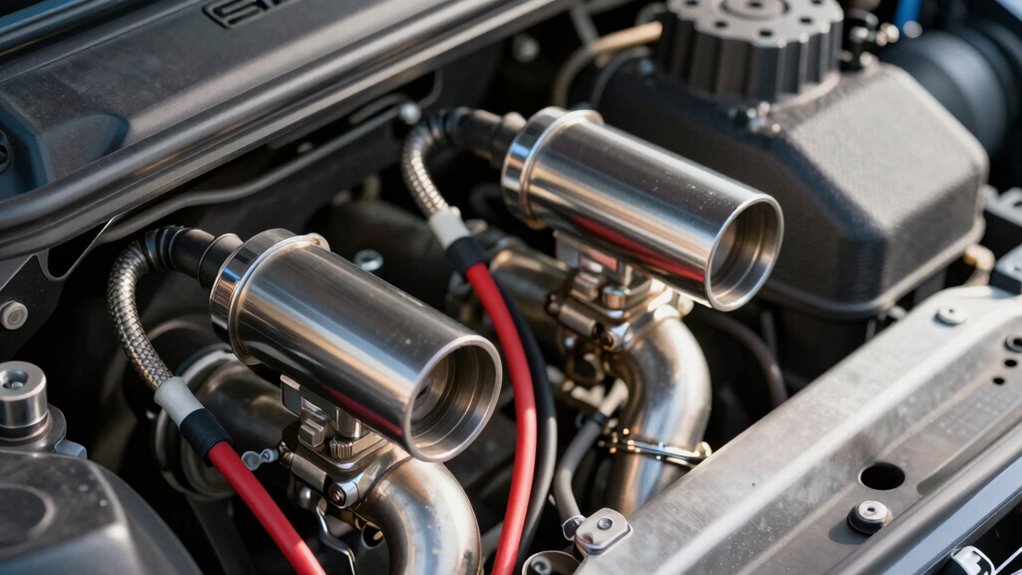

To get accurate readings, you should mount your wideband O2 sensor downstream of the catalytic converter, just a few inches from the exhaust exit. Avoid placing it near the exhaust manifold or in turbulent, airflow-restricted zones. Make certain the sensor is mounted in a position where gases are stable and flowing smoothly. Proper placement is key for reliable data, so keep reading to discover additional tips for ideal sensor installation and performance.

Get business pricing on garage and car supplies
- Business-only prices and quantity discounts
- Tax-exempt purchasing
- Multiple users, one account, clear invoices
Key Takeaways
- Mount downstream of the catalytic converter, within a few inches of the exhaust exit, to ensure stable and accurate readings.
- Avoid installation near the exhaust manifold or in turbulent, swirling airflow zones to prevent measurement errors.
- Ensure gases are stabilized and free of turbulence before the sensor to improve response time and accuracy.
- Use proper mounting hardware and ensure the sensor is securely installed in a clean, sealed bung to prevent leaks.
- Route wiring away from heat sources and moving parts, and verify calibration after installation for optimal performance.
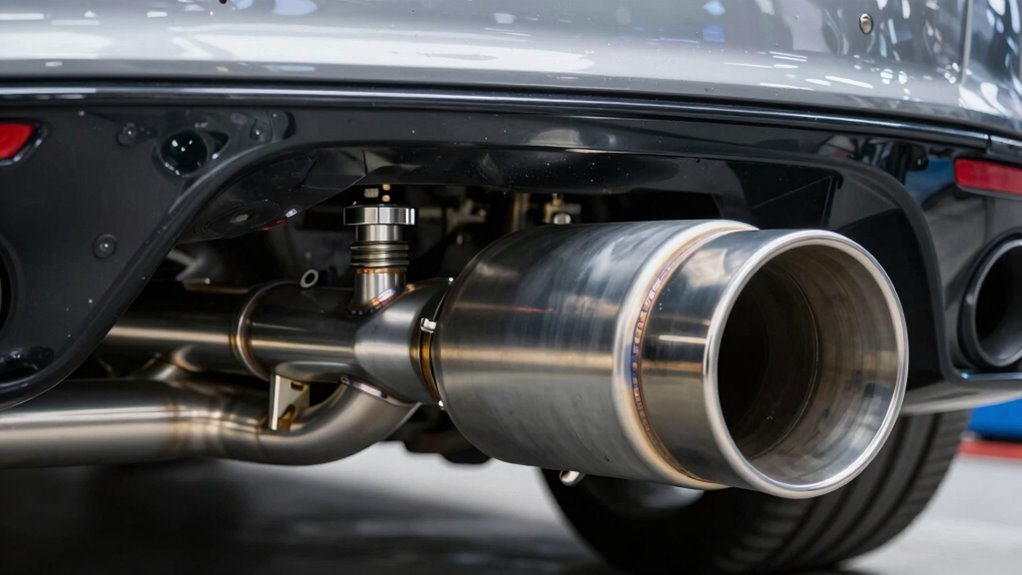
Wideband O2 sensors are essential components in modern engine management systems, providing precise measurements of air-fuel ratios. Their placement directly impacts the accuracy of these readings, which in turn affects your vehicle’s performance and emissions. When choosing where to mount your wideband sensor, you need to consider both the sensor’s calibration and the flow of exhaust gases. Proper installation ensures the sensor reads the most representative sample of exhaust gases, avoiding areas where turbulence or cool spots could distort measurements.
Proper sensor placement and calibration are key for accurate wideband O2 readings and optimal engine performance.
A good rule of thumb is to position the sensor downstream of the catalytic converter, ideally within a few inches of the exhaust pipe’s exit. This location provides a stable and consistent environment for the sensor, minimizing errors caused by rapid temperature changes or turbulent flow. Avoid mounting the sensor too close to the exhaust manifold or in areas where exhaust gases are still cooling or swirling. These spots can produce inaccurate readings because the gases haven’t stabilized yet. Similarly, mounting the sensor too far downstream might lead to delayed or less representative data, impacting your engine’s tuning process.
Before installation, focus on sensor calibration. Many wideband sensors require a calibration process to ensure their readings are accurate. This usually involves using a known reference gas or following the manufacturer’s specific calibration procedure. You’ll want to perform this step before installing the sensor in your vehicle to confirm it’s providing reliable data. Also, ensure the sensor’s electrical connections are secure, and the wiring is routed away from high-heat areas or moving parts to prevent damage. Proper installation tips include using the correct type of bung or sensor mount, which should be welded or securely threaded into the exhaust pipe. Make sure the mounting hole is clean and free of debris to avoid leaks and ensure proper sealing.
When mounting the sensor, keep in mind that it needs adequate airflow for quick response times. Avoid positioning it in areas where exhaust gases might stagnate or where airflow is restricted. Once installed, double-check your sensor calibration, and if necessary, run a quick test to verify that the readings are accurate. Regularly inspecting and recalibrating your wideband sensor ensures consistent performance and reliable data. Additionally, proper placement is crucial for accurate readings, as it helps avoid errors caused by turbulent or inconsistent exhaust flow. By paying close attention to placement, calibration, and installation tips, you’ll get the most accurate readings possible, leading to better tuning, improved efficiency, and reduced emissions. Proper installation might take a bit of effort upfront, but it’s well worth it for the precision and peace of mind it provides.
As an affiliate, we earn on qualifying purchases.
Frequently Asked Questions
How Do I Troubleshoot if My Wideband O2 Sensor Isn’t Reading Correctly?
If your wideband O2 sensor isn’t reading correctly, start by checking the sensor calibration to guarantee it’s accurate. Next, inspect the wiring for any issues like loose connections, corrosion, or damage. Make sure the sensor is properly installed and that the wiring harness is secure. Recalibrate the sensor if needed, and replace any damaged wiring. These steps help pinpoint problems and restore accurate readings efficiently.
Can I Upgrade My Stock O2 Sensor to a Wideband Sensor?
Yes, you can upgrade your stock O2 sensor to a wideband sensor. For a successful upgrade, guarantee proper sensor calibration and follow correct installation techniques. For example, a car enthusiast upgraded their stock sensor, calibrated the wideband properly, and experienced better tuning accuracy. Always verify compatibility with your vehicle’s ECU and follow installation instructions carefully to get precise readings and ideal performance.
What Is the Lifespan of a Typical Wideband O2 Sensor?
A typical wideband O2 sensor lasts about 50,000 to 100,000 miles, but this can vary. You should plan for sensor replacement over time and perform regular calibration techniques to guarantee accuracy. Proper maintenance, including checking for contamination and following manufacturer recommendations, helps extend its lifespan. Keep an eye on performance; if you notice irregular readings, it might be time to replace the sensor to maintain ideal engine performance.
Are There Specific Brands of Wideband Sensors Recommended for Certain Vehicles?
Think of choosing a wideband O2 sensor like selecting a trusted compass. For your vehicle, stick with brands known for reliability, like AEM or Innovate, which often match specific sensor compatibility needs. These brands have proven track records, ensuring consistent, accurate readings. Always verify compatibility with your car’s make and model, because a reliable brand guides you better than a generic choice, helping your engine perform at its best.
How Does Ambient Temperature Affect Wideband O2 Sensor Accuracy?
Ambient temperature can impact your wideband O2 sensor’s accuracy by affecting its sensor calibration. Higher or lower temperatures may cause the sensor to drift, leading to inaccurate readings. To guarantee ideal performance, you should monitor ambient temperature and perform regular sensor calibration, especially if you notice inconsistent data. Proper placement away from extreme heat sources helps maintain accuracy, allowing your vehicle’s ECU to optimize fuel efficiency and emissions effectively.
Conclusion
Think of your wideband O2 sensor as the compass guiding your engine’s performance. Mount it correctly, and you’ll navigate the road to ideal fuel efficiency and power. Position it too far from the exhaust stream, and it’s like trying to find your way with a broken compass—misleading and frustrating. By placing your sensor in the right spot, you guarantee your engine’s signals stay sharp and true, steering you toward smooth, reliable rides every time.
Fall Picks
fall essentials
As an affiliate, we earn on qualifying purchases.