Choosing the wrong tie-down kit or using worn-out straps can make car hauling stressful and unsafe. You might overlook proper weight ratings, attach straps to fragile parts, or tighten unevenly, causing vehicle movement or damage. Poor positioning and neglecting regular checks increase risks during transit. Knowing what mistakes to avoid helps you secure your vehicle confidently. Want to learn how to prevent these issues and guarantee a smooth haul? Keep going to discover expert tips.
Key Takeaways
- Using low-quality or worn-out straps increases the risk of breakage during transit.
- Failing to anchor straps to solid points can cause vehicle shifting and instability.
- Over-tightening or uneven tension can damage the vehicle or cause strap failure.
- Improper vehicle positioning leads to imbalance and added stress on tie-downs.
- Skipping regular inspections allows wear or damage to go unnoticed, risking safety.
When hauling a car, using a tie-down kit might seem straightforward, but even small mistakes can lead to serious safety issues. The key to a safe and smooth transport lies in understanding proper equipment and mastering securing techniques. If you neglect these, your vehicle could shift, sway, or even fall off during transit, creating dangerous situations on the road. That’s why you need to pay close attention to how you choose and use your tie-down kit.
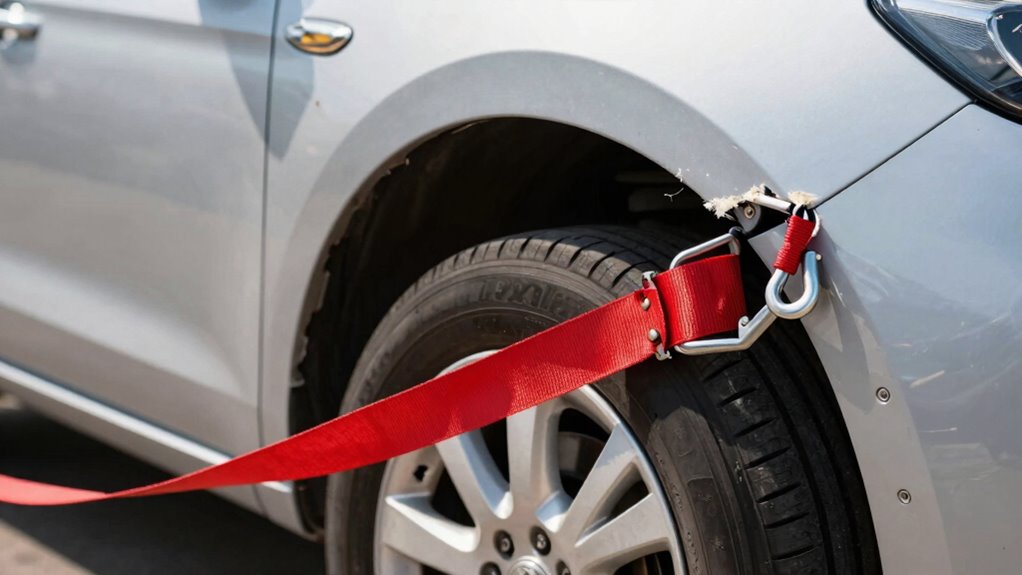
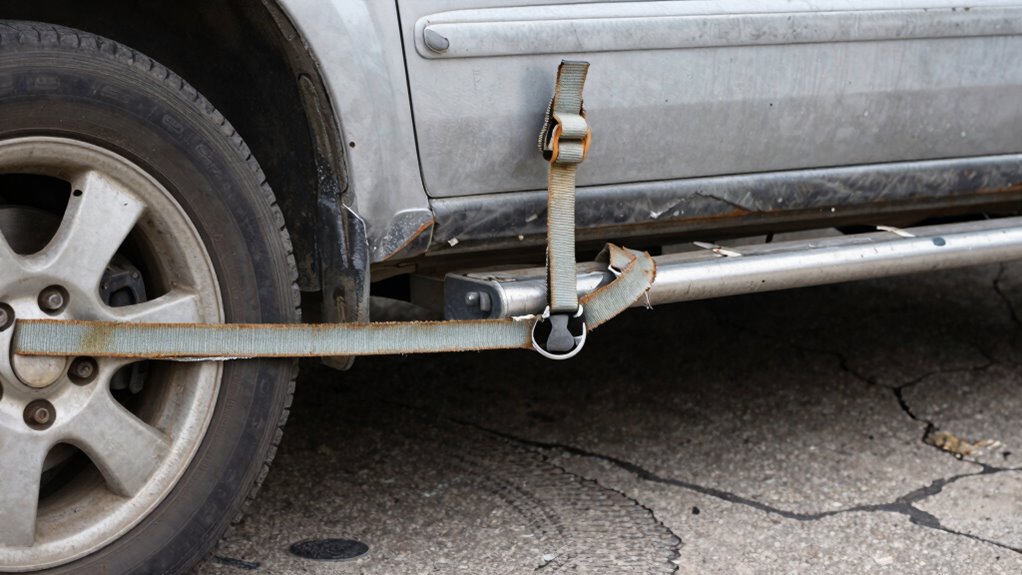
First, ensure you have the proper equipment. Not all tie-down straps are created equal, and using the wrong type can compromise the entire setup. Look for straps made of durable, high-quality materials with strong hooks and ratchets. Using cheap or worn-out straps might seem cost-effective initially, but they can break under tension or wear out quickly, risking your vehicle’s safety. Always verify that your tie-downs are rated for the weight of your vehicle. Overloading straps or using inadequate equipment is a common mistake that can lead to accidents or damage. Additionally, selecting equipment based on proper equipment selection is essential to ensure safety and durability during the haul. To avoid confusion, familiarize yourself with the different types of tie-downs and their specific uses for various vehicles.
Securing techniques are just as crucial. It’s not enough to simply attach straps to your vehicle and tighten them; you need to follow a systematic approach. Start by anchoring the straps to solid points on your vehicle, such as frame rails or designated tie-down points, avoiding fragile parts like suspension components. Once in place, tighten the straps evenly, making sure there’s no slack, but also avoiding over-tightening, which can damage the vehicle or strain the straps. Crisscrossing straps diagonally across the vehicle helps prevent movement in multiple directions. Double-check that the vehicle is firmly held in place from all sides before hitting the road. Regularly inspecting your tie-downs during stops is also important to prevent unexpected failures caused by wear or damage. Proper vehicle positioning on the trailer is another critical factor, as it ensures balanced weight distribution and reduces undue stress on the tie-downs. Maintaining proper tension and angle in your straps can significantly improve security and prevent slippage. Proper securing techniques not only secure your vehicle but also prolong the lifespan of your equipment.
Many people underestimate the importance of inspecting their tie-downs before and during travel. Regularly checking your straps during stops can prevent sudden failures. Remember, securing techniques also include proper positioning of your vehicle on the trailer. Center it properly and avoid putting excessive weight on one side. This balance reduces stress on your tie-downs and improves overall stability. Additionally, understanding proper securing techniques can help you avoid common pitfalls that lead to vehicle movement. Taking the time to learn and apply these techniques can make a significant difference in your hauling experience.
In essence, the combination of proper equipment and securing techniques forms the foundation of safe car hauling. Cutting corners or rushing through the process increases the risk of accidents, damages, or dangerous roadside incidents. Take your time to choose quality gear, follow best practices, and double-check your setup. Doing so ensures your vehicle stays secure, your journey remains safe, and you avoid the stress and potential hazards that come with improper tie-downs.
As an affiliate, we earn on qualifying purchases.
Frequently Asked Questions
How Often Should I Inspect My Tie-Downs During a Trip?
You should inspect your tie-downs every 2 to 3 hours during your trip to guarantee vehicle safety. Regular inspection helps you catch any loosening or damage early, preventing accidents or cargo loss. Always check for proper tension, wear, and secure attachment points. By maintaining a consistent inspection frequency, you keep your vehicle safe, reduce stress, and avoid costly repairs or hazards caused by neglected tie-downs.
What Are the Best Types of Tie-Downs for Different Vehicles?
Imagine sturdy straps hugging your vehicle like a protective shield—this visual highlights the importance of choosing the right tie-downs. For different vehicles, consider ratchet straps for heavy-duty trucks, wheel nets for sports cars, and soft tie-downs for delicate finishes. Prioritize tie-down durability and vehicle protection, ensuring your cargo stays secure. Selecting the best type depends on your vehicle’s size, weight, and fragility, making safety your top priority on every trip.
Can Improper Tie-Downs Cause Damage to My Vehicle?
Improper tie-downs can definitely cause vehicle damage and compromise tie down safety. When you don’t secure your vehicle correctly, it can shift or bounce during transit, leading to scratches, dents, or even more serious damage. Using the wrong type or faulty tie-downs increases this risk. Always make certain your tie-downs are strong, properly rated, and correctly attached to prevent vehicle damage and keep your cargo safe throughout the journey.
Are There Legal Weight Limits for Tie-Down Straps?
In the days of dial-up internet, knowing that legal regulations and weight restrictions apply to tie-down straps is essential. Yes, there are legal weight limits to ensure safe hauling. You must check your straps’ maximum load capacity and adhere to local laws. Exceeding these limits risks damage or accidents. Always select straps rated for your vehicle’s weight, and don’t forget to double-check the manufacturer’s specifications before hitting the road.
How Do Weather Conditions Affect Tie-Down Security?
Weather conditions greatly impact tie-down security. Weather hazards like rain, snow, or ice can weaken straps, making them more likely to slip or break. Climate effects such as high humidity or extreme heat can degrade material strength over time. You should regularly check and tighten straps in bad weather, and consider using weather-resistant tie-downs to guarantee your vehicle stays secure regardless of changing conditions.
Conclusion
Remember, when you’re hauling your car, a secure tie-down kit is like the steady hand guiding a ship through choppy waters. Avoid common mistakes, and you’ll keep the journey smooth and stress-free. Picture your vehicle safely anchored, riding steady on the open road, as the wind whispers past. With the right setup, you’ll arrive with your car intact, ready to hit the ground running. Safe hauling begins with paying attention to those little details—because peace of mind is worth it.