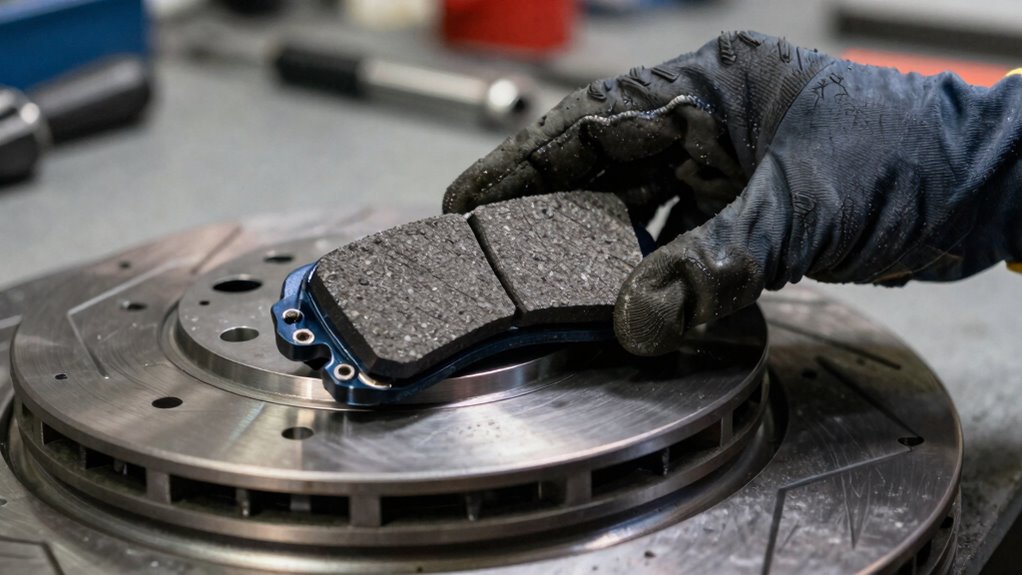

To break in your performance brake pads correctly, start by ensuring the pads and rotors are properly installed and clean. Begin with gentle, controlled stops from 30-40 mph, performing around 15-20 moderate stops, gradually increasing the intensity while avoiding hard stops or wheel lock-up. Between stops, let your brakes cool down. Keep your driving steady afterward, avoiding aggressive braking for a few hundred miles. Proper bedding enhances braking power, reduces noise, and extends pad life—keep going to learn the full process.

Get business pricing on garage and car supplies
- Business-only prices and quantity discounts
- Tax-exempt purchasing
- Multiple users, one account, clear invoices
Key Takeaways
- Ensure proper bedding by performing 15-20 moderate, controlled stops from 30-40 mph without hard braking.
- Check all hardware, caliper alignment, and pad installation to guarantee secure and correct mounting.
- Allow brakes to cool between stops to prevent overheating and maintain consistent transfer layer formation.
- Avoid aggressive braking or high-speed stops during the initial bedding process for optimal pad and rotor life.
- Continue gentle driving for several hundred miles, avoiding sudden stops, to develop a stable, even transfer layer.
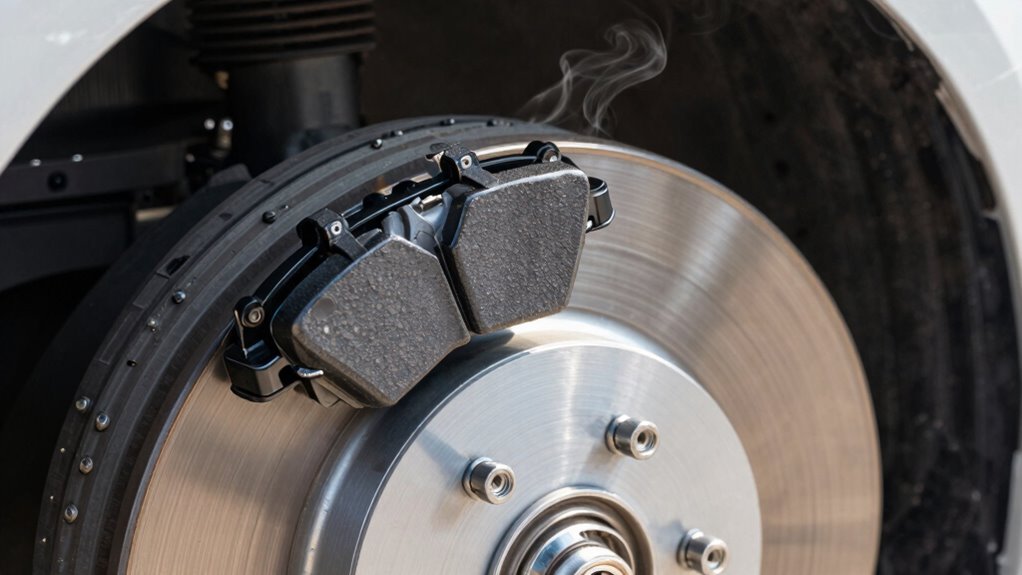
Breaking in your performance brake pads is a critical step to guarantee they perform at their best and last longer. The process of properly bedding in your brake pads ensures ideal contact between the pad materials and your rotors, preventing uneven wear and reducing braking noise. When it comes to brake pad materials, different types—such as ceramic, semi-metallic, or organic—may require slightly different break-in procedures. However, the core goal remains the same: gradually heat up the pads and rotors to establish a strong, uniform transfer layer. Before starting, double-check your installation tips to make sure the pads are correctly mounted and secure. Proper installation is essential because even the best brake pads won’t perform well if they’re not installed properly. Make sure the calipers are aligned correctly, and all hardware is tightened to manufacturer specifications.
Once your brake pads are installed, you want to start with gentle, controlled braking. You should avoid hard, sudden stops during the initial break-in phase. Instead, perform a series of moderate stops from around 30 to 40 mph, applying steady pressure without locking the wheels. This helps generate enough heat to burn off any residual manufacturing oils or contaminants from the brake pad materials, which can otherwise cause noise or uneven wear. Between each stop, allow the brakes to cool down before the next application. This prevents overheating, which can lead to uneven pad bedding or warping of your rotors. Continue this process for about 15-20 controlled stops, gradually increasing the braking intensity as the pads warm up. Additionally, understanding proper bedding techniques can significantly impact the longevity and performance of your brake system. A consistent driving style during this process is also important to ensure even transfer layer development. After the initial bedding process, it’s important to maintain a consistent driving style for a few hundred miles. Avoid aggressive braking or high-speed stops until the brake pads and rotors have fully bedded in. This allows the brake pad materials to develop an even transfer layer, ensuring maximum friction and peak performance. Ensuring proper initial heat cycling can help the brake pads achieve optimal performance sooner. Regularly inspecting your brake system and monitoring brake fluid levels** can help identify potential issues early and support proper bedding. It’s also beneficial to check for any contaminants or debris that may interfere with the bedding process. Keep an eye on your brake fluid levels and check that your brake components are free of debris or contaminants, as these can interfere with proper bedding. Remember, patience during this process pays off: a well-bedded set of performance brake pads will provide more consistent braking power, less noise, and longer lifespan**. Proper bedding is a simple, yet essential step that can save you time and money in the long run, giving you confidence in your braking system every time you hit the road.
As an affiliate, we earn on qualifying purchases.
Frequently Asked Questions
Can I Skip the Bedding Process for New Brake Pads?
You shouldn’t skip the bedding process after brake pad installation because it guarantees peak performance and longevity. The bedding process importance lies in properly transferring brake pad material onto the rotor surface, reducing noise and brake fade. Skipping it can cause uneven pad wear and reduced braking efficiency. Take time to perform the bedding process correctly, as it ensures your new performance brake pads function safely and effectively, providing the best braking experience.
How Long Does It Take to Properly Break in Brake Pads?
Think of the bedding process as giving your brake pads a gentle warm-up lap around the track. It typically takes about 15 to 30 minutes of steady driving, gradually increasing and then decreasing speed. During this time, the brake pad materials build a thin, even layer of transfer film, ensuring best performance. Skipping this step leaves your brake pads unprepared for peak performance and could cause uneven wear or squealing down the road.
Is It Safe to Drive Aggressively During the Bedding Process?
It’s not safe to drive aggressively during the bedding process, as sudden braking can cause uneven brake wear and compromise vehicle safety. Instead, you should gradually apply moderate pressure to brake and avoid hard stops. This helps the brake pads and rotors properly bed in, reducing long-term brake wear. Driving gently during this time ensures your brake system functions effectively and maintains safe vehicle operation.
Do Different Brake Pad Materials Require Different Bedding Procedures?
Think of brake pads like different kinds of paint; each needs its own technique. Different brake material, like ceramic or semi-metallic, requires specific bedding techniques to optimize performance. For example, ceramic pads often need a gentle initial stop, while semi-metallics might handle more aggressive bedding. Ignoring these differences can lead to uneven wear and reduced braking efficiency, so always follow the manufacturer’s recommended bedding procedures for each brake material.
How Often Should I Repeat the Bedding Process?
You should repeat the bedding process only if you notice decreased braking performance or uneven pad wear, which can happen with different brake pad materials. Typically, the bedding process isn’t needed frequently; it’s a one-time procedure when installing new pads. However, if you switch to a different brake pad material or after intense driving sessions, it’s wise to repeat the bedding process to guarantee maximum performance and safety.
Conclusion
Remember, breaking in your performance brake pads isn’t just a step; it’s a commitment to safety, a ritual for longevity, and a practice for peak performance. By driving cautiously, avoiding hard stops, and allowing the pads to cool properly, you’re ensuring they perform their best when you need them most. Embrace the process, stay consistent, and enjoy the smooth, reliable braking power that comes with proper break-in. Your car—and your safety—will thank you.
Halloween Picks
halloween
As an affiliate, we earn on qualifying purchases.