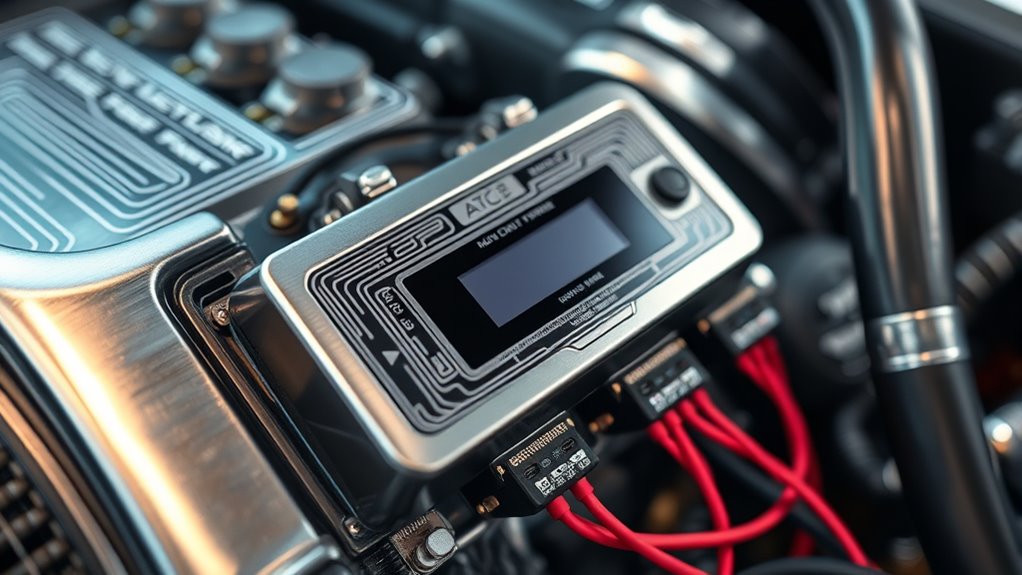

Tuning hybrid engine control units requires understanding their complex management system, including the Battery Management System (BMS), calibration maps, and control algorithms. You must balance improving performance and efficiency without compromising safety or battery longevity. Many ECUs have safeguards that limit adjustments, so precise modifications and specialized tools are essential. If you’re aware of these factors, you can access hidden potential, ensuring seamless power mode shifts and peak system operation—more vital insights await as you explore further.
Key Takeaways
- Understand the BMS’s role in monitoring and protecting the battery to avoid damage during tuning.
- Recognize that calibration maps influence charging thresholds, regenerative braking, and power distribution strategies.
- Be aware that ECU firmware is often protected, requiring specialized tools for safe access and modifications.
- Fine-tune control algorithms for seamless mode transitions between electric and gasoline power sources.
- Prioritize safety protocols to prevent system malfunctions, battery damage, or safety hazards during tuning efforts.

Have you ever wondered how hybrid vehicles seamlessly switch between gasoline and electric power? It all comes down to the hybrid engine control unit (ECU), a sophisticated system that manages multiple components to optimize performance, efficiency, and safety. As a tuner, understanding how the ECU handles battery management and software calibration is essential for making effective modifications. The battery management system (BMS) is at the heart of this process, continuously monitoring the state of charge, voltage levels, temperature, and overall health of the battery pack. It guarantees that the battery operates within safe parameters, preventing overcharging or deep discharging that could damage the cells. When tuning a hybrid, you need to ponder how changes might impact this delicate balance. Altering the software calibration can influence how aggressively the system manages power flow between the engine, electric motor, and battery. For example, modifying the calibration parameters might improve responsiveness or power output, but it also risks upsetting the battery’s longevity if not done carefully. Many hybrid ECUs feature built-in safeguards that limit changes to battery management settings, so a deep understanding of the software architecture is crucial. You’ll want to analyze the calibration maps and parameters, understanding how they control battery charging thresholds, regenerative braking settings, and power distribution strategies. Adjustments should be made with precision, guaranteeing that the modifications do not compromise safety or reliability. Software calibration also involves tweaking the algorithms that govern the hybrid system’s transitions between electric and gasoline modes. These algorithms dictate when the vehicle switches power sources based on driving conditions, battery state, and driver inputs. Fine-tuning these parameters can yield smoother operation, better fuel economy, or increased power, but it requires a thorough understanding of how the ECU interprets sensor data and executes control commands. Additionally, understanding the role of AI in Education can help in designing more intuitive tuning interfaces or diagnostic tools for hybrid ECUs. These tools can assist tuners in diagnosing issues or optimizing performance more efficiently. The ECU’s firmware is often locked or protected, requiring specialized tools and software to access and modify its calibration data. Tuning a hybrid ECU isn’t just about performance; it’s about respecting the system’s complexity and guaranteeing that any changes harmonize with the vehicle’s safety protocols. When done correctly, it can unveil hidden potential, improve efficiency, and enhance driving experience. However, it’s essential to proceed with caution, knowing that improper tuning can lead to reduced battery life, system malfunctions, or even safety hazards. As you explore modifications, keep in mind that the hybrid ECU is a finely balanced system, where battery management and software calibration work together seamlessly to deliver a smooth, efficient, and safe ride.
Frequently Asked Questions
How Do Hybrid ECUS Differ From Traditional Engine Control Units?
Hybrid ECUs differ from traditional engine control units by managing both the internal combustion engine and the electric motor, focusing heavily on battery management and software integration. You need to understand how these systems coordinate power delivery, optimize energy use, and maintain battery health. Unlike traditional ECUs, hybrid units require tuning that considers electrical components, software algorithms, and regenerative braking to maximize efficiency and performance effectively.
What Are the Risks of Tuning Hybrid Engine Control Units?
Tuning hybrid engine control units is like walking a tightrope over a volcano—you risk major damage. You could cause battery degradation, reducing your hybrid’s lifespan, or software instability, leading to unpredictable performance or failure. Pushing limits without proper expertise might seem tempting, but it’s a gamble that can cost you thousands in repairs and replacements. Always proceed carefully, understanding these risks before tweaking hybrid ECUs.
Can Hybrid ECUS Be Tuned Without Voiding the Warranty?
You can tune hybrid ECUs without voiding the warranty, but it depends on your approach. Warranty considerations are essential; some manufacturers allow limited modifications if you use approved tuner techniques. To avoid issues, work with experienced tuners who understand hybrid systems and follow manufacturer guidelines. Keep detailed records of your tuning process, and avoid aggressive modifications that could be flagged during warranty claims.
Are There Specific Tools Required to Tune Hybrid ECUS?
Yes, you need specific tools to tune hybrid ECUs. You’ll require advanced diagnostics equipment to access and modify the ECU settings safely. Additionally, ensuring software compatibility is vital to avoid damaging the system or voiding warranties. These tools help you communicate effectively with the hybrid ECU, perform precise tuning, and monitor system responses. Investing in the right hardware and software is essential for a successful and safe tuning process.
How Does Tuning Affect the Longevity of Hybrid Powertrains?
Tuning your hybrid powertrain is like steering a delicate ship—improper adjustments can strain the engine and battery management systems, risking longevity. By optimizing thermal stability and battery management, you guarantee smoother sailing and prevent overheating or premature wear. Responsible tuning balances performance with durability, allowing your hybrid to run efficiently without sacrificing its lifespan. Keep the system in harmony, and your powertrain will reward you with years of dependable performance.
Conclusion
In conclusion, mastering hybrid engine control units means more than just modifying machines — it’s about mindful tuning and meticulous understanding. By balancing brilliance with caution, you protect your powertrain and prolong performance. Remember, responsible refinement fuels reliability and reigns in risks. So, stay sharp, stay savvy, and steer your skills steadily, ensuring your hybrid’s harmony and health. With careful consideration, your tuning journey transforms into a triumph of technique and trust.