
Regenerative braking in EVs and hybrids reduces wear on your brake pads and rotors by taking over during most deceleration, converting kinetic energy into electrical energy to recharge the battery. This means your friction brakes are used less often, which helps extend their lifespan. However, they still engage during sudden stops or when the battery is full. If you want to learn how regular maintenance stays essential despite less wear, keep exploring this topic.
Key Takeaways
- Regenerative braking reduces friction brake engagement, decreasing the wear on pads and rotors during normal driving.
- Friction brakes are still essential for emergency stops and when the battery can’t accept more energy.
- Less frequent use of friction brakes can lead to overlooked wear issues, requiring regular inspections.
- Extended brake component lifespan occurs due to regenerative braking, but routine maintenance remains necessary.
- Proper upkeep ensures reliable braking performance and safety despite changes in wear patterns caused by regen.

Electric and hybrid vehicles rely on specialized braking systems to guarantee safety and efficiency. Unlike traditional cars, these vehicles often incorporate regenerative braking, a technology that captures kinetic energy during deceleration and converts it into electrical energy to recharge the battery. This process reduces reliance on conventional friction brakes, but it also impacts how you should approach brake maintenance and wear. Understanding how regenerative braking influences pad and rotor wear is essential to keeping these systems functioning at their best and extending their lifespan.
Regenerative braking reduces traditional brake wear but still requires regular maintenance for safety and efficiency.
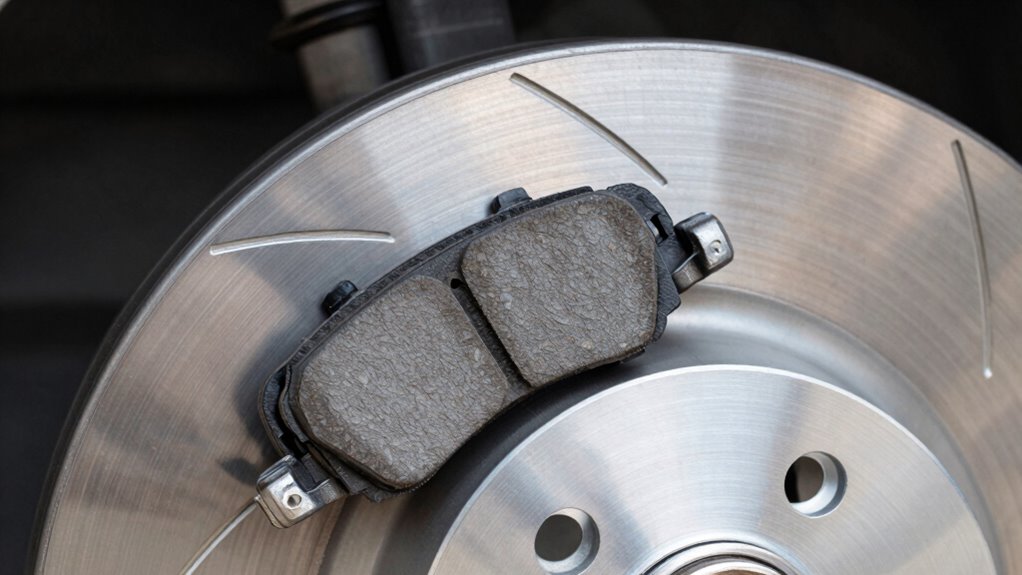
When you use regenerative braking, you’ll notice that the traditional brake components aren’t engaged as often or as aggressively as in conventional vehicles. Instead, the electric motor acts as a generator, slowing the vehicle and converting energy. This means the brake pads and rotors experience less frictional stress during normal deceleration, which can lead to reduced wear over time. However, it’s important to remember that the friction brakes still play a key role, especially during sudden stops or when the battery is fully charged and can’t accept more energy. Regular brake maintenance becomes necessary because, even with regenerative braking, the pads and rotors are still subject to wear and tear. Neglecting routine inspections can lead to uneven pad wear or rotor damage, compromising safety and performance.
Since regenerative braking decreases the frequency of traditional brake use, you might think brake maintenance isn’t as essential. But in reality, it’s just as important to check and replace brake components when necessary. Over time, brake pads can develop uneven wear patterns, especially if the vehicle frequently switches between regenerative and friction braking modes. Rotor surfaces can also become glazed or develop hot spots if the brakes are not inspected regularly. Maintaining a schedule for brake checks ensures you catch any issues early, preventing costly repairs down the line. Plus, a well-maintained braking system guarantees that when you need the friction brakes the most—say, during an emergency stop—they’ll respond reliably. Additionally, brake system components may still require replacement due to normal aging, regardless of regenerative braking.
In essence, regenerative braking is a game-changer for how often and how hard your brakes work. It extends the life of brake pads and rotors but doesn’t eliminate the need for proper brake maintenance. By staying vigilant with regular inspections, you ensure that both the electric and friction components work together seamlessly. This not only prolongs the lifespan of your braking system but also keeps you safe on the road. Remember, even with innovative tech like regenerative braking, the fundamentals of brake care remain the same: consistent maintenance, timely replacements, and attentive inspections are key to keeping your EV or hybrid running smoothly and safely.
Frequently Asked Questions
How Often Should Regen Brake Systems Be Inspected?
You should inspect your regen brake system every 12,000 to 15,000 miles or during regular service intervals. Check brake fluid compatibility to verify proper operation, and monitor the regen system durability, as it can affect overall brake performance. Regular inspections help identify any wear on pads and rotors caused by regen, keeping your brakes reliable and safe. If you notice any unusual noises or reduced braking efficiency, get them checked sooner.
Are There Specific Brake Fluids for EVS and Hybrids?
Yes, there are specific brake fluids for EVs and hybrids to guarantee fluid compatibility and peak performance. You should always check your vehicle’s manual for the recommended brake fluid type, often DOT 3, DOT 4, or DOT 5. Using the correct fluid prevents corrosion, maintains braking efficiency, and avoids damage to sensitive components. Regularly inspecting and replacing your brake fluid as specified helps keep your brake system in top condition.
Can Regen Braking Cause Battery Overheating?
Think of your EV’s battery like a car’s engine cooling system—if it overheats, everything struggles. Regen braking can cause battery overheating if thermal management isn’t effective, especially during heavy or repeated deceleration. Proper battery cooling is vital, as it prevents thermal runaway and maintains performance. You should monitor the battery temperature gauge and make certain your vehicle’s thermal management system is functioning well, especially during aggressive driving.
Do Different EV Models Have Varying Regen Braking Efficiencies?
Yes, different EV models have varying regenerative efficiencies due to design and technology differences. You’ll notice that some models maximize regen to slow the car quickly, while others rely more on traditional braking. Model variations, such as battery capacity, inverter design, and software tuning, influence how effectively regen recovers energy. This means your driving experience and energy recuperation can differ markedly between EVs, impacting overall efficiency and braking feel.
How Does Regen Braking Impact Traditional Brake Maintenance Schedules?
You might find that regenerative braking extends your brake pad longevity by up to 50%, according to recent studies. This means you’ll need less frequent maintenance, as brake pads experience less wear. However, rotor wear patterns can become uneven, especially if regen is frequently used at high deceleration levels. Regular inspections are still essential, but overall, regen braking reduces the need for immediate brake component replacements, saving you time and money.
Conclusion
Remember, every action has a reaction. Regenerative braking in EVs and hybrids reduces wear on pads and rotors, saving you money and maintenance time. While it’s a game-changer, don’t forget to stay attentive to traditional braking when needed. Keep in mind that slow and steady wins the race, so embrace the benefits of regen but always prioritize safety. Overall, understanding how regen impacts wear helps you drive smarter and keep your brakes in top shape.