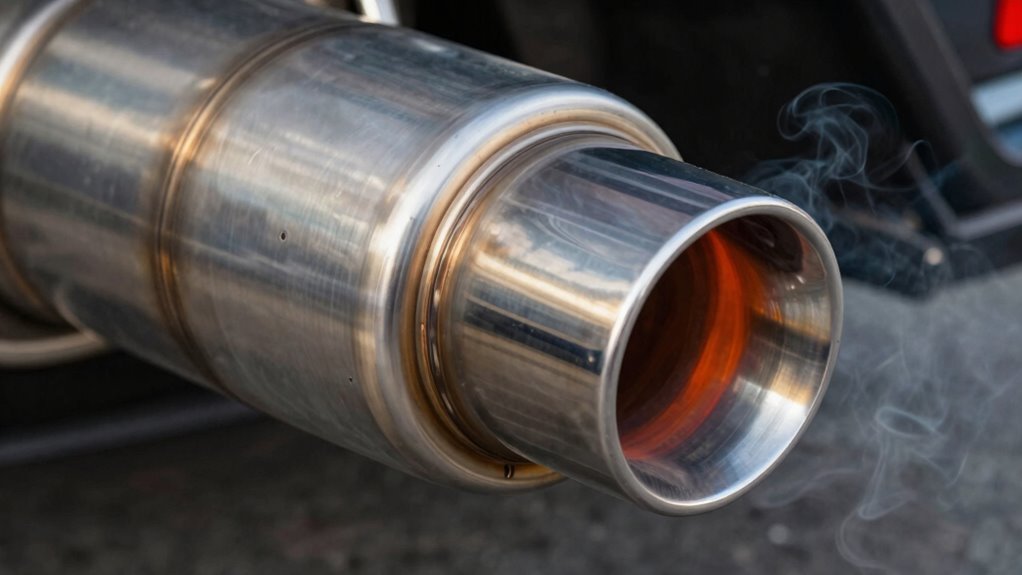

Changing your exhaust diameter does more than just alter the sound; it directly impacts your engine’s performance, emissions, and long-term health. A smaller pipe can cause back-up and increase exhaust temperature, while a larger one might reduce torque and make emissions harder to control. Proper sizing guarantees smooth flow, better efficiency, and reliable sensor feedback, supporting your engine’s well-being. If you want to understand how these factors interconnect, keep exploring the details behind exhaust system design.

Get business pricing on garage and car supplies
- Business-only prices and quantity discounts
- Tax-exempt purchasing
- Multiple users, one account, clear invoices
Key Takeaways
- Exhaust diameter influences engine performance, fuel efficiency, and torque, not just the sound produced.
- Changes in exhaust size affect emissions control and sensor readings, impacting environmental compliance.
- Larger or smaller exhaust diameters alter exhaust flow velocity, affecting engine back pressure and overall health.
- Proper exhaust sizing ensures optimal emission system function and prevents sensor-related issues.
- Exhaust diameter adjustments can modify back pressure, influencing tuning, mechanical longevity, and long-term engine performance.

Adjusting the exhaust diameter can substantially impact your vehicle’s performance. When you change the size of your exhaust pipe, you’re not just affecting how loud your car sounds; you’re also influencing how well your engine runs and how efficiently it manages emissions. This is where engine tuning plays an essential role. A properly sized exhaust ensures ideal flow of gases, which can improve power output and fuel efficiency. If the diameter is too small, exhaust gases back up, creating resistance that hampers engine performance. Conversely, if it’s too large, the exhaust gases may flow too freely, reducing the exhaust velocity and negatively affecting torque, especially at lower RPMs. Understanding how to balance these factors is key for achieving the desired performance.
Beyond just performance, the exhaust diameter also influences emission control. Modern vehicles are equipped with sensors and catalytic converters that monitor and reduce harmful emissions. When you alter the exhaust size, these systems may respond differently, potentially throwing off the delicate balance they maintain to meet environmental standards. An exhaust that’s too large might cause exhaust gases to linger longer in the catalytic converter, decreasing its efficiency. On the other hand, a smaller diameter can increase exhaust temperature, which might improve some emission control aspects but at the expense of engine performance. This interplay highlights why proper sizing isn’t just about sound or aesthetics; it’s about maintaining compliance with emission regulations and protecting the environment.
Furthermore, changing the exhaust diameter can affect how your vehicle engages in emission control strategies like closed-loop operation, where sensors continuously adjust fuel mixture based on exhaust feedback. A mismatch in exhaust size can cause sensor readings to fluctuate unpredictably or lead to increased emissions. This can trigger check engine lights or even cause your vehicle to fail emissions testing. Proper exhaust sizing contributes to the stability of these systems by ensuring consistent sensor readings and optimal exhaust flow. Additionally, improper sizing can lead to increased back pressure, which can further complicate engine tuning and emissions management. Recognizing the relationship between exhaust flow, engine tuning, and emission systems is crucial for ensuring your vehicle operates efficiently and within environmental standards. Properly tuning your exhaust system is also essential for maintaining overall engine health, as unbalanced exhaust flow can cause long-term mechanical issues. That’s why tuning the exhaust system isn’t a DIY job—unless you understand the intricate relationship between exhaust flow, engine tuning, and emission systems, you risk creating more problems than solutions.
A thorough understanding of exhaust system design can help you make informed modifications that improve performance without compromising environmental compliance.
As an affiliate, we earn on qualifying purchases.
Frequently Asked Questions
How Does Exhaust Diameter Affect Fuel Efficiency?
A larger exhaust diameter can improve fuel efficiency by allowing exhaust gases to flow more freely, reducing back pressure. When exhaust flow is optimized, your engine doesn’t need to work as hard, which conserves fuel. Conversely, too small a diameter restricts flow, making your engine work harder and decreasing fuel economy. Finding the right exhaust size balances sound and performance while maximizing fuel efficiency.
Can Changing Exhaust Diameter Improve Engine Power?
Changing exhaust diameter can boost your engine power, making it roar like a beast on the highway. When you widen or narrow the exhaust, you optimize airflow, which enhances performance and response. It not only increases horsepower but also impacts exhaust noise, giving your ride a more aggressive sound. Plus, aesthetic modifications like a larger tip add style, making your car stand out even more. Your engine’s potential is revealed with the right exhaust size.
Is Larger Exhaust Diameter Better for All Vehicle Types?
A larger exhaust diameter isn’t always better for all vehicle types. While it can reduce exhaust noise and improve aesthetic appeal, it may decrease back pressure, negatively affecting engine performance in some cars. For smaller engines or daily drivers, a bigger diameter might cause power loss. You should consider your vehicle’s specific needs, engine size, and driving style before opting for a larger exhaust, balancing sound, look, and function.
How Does Exhaust Diameter Influence Emissions?
Exhaust diameter influences emissions like a funnel directs water, guiding pollutants out efficiently. A larger diameter can reduce backpressure, helping the engine burn fuel cleaner, but if too big, it might increase emissions by allowing unburned gases to escape. A well-designed exhaust, including a catalytic converter, guarantees you meet emission regulations while optimizing performance. Proper sizing balances emissions control and engine efficiency, making your vehicle cleaner and compliant with environmental standards.
What Are the Risks of Modifying Exhaust Diameter?
Modifying exhaust diameter can introduce risks like increased backpressure or improper flow, which may harm your engine’s performance. You might face installation challenges, especially if the exhaust material isn’t compatible or if the new size doesn’t fit your vehicle properly. Larger or smaller diameters can also cause unexpected emissions issues. Always guarantee your modifications are done carefully, considering both exhaust material quality and proper installation to avoid costly damage.
Conclusion
So, next time you think about widening or narrowing your exhaust, remember it’s not just a tuning trick—it’s like adjusting the heartbeat of your engine. Changing the diameter sends ripples through performance, sound, and efficiency, shaping your ride in ways you might not see at first glance. Your exhaust is the voice of your car, and tweaking it can turn a whisper into a roar or a hum into a symphony—making every drive a story worth telling.
Fall Picks
fall essentials
As an affiliate, we earn on qualifying purchases.