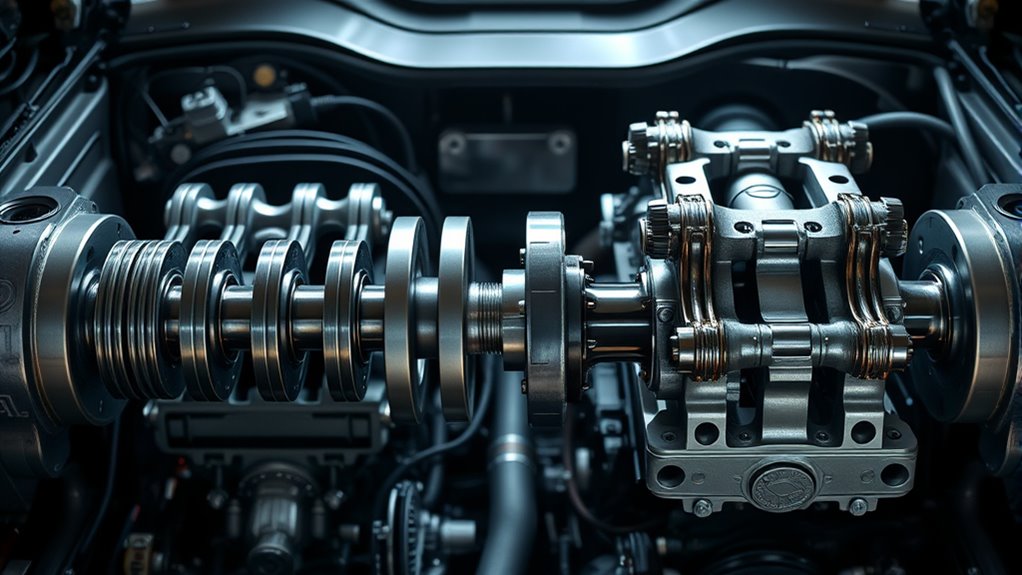

If you prefer a sharper, more aggressive engine sound and a lively driving feel, a flat-plane crankshaft suits you best. It produces higher vibrations and a high-revving tone favored in racing and sports cars. Conversely, if smoothness, comfort, and quieter operation matter more, a cross-plane crankshaft offers a refined experience with less vibration. Understanding these differences can help you choose the right setup for your vehicle’s performance and character—continue exploring to learn more about their unique impacts.
Key Takeaways
- Flat-plane crankshafts produce a sharper, more aggressive engine sound and high-revving performance.
- Cross-plane crankshafts generate a smoother, quieter engine sound with enhanced ride comfort.
- Flat-plane designs offer increased throttle response and liveliness, ideal for high-performance applications.
- Cross-plane crankshafts prioritize smoothness and reliability, suitable for daily driving and luxury vehicles.
- Manufacturing complexity and cost are generally higher for cross-plane crankshafts due to intricate design requirements.
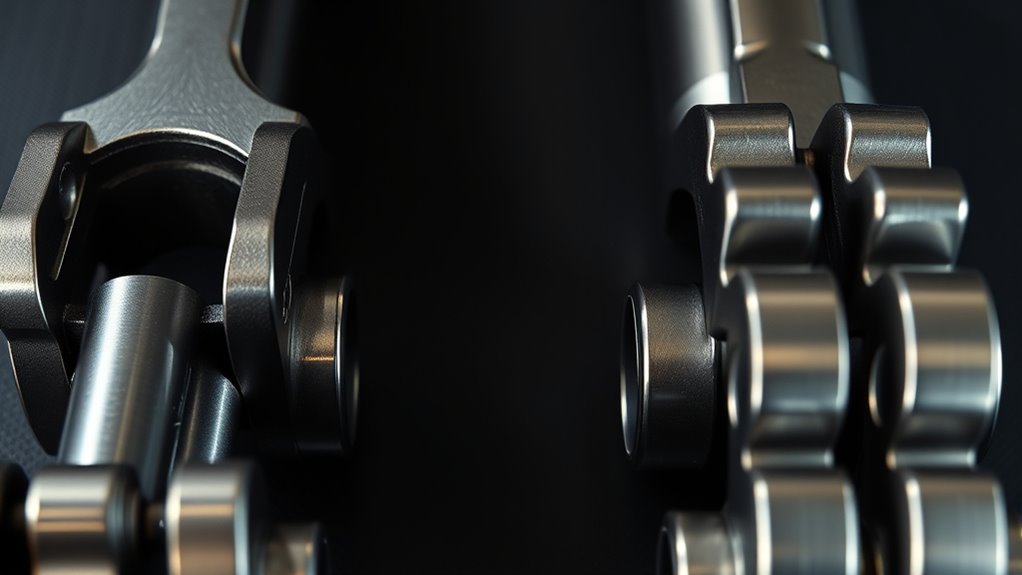
Have you ever wondered how the design of a crankshaft influences an engine’s performance and sound? The difference between flat-plane and cross-plane crankshafts is fundamental in shaping how an engine runs and sounds, and understanding this can help you grasp why certain cars feel and sound a specific way. One of the major factors affected by crankshaft design is engine vibration. Flat-plane crankshafts tend to produce more vibrations because their design places the crank throws 180 degrees apart, which results in a more even firing order. This increased vibration isn’t necessarily a flaw; in fact, it can enhance throttle response and make the engine feel more lively. However, it also means that the engine may require more robust components or additional balancing to manage the vibrations effectively. Conversely, cross-plane crankshafts, with their 90-degree offset between the crank throws, generate less vibration. This design naturally balances out the forces inside the engine, leading to a smoother operation that’s easier on the drivetrain and reduces stress on engine components. As a result, engines with cross-plane cranks often deliver a more refined and comfortable driving experience, especially at lower RPMs.
But it’s not just about how the engine feels and sounds; manufacturing complexity plays a significant role as well. Crafting a flat-plane crankshaft is generally less complex because of its simpler, symmetrical design. This simplicity can translate into lower manufacturing costs and easier customization, which is why many high-performance and racing engines prefer it. In contrast, a cross-plane crankshaft requires more precise machining and assembly because of its intricate configuration. The offset throws and additional balancing considerations make it more challenging to produce. This increased manufacturing complexity can lead to higher costs and longer production times, but it also results in a more balanced and durable crankshaft, suitable for luxury and street-driven vehicles where smoothness is prioritized.
Ultimately, your choice between flat-plane and cross-plane crankshafts depends on what you value most — raw performance and aggressive sound versus smoothness and ride comfort. Flat-plane designs favor enthusiasts seeking that sharp, high-revving experience, while cross-plane configurations appeal to those wanting a refined, quiet, and reliable engine. Both designs have their strengths and trade-offs, but understanding their impact on engine vibration and manufacturing complexity helps you appreciate the engineering behind each.
Frequently Asked Questions
How Do Crankshaft Designs Affect Fuel Efficiency?
Your choice of crankshaft design impacts fuel economy and power consistency. Flat-plane crankshafts often deliver quicker throttle response, which can improve fuel efficiency during spirited driving. Cross-plane crankshafts provide smoother power delivery, helping you maintain steady fuel consumption. Ultimately, a well-suited crankshaft design balances power output and efficiency, ensuring you get the best fuel economy while maintaining consistent performance, especially during long drives or repeated acceleration.
Are There Specific Racing Applications Better Suited for One Type?
You’ll find flat-plane crankshafts are perfect for high-revving race cars that crave explosive power and razor-sharp throttle response, making them ideal for track setups. Cross-plane cranks excel in street performance, delivering smoothness and a deep rumble that turns heads. If you’re aiming for blistering speed on the race circuit, flat-plane is your go-to. For everyday driving with a touch of muscle, cross-plane keeps things refined and powerful.
What Maintenance Differences Exist Between Flat-Plane and Cross-Plane Cranks?
You’ll notice that flat-plane crankshafts require more frequent lubrication checks due to their high-revving nature, which can lead to increased heat and wear. Balancing procedures are also more critical with flat-plane setups since uneven rotation can cause vibrations. Cross-plane cranks generally need less maintenance in these areas, thanks to their smoother operation, but you should still regularly inspect lubrication and balance to guarantee peak performance and longevity.
How Does Crankshaft Design Influence Emissions?
Crankshaft design directly impacts emissions and engine noise. Flat-plane cranks tend to produce more engine noise due to their rapid firing intervals, but they often emit fewer exhaust emissions because of more efficient combustion. Cross-plane cranks generate smoother sounds and quieter operation, yet might produce higher emissions because of less suitable combustion timing. Your choice influences how cleanly your engine runs and how loudly it sounds on the road.
Can a Car Be Converted From One Crankshaft Type to Another?
Yes, you can convert your car from one crankshaft type to another through an engine conversion involving a crankshaft swap. However, it’s a complex process that requires significant modifications, including adjusting the engine block, balancing components, and possibly updating the exhaust system. You’ll need expert assistance to guarantee the new crankshaft fits properly and functions correctly, making the swap a worthwhile but intricate upgrade.
Conclusion
Choosing between a flat-plane and cross-plane crankshaft is like selecting between raw excitement and smooth confidence. The flat-plane’s sharp, aggressive sound ignites adrenaline, while the cross-plane’s refined tone offers seamless performance. Both have their unique appeal—one’s a roaring beast, the other a polished symphony. Your choice shapes not just how your engine sounds but how it feels on the road. So, do you crave the thrill of the wild or the comfort of the dependable? The decision is yours.