
Effective heat management is essential for ensuring your system’s reliability and longevity. If temperatures get too high, components can overheat, fail, or degrade, leading to costly repairs and downtime. Proper cooling solutions, like fans or liquid cooling, help maintain safe temperatures and prevent thermal stress. Addressing heat issues proactively keeps your device operating smoothly and efficiently. Keep exploring to discover how proper heat management can safeguard your equipment and boost performance in the long run.
Key Takeaways
- Effective heat management prevents overheating, safeguarding device components and ensuring consistent performance.
- Proper cooling extends equipment lifespan by reducing thermal stress and preventing heat-related damage.
- Maintaining optimal temperatures minimizes system failures and costly repairs.
- Thermal regulation enhances efficiency by enabling devices to operate at peak performance levels.
- Regular monitoring and maintenance of cooling systems ensure reliable operation and early detection of potential issues.
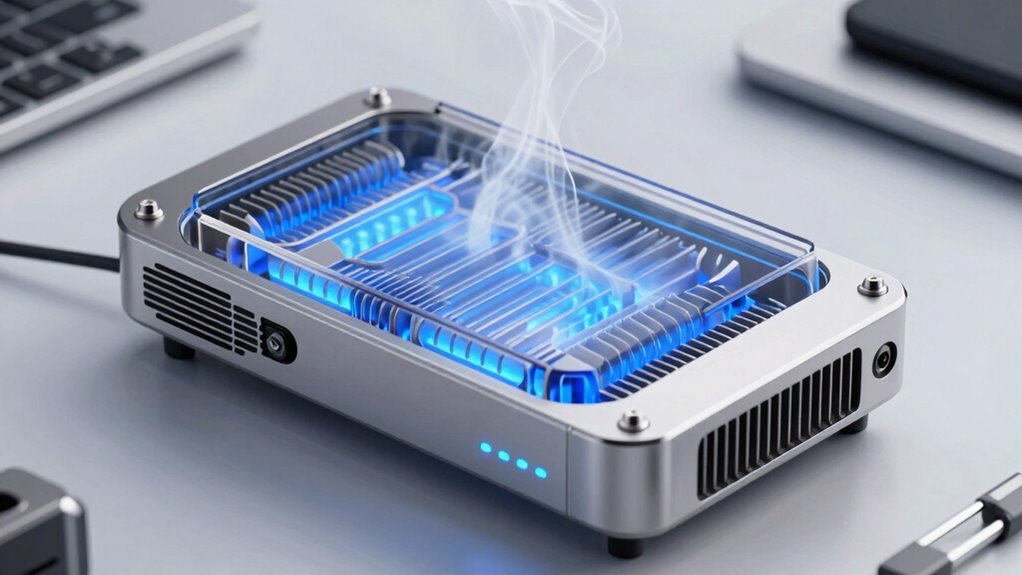
Effective heat management is essential for maintaining the reliability and longevity of electronic devices and industrial systems. When components generate heat during operation, it’s crucial to control that heat efficiently to prevent damage and ensure optimal performance. Without proper thermal regulation, devices can overheat, leading to system failures, reduced lifespan, and costly repairs. By addressing heat effectively, you can keep your equipment running smoothly and extend its operational life.
Effective heat management ensures device reliability, prevents damage, and extends operational lifespan through proper thermal regulation and cooling solutions.
At the core of heat management lies thermal regulation, which involves controlling temperature levels to keep devices within safe operating ranges. This process requires understanding how heat moves through components, and then deploying suitable cooling technologies to dissipate that heat. Cooling technologies come in many forms—fans, heat sinks, liquid cooling, and advanced thermal interface materials—all designed to transfer heat away from critical parts rapidly. Your choice depends on the specific application, power density, and environmental constraints. For instance, high-performance computing setups often rely on liquid cooling to handle intense heat loads, while simpler electronics might only need passive heat sinks.
Implementing effective cooling technologies is more than just attaching a fan or a heat sink. It’s about designing a comprehensive thermal management system that accounts for heat generation patterns and ambient conditions. Proper airflow management, for example, ensures hot air is expelled efficiently, while cold air is directed precisely where it’s needed. You should also consider the placement of components, making sure heat-sensitive parts are positioned away from heat sources. Additionally, using thermal interface materials can improve heat transfer between components and cooling devices, further enhancing thermal regulation. Effective thermal regulation is essential for preventing overheating and maintaining consistent performance. Proper design and maintenance of these systems can significantly improve thermal efficiency**** and reduce energy consumption. Regular monitoring of temperature levels can also help identify potential issues before they lead to failure.
Failing to manage heat properly can cause your system’s performance to degrade quickly. Overheated components tend to slow down, malfunction, or even fail completely. In industrial settings, this can translate to costly downtime and maintenance. Therefore, investing in the right cooling technologies and maintaining them is crucial. Regular inspections, cleaning, and upgrades can keep thermal regulation systems operating at peak efficiency. This proactive approach minimizes the risk of thermal stress, which can compromise electronic integrity over time.
In essence, your ability to control heat through effective thermal regulation and cooling technologies is the backbone of reliable performance. It’s not just about preventing failures but also about maximizing efficiency and lifespan. When you prioritize robust heat management, you ensure your devices and systems operate consistently, reduce maintenance costs, and enjoy peace of mind knowing your equipment is protected against thermal-related issues. Understanding heat transfer mechanisms further enhances your capacity to develop optimal cooling solutions tailored to your specific needs.
As an affiliate, we earn on qualifying purchases.
Frequently Asked Questions
How Does Heat Affect Electronic Component Lifespan?
Heat substantially impacts your electronic components’ lifespan by causing thermal interface degradation and stress from heat cycling. As temperatures rise, thermal interfaces can break down, reducing heat transfer efficiency. Repeated heat cycling causes expansion and contraction, leading to material fatigue and potential failure over time. Managing heat effectively minimizes these effects, ensuring your components last longer and perform reliably. Proper heat management is essential to maintain ideal operation and extend the lifespan of your electronics.
What Are the Latest Innovations in Heat Dissipation?
They say “a chain is only as strong as its weakest link,” and that’s true for heat dissipation. The latest innovations focus on advanced thermal interface materials that improve cooling efficiency, such as graphene-based solutions and phase-change materials. These enhancements allow heat to transfer more rapidly, preventing overheating and boosting device reliability. By optimizing thermal pathways, you guarantee your electronic components perform at their best for longer periods.
Can Improper Heat Management Cause System Failures?
Yes, improper heat management can cause system failures. When thermal insulation isn’t effective or heat transfer isn’t properly managed, components can overheat, leading to malfunctions or damage. Without proper cooling, heat builds up, risking thermal runaway or short circuits. Ensuring efficient heat transfer and adequate thermal insulation helps maintain ideal temperatures, preventing failures and prolonging system lifespan. Good heat management is essential for reliable, safe operation.
How Often Should Heat Management Systems Be Maintained?
You should perform heat management system maintenance at least every six months to guarantee peak performance. Regular inspection and cleaning help prevent dust buildup, which can impair cooling efficiency. Adjustments or replacements might be needed based on your system’s usage and environment. Consistent maintenance frequency directly impacts system longevity, reducing the risk of overheating and failures, ultimately keeping your equipment reliable and running smoothly over time.
What Are Cost-Effective Heat Management Solutions?
You can save costs by choosing thermal insulation and passive cooling methods. Thermal insulation helps reduce heat transfer, keeping equipment cooler without additional energy use. Passive cooling techniques, like natural ventilation or shading, lower temperatures naturally, minimizing reliance on expensive active cooling systems. These solutions are budget-friendly, easy to implement, and improve reliability, ensuring your systems operate efficiently without excessive maintenance or high energy bills.
Conclusion
You now see how essential heat management is for reliable performance — it’s the backbone that keeps your systems running smoothly. Did you know that overheating causes nearly 60% of electronic failures? By implementing effective cooling strategies, you can prevent costly downtime and extend your equipment’s lifespan. So, don’t overlook this critical aspect; investing in proper heat management isn’t just smart — it’s indispensable for long-term success. Stay cool, stay reliable!