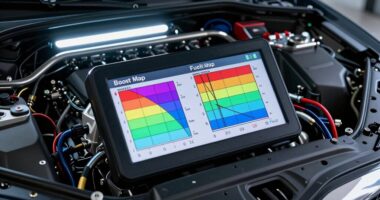
To prevent misfires when boosting your engine, choosing the right spark plug heat range is key. If your engine runs hotter under boost, you’ll likely need colder plugs to prevent pre-ignition and fouling. On the other hand, too cold a plug may cause fouling at lower loads. Proper selection keeps the spark plugs within their ideal temperature range, helping prevent costly issues. Keep exploring how to fine-tune your setup for reliable power and performance.
Key Takeaways
- Use colder spark plugs to handle increased combustion temperatures in boosted engines.
- Incorrect heat range can cause misfires due to fouling or pre-ignition, especially in turbocharged setups.
- Consult your vehicle manual or mechanic to select the proper heat range tailored for boosted conditions.
- Upgrading to the right heat range is an affordable, effective fix (~$40) to prevent misfires and improve reliability.
- Proper material choice (e.g., iridium, platinum) enhances heat management and prolongs spark plug life under boost.
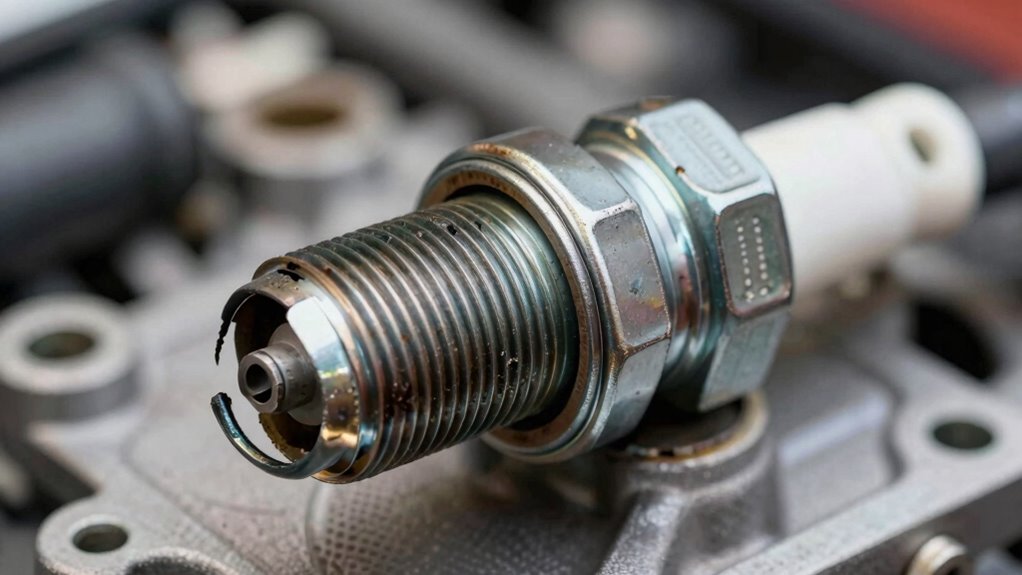
Understanding the heat range of a spark plug is essential for ideal engine performance and longevity. The heat range determines how quickly the spark plug’s tip dissipates heat, which directly influences how well your engine runs and how long the spark plug lasts. When selecting a spark plug, you need to consider the spark plug material and the heat range selection carefully. Different materials, like copper, iridium, or platinum, have varying thermal properties that affect how they handle heat. Copper plugs, for example, have excellent thermal conductivity, allowing them to dissipate heat quickly, making them suitable for high-performance or turbocharged engines. Iridium and platinum plugs, on the other hand, tend to retain heat longer, which can be beneficial for engines that run at lower speeds or under lighter loads.
Choosing the right spark plug material and heat range is vital for optimal engine performance and longevity.
Choosing the right heat range is about matching your engine’s specific needs. If your spark plug runs too hot, the tip can overheat, leading to pre-ignition or engine knocking, which can damage your engine over time. Conversely, a spark plug that runs too cold won’t reach the optimal temperature to burn off carbon deposits, resulting in fouling, misfires, and reduced performance. That’s why proper heat range selection is crucial; it helps keep the spark plug operating within the ideal temperature window for your engine’s conditions. Proper selection can also help prevent issues related to spark plug fouling and premature wear.
When you’re upgrading your boost levels or modifying your engine, you might notice more misfires or rough idling. This is often related to incorrect spark plug heat range. If the spark plug is too hot for your boosted setup, it can cause knocking or pre-ignition, especially under heavy load. If it’s too cold, carbon buildup and fouling are common issues, leading to misfires that cost you power and fuel efficiency. To fix this, you need to select a spark plug with a heat range that matches your altered engine conditions. Often, this means moving to a colder plug to handle increased combustion temperatures caused by boost.
The key to avoiding misfires and ensuring optimal performance is to understand your engine’s demands and select a spark plug material and heat range accordingly. It’s not just about installing the most expensive plug; it’s about choosing one that fits your vehicle’s specific operating conditions. When in doubt, consulting your vehicle’s manual or a trusted mechanic can help you find the right spark plug material and heat range. Making this simple adjustment can be the $40 fix that dramatically improves your engine’s reliability, reduces misfires, and extends the life of your spark plugs, especially when boosting your engine’s power.
As an affiliate, we earn on qualifying purchases.
Frequently Asked Questions
Can Changing the Heat Range Fix All Misfire Issues?
Changing the heat range can fix some misfire issues, but it isn’t a guaranteed fix for all. If your ignition timing is off or you’re using low fuel octane, misfires may persist despite a hotter or colder plug. Proper diagnosis involves checking ignition timing and fuel quality alongside spark plug selection. Adjusting these factors together can improve performance and reduce misfires effectively, but it’s not a one-size-fits-all solution.
How Often Should Spark Plugs Be Replaced When Adjusting Heat Range?
Think of spark plug lifespan as a journey that needs regular care. When adjusting heat range, you should replace your spark plugs every 30,000 to 50,000 miles to guarantee ideal heat range compatibility. This keeps your engine running smoothly and prevents misfires. Regular inspections help you catch wear early, so you can maintain peak performance and avoid costly issues down the road. Staying attentive to your spark plugs is the key to a healthy engine.
Does a Colder Heat Range Improve Fuel Economy?
Choosing a colder spark plug heat range can improve fuel economy if your engine runs hotter, as it helps prevent fouling and maintains ideal combustion. However, it may reduce spark plug longevity because the colder plug wears faster under high temperatures. You should match the heat range to your engine’s temperature to balance fuel efficiency and durability, ensuring your engine runs smoothly without misfires or excessive wear.
Are There Risks in Choosing a Too-Hot Spark Plug?
A word to the wise: don’t bite off more than you can chew. Choosing a too-hot spark plug can cause pre-ignition, risking engine damage, and may reduce spark plug longevity. It can also disrupt ignition timing, leading to misfires and poor performance. Always match your spark plug heat range to your engine’s needs, ensuring ideal combustion and avoiding costly repairs down the line.
How Do I Know if My Boost Level Requires a Different Heat Range?
You can determine if your boost level needs a different heat range by monitoring your engine modifications and boost pressure. Higher boost pressure often generates more heat, so you might need a colder spark plug to prevent misfires and fouling. Consult your vehicle’s specifications or a professional tuner to match your engine modifications with the appropriate heat range, ensuring ideal performance and avoiding potential damage.
Conclusion
Choosing the right spark plug heat range can make all the difference in preventing misfires and optimizing your boost. Don’t just settle for generic options—your engine deserves the best fit. Are you willing to risk performance and reliability for a cheap fix? Investing in the correct heat range isn’t just about saving money; it’s about ensuring your ride runs smoothly and efficiently. After all, isn’t your engine worth the attention to detail?