High-flow catalytic converters can boost your vehicle’s performance by improving exhaust flow and increasing horsepower, all while meeting emissions standards if you choose certified units. It’s vital to guarantee proper installation and verify your model’s compatibility to avoid leaks or legal issues. Many regions require lawful, certified converters for street use, so checking local laws is essential. Keep exploring to learn how to make the best, compliant upgrade for your vehicle.
Key Takeaways
- High-flow catalytic converters improve exhaust flow, boosting horsepower and torque while maintaining emission standards.
- Proper installation and compatibility are essential to prevent leaks and ensure optimal performance.
- Verify that the converter is certified for street use to comply with local emissions laws.
- Certified units balance performance gains with environmental responsibility, avoiding legal issues.
- Professional guidance and sourcing from trusted vendors help ensure legality and maximize benefits.
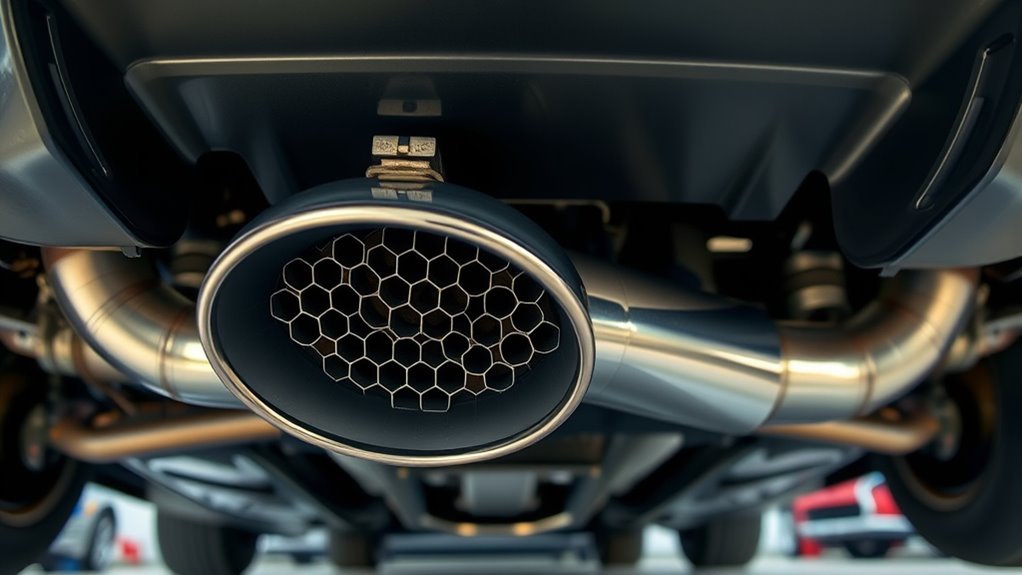
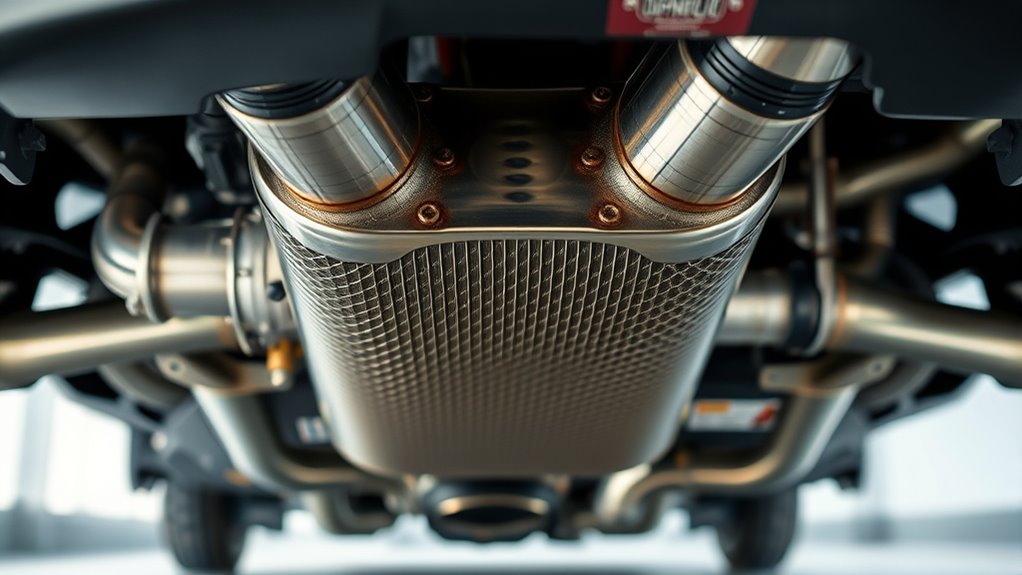
High-flow catalytic converters are designed to improve your vehicle’s exhaust flow, which can boost performance and reduce emissions. By allowing exhaust gases to exit more freely, these converters help your engine breathe better, resulting in increased horsepower and torque. But beyond performance gains, emission reduction remains a key benefit. High-flow units are engineered to maintain or even improve the catalytic process, ensuring your vehicle stays within environmental standards while delivering enhanced power. This balance makes them appealing for enthusiasts who want a performance upgrade without sacrificing eco-friendliness.
When considering the installation of a high-flow catalytic converter, you should pay close attention to specific considerations. First, confirm the converter is compatible with your vehicle’s make and model. Not all high-flow units fit every car, and an improper fit can lead to exhaust leaks or performance issues. Proper installation is crucial to maximize the benefits and avoid potential legal complications. You might need to modify existing exhaust components or work with a professional installer to ensure the converter is securely fitted and functions correctly. Proper sealing and mounting prevent leaks, which can affect both emissions and performance.
Legalities play a significant role when choosing a high-flow catalytic converter. Many jurisdictions have strict regulations regarding emissions equipment, and installing a non-compliant unit can result in fines or failure to pass inspections. It’s important to verify that the high-flow converter you select is certified for street use in your area. Some models are designed specifically for off-road or racing applications and may not meet legal standards for daily driving. Always check local laws and regulations before making a purchase, and consider consulting with an automotive professional to ensure your modifications will be compliant.
While high-flow catalytic converters can provide notable performance improvements, they also require thoughtful installation and legal compliance. Cutting corners on installation or choosing an uncertified unit can negate the benefits and lead to costly repercussions. By focusing on emission reduction and taking installation considerations seriously, you can enjoy a smoother, more powerful ride without risking legal issues. Remember, the goal isn’t just increased horsepower but also maintaining your vehicle’s environmental responsibility and legal standing. Proper planning, certification for street use, and professional guidance can help you strike this balance effectively, making your upgrade both legal and performance-enhancing.
Frequently Asked Questions
Do High-Flow Converters Improve Fuel Economy?
High-flow converters can improve your vehicle’s fuel efficiency by reducing exhaust backpressure, allowing the engine to breathe better. This means your engine doesn’t have to work as hard, saving fuel over time. Additionally, they can positively impact emissions by helping your vehicle meet legal standards. However, the actual fuel savings vary depending on your vehicle and driving habits, so don’t expect a huge boost in every situation.
Are High-Flow Catalytic Converters Legal Everywhere?
Imagine you’re installing a high-flow catalytic converter on your car. In some states, like California, this might violate local emissions laws because of strict regulatory compliance and aftermarket regulations. These converters aren’t legal everywhere, especially if they don’t meet specific standards. Always check your area’s regulations before installing one, as illegal modifications can lead to fines or failed inspections, making it vital to stay within legal limits.
How Long Do High-Flow Converters Typically Last?
High-flow catalytic converters usually last around 70,000 to 100,000 miles, depending on your driving habits and maintenance. They must meet emissions standards and comply with aftermarket regulations to stay legal. If you follow proper care and choose quality parts, you can prolong their lifespan. Keep in mind that extreme conditions or neglect can shorten their durability, so regular inspections help ensure they keep functioning effectively and legally.
Can High-Flow Converters Cause Engine Check Lights?
You might notice your check engine light after installing a high-flow converter, especially if it affects catalytic efficiency. For example, a driver replaced their converter and soon saw the light come on because the new part didn’t meet emission standards, triggering sensors. High-flow converters can cause this if they don’t properly support emission standards, leading to sensor readings that the engine control unit interprets as faults.
Are High-Flow Converters Compatible With All Vehicle Models?
High-flow converters aren’t compatible with all vehicle models. You need to check your vehicle’s compatibility before installation, as some models require specific sizes or designs. Consider installation considerations, like fitting and exhaust system connections, to guarantee proper performance. Always consult your vehicle’s manual or a professional to confirm the high-flow converter suits your car, preventing potential issues and ensuring peak performance.
Conclusion
High-flow catalytic converters boost your vehicle’s performance while meeting legal standards. Did you know that these converters can reduce exhaust emissions by up to 90%, making your car more eco-friendly? By choosing the right high-flow converter, you not only enhance power and efficiency but also stay compliant with regulations. So, whether you’re seeking better performance or cleaner emissions, these converters offer a smart, legal upgrade. Make sure to stay informed and choose wisely for maximum results.