
Increasing boost pressure does not automatically improve your engine’s performance; in fact, it can cause turbo lag, making response slower and less smooth. Pushing boost too high also raises fuel consumption and puts extra strain on engine parts, which can lead to quicker wear. Proper tuning and moderation are key to balancing power, efficiency, and engine longevity. Keep exploring to discover how to get the most out of your turbocharged setup without risking damage.

Get garage and car supplies delivered free — and shop member deals
- Fast, free delivery on millions of items
- Access to Prime Big Deal Days deals on October 6–7
- Prime Video, Amazon Music and more included
Key Takeaways
- Increased boost can cause turbo lag, delaying engine response and reducing overall driving smoothness.
- Higher boost levels lead to greater fuel consumption without guaranteed power gains.
- Overboosting strains engine components, accelerating wear and potentially shortening engine lifespan.
- Proper tuning and sensor monitoring are essential to balance boost levels with engine safety and reliability.
- Optimal performance relies on system harmony, not just maximizing boost pressure.
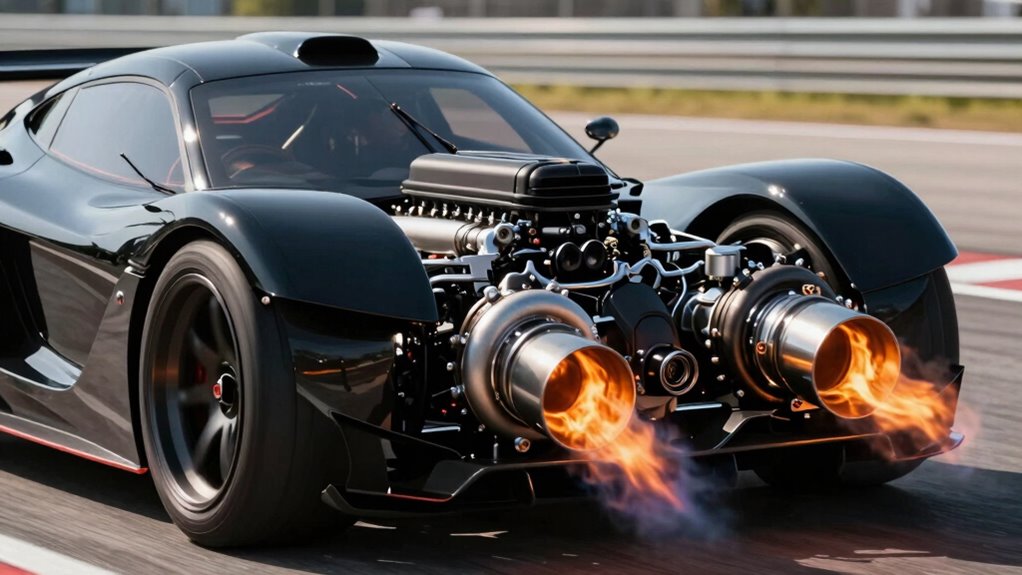
When it comes to boosting performance, more isn’t always better. You might think that increasing boost pressure in your turbocharged engine will automatically lead to faster acceleration and more power. However, cranking up the boost can introduce issues like turbo lag, where there’s a delay between pressing the accelerator and feeling the engine respond. This lag happens because the turbo needs time to spool up and generate the extra air necessary for more power. Instead of an immediate boost in performance, you may find yourself waiting longer than you’d like, which can make driving less smooth and more frustrating, especially in situations that demand quick response.
Increasing boost pressure can cause turbo lag, delaying response and making quick acceleration less smooth.
Beyond turbo lag, increasing boost levels can also negatively impact fuel efficiency. When you push your turbo harder, the engine works harder to produce the extra power, often consuming more fuel in the process. This means what you gain in performance might come at the cost of higher fuel bills. If you’re trying to balance power with economy, simply turning up the boost isn’t the best approach. Instead, it’s more effective to optimize the boost levels so your engine runs efficiently without sacrificing responsiveness. Proper tuning can help you achieve a good balance, giving you enough power when needed without wasting fuel during everyday driving.
Another thing to keep in mind is that more boost can put extra strain on your engine components. Overboosting can lead to increased wear and tear, reducing the lifespan of parts like pistons, valves, and the turbo itself. If you’re not careful, this extra stress might result in costly repairs down the line. Smart boosting involves understanding your engine’s limits and adjusting the boost level accordingly, rather than simply maxing it out for a perceived performance boost. Additionally, understanding the role of boost pressure in engine dynamics can help you make more informed decisions about tuning and performance upgrades. To avoid unintended damage, it’s crucial to consider engine stress and how it correlates with boost levels. Furthermore, proper calibration ensures that your engine maintains reliability while delivering the desired performance gains. It’s also worth noting that engine management systems can play a significant role in maintaining optimal performance and protecting your engine from overboosting. Using advanced sensor technology can further help monitor and regulate boost levels in real time, preventing potential damage.
Ultimately, boosting performance isn’t just about increasing boost pressure. It’s about tuning your entire system to work harmoniously—balancing turbo lag, fuel efficiency, and engine longevity. More boost doesn’t automatically mean better performance; it can introduce delays, raise fuel consumption, and cause mechanical stress. Instead, focus on a well-calibrated setup that enhances responsiveness and efficiency, giving you the best possible driving experience without the downsides of overboosting. Remember, sometimes less is more when it comes to achieving optimal performance.
As an affiliate, we earn on qualifying purchases.
Frequently Asked Questions
How Does Boost Pressure Affect Engine Longevity?
Increasing boost pressure can boost your engine’s power, but it also accelerates engine wear and oil consumption. Higher boost puts extra stress on engine components, leading to faster deterioration over time. You might notice more frequent oil changes and potential issues with seals and pistons. If you push boost too high, you risk reducing your engine’s longevity, so it’s crucial to find a balance that maintains performance without causing undue damage.
Can Too Much Boost Cause Safety Issues?
Pushing too much boost can turn your ride into a safety nightmare, releasing turbo lag and boost creep that make control nearly impossible. Excessive boost increases the risk of engine damage, overheating, and even catastrophic failure. You might experience unpredictable power surges or delayed responses, which compromise safety. Overboosting isn’t just risky; it could lead to dangerous driving situations, so always stick to recommended boost levels for safe, reliable performance.
What Are Signs of Excessive Boost in a Vehicle?
You might notice signs of excessive boost when your boost gauge shows higher pressure than normal, causing turbo lag or delayed acceleration. You could also experience engine knocking, rough idling, or a sudden decrease in power. If the boost gauge fluctuates erratically or your vehicle feels less responsive, it’s a clear signal that the boost levels are too high, which can damage your engine and impact safety.
How Do Different Turbochargers Impact Performance?
Imagine your engine roars to life with a different turbocharger; each impacts performance uniquely. A smaller compressor wheel reduces turbo lag, giving quick throttle response, while a larger wheel boosts power at high RPMs. Different turbochargers influence how smoothly your car accelerates, with some offering rapid spool-up and others providing sustained high-end power. Your choice determines whether your ride feels enthusiastic or steady, shaping your driving experience.
Is Higher Boost Always More Fuel-Efficient?
Higher boost doesn’t always mean better fuel economy. Increasing boost levels can lead to more fuel consumption because the engine works harder to generate that extra pressure. Plus, higher boost may cause turbo lag, which affects acceleration and efficiency. To optimize fuel economy, it’s better to balance boost levels with engine efficiency, rather than simply increasing boost to boost performance. Proper tuning can help achieve this balance effectively.
Conclusion
More boost might seem like the secret to better performance, but it’s not always the case. Just like adding more fuel to a fire can quickly burn out, cranking up boost can lead to damage or inefficiency. Sometimes, less is more—you get smoother, more reliable power without risking long-term harm. Remember, in performance, quality often beats quantity. So, don’t chase more boost blindly; instead, aim for balanced, well-tuned results.
Evergreen bestsellers Picks
bestsellers
As an affiliate, we earn on qualifying purchases.