If your boost drops off at high RPMs, belt slip may be the culprit. This happens when the belt loses grip due to misaligned pulleys, improper tension, or worn-out belts. Dirt or debris can also reduce friction, causing slippage during intense engine demands. Ensuring correct pulley alignment, maintaining proper belt tension, and inspecting the belt’s condition can help prevent this. Keep going to discover detailed steps to fix and prevent supercharger belt slip effectively.
Key Takeaways
- Misaligned pulleys reduce belt grip, causing slip and boost loss at high RPMs.
- Insufficient or excessive belt tension leads to slipping, especially during high-demand acceleration.
- Worn, cracked, or glazed belts lose friction, resulting in boost pressure drops at top end.
- Dirt, oil, or debris on pulleys and belts diminish grip, increasing the likelihood of slipping during high RPMs.
- Lack of regular maintenance and checks can allow small issues to escalate, causing boost fall-off at top end.
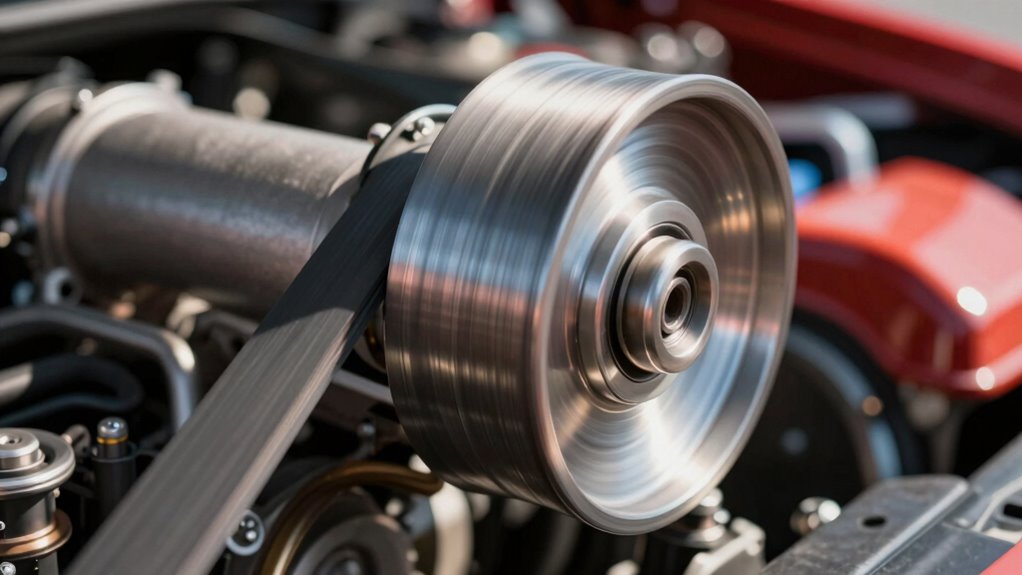
Supercharger belt slip occurs when the belt that drives your supercharger loses grip or momentum, reducing its ability to spin the compressor efficiently. This slip often leads to a noticeable drop in boost pressure, especially at higher RPMs, where you expect maximum performance. To understand why this happens, you need to pay attention to two critical factors: pulley alignment and belt tension. Both play a significant role in ensuring your supercharger operates smoothly and delivers consistent power.
First, pulley alignment is essential. If the pulleys are misaligned, the belt doesn’t run straight, which causes uneven wear and reduces the grip between the belt and pulleys. Over time, misalignment can lead to slipping because the belt doesn’t sit properly in the pulley grooves. To prevent this, regularly check that the pulleys are aligned correctly. Use a straight edge or a laser alignment tool to verify that the pulleys are in the same plane. Correcting pulley misalignment not only improves belt grip but also extends the lifespan of your belt and pulleys. Additionally, belt material plays a role in grip and durability, so choosing the right type can help prevent slipping.
Belt tension is equally important. If the belt is too loose, it won’t have enough friction to stay engaged with the pulleys, resulting in slip. Conversely, if it’s too tight, it can cause unnecessary stress on bearings and other components, leading to premature wear. Finding the right tension involves adjusting the tensioner or the mounting brackets to ensure the belt has a firm yet not overly tight fit. Many supercharger setups come with a tensioner that automatically maintains proper tension, but if yours doesn’t, you’ll need to check and adjust it periodically. Proper tension guarantees maximum contact between the belt and pulleys, maximizing grip and preventing slip during high-demand situations.
Regularly inspecting your supercharger belt for signs of wear, such as cracks or glazing, is also vital. A worn or damaged belt is more prone to slipping, regardless of proper alignment and tension. Replacing it at the first signs of deterioration keeps your supercharger performing at its best. Remember that even with perfect pulley alignment and correct belt tension, environmental factors like dirt, oil, or debris can cause slipping. Keeping the pulleys and belt clean helps maintain maximum grip.
Frequently Asked Questions
Can Supercharger Belt Slip Cause Engine Damage?
Yes, supercharger belt slip can cause engine damage. When the belt slips due to improper belt tension or misaligned pulleys, it can lead to inconsistent power delivery and excessive wear. Over time, this may damage the belt and pulleys, potentially causing engine problems like overheating or loss of boost. Ensuring proper belt tension and pulley alignment helps prevent slip, protecting your engine from costly damage.
How Often Should I Check My Supercharger Belt?
You should check your supercharger belt every 3,000 to 5,000 miles or during regular maintenance. Focus on belt tension and pulley alignment, ensuring they’re within manufacturer specs. If the belt feels loose or shows signs of wear like cracks or fraying, replace it promptly. Regular checks help prevent slip, maintain boost pressure, and avoid potential engine damage caused by a slipping belt.
What Are Signs of Supercharger Belt Wear?
Like a worn-out rubber band, your supercharger belt shows signs of wear through cracks, fraying, or glazing. You should also notice slipping or squealing sounds. Check for improper belt tension and pulley misalignment, as these issues can accelerate wear. If the belt feels loose or unevenly worn, it’s time to replace it to prevent belt failure and maintain peak boost performance.
Does Belt Slip Affect Fuel Efficiency?
Belt slip can negatively affect your fuel economy because it reduces the efficiency of your supercharger, causing your engine to work harder. When the belt isn’t properly tensioned, it slips, leading to less boost and decreased performance. This inefficiency means your engine consumes more fuel to maintain power levels. Regularly checking and maintaining proper belt tension helps guarantee your supercharger operates smoothly, optimizing fuel efficiency and overall vehicle performance.
Can Aftermarket Parts Reduce Belt Slip Issues?
Yes, aftermarket parts can mitigate belt slip issues. Many upgrades include high-quality belts, tensioners, and pulleys designed to improve belt tensioning and grip. While some worry about compatibility, choosing reputable brands guarantees a proper fit and better performance. Upgrading your supercharger system with aftermarket components helps maintain consistent boost pressure, prevents slip, and enhances overall reliability—giving you peace of mind during high-performance driving.
Conclusion
If your supercharger belt slips, it’s like trying to hold onto a slipping clutch—your boost drops, and performance suffers. By keeping an eye on belt tension, replacing worn components, and ensuring proper alignment, you can keep your boost riding high. Think of your supercharger as a finely tuned engine’s heartbeat; if the belt falters, it’s like the rhythm falters. Stay proactive, and you’ll keep that boost pushing powerfully all the way to the top.