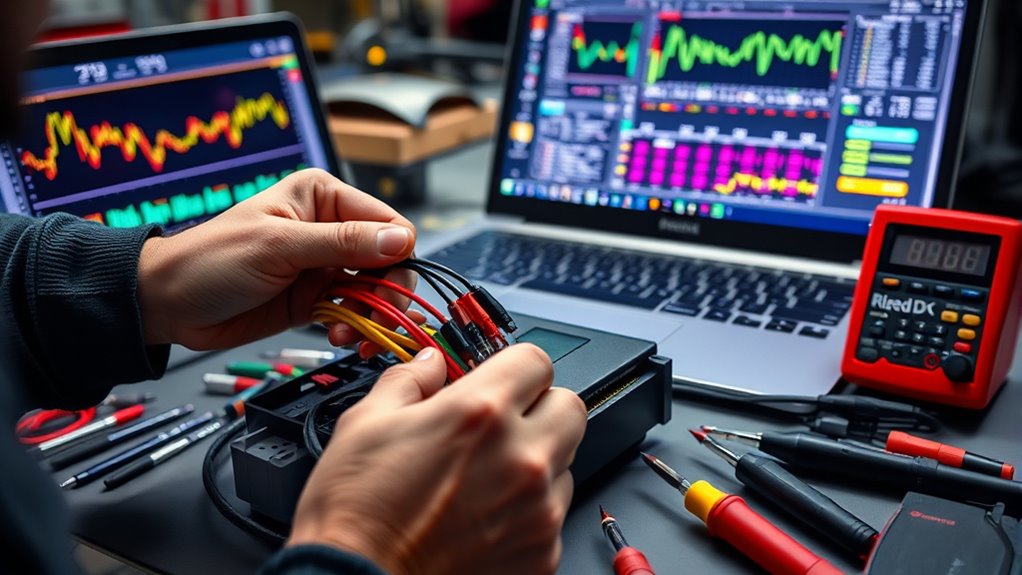

To tune effectively with data logging, you’ll want tools that record multiple sensors like air-fuel ratio, boost, and throttle in real-time, while visualization software helps you interpret the data easily. Calibrating sensors guarantees your readings are accurate, preventing misleading info that can hinder tuning. Regularly analyzing logged data allows you to make precise adjustments for better performance and efficiency. Keep exploring, and you’ll discover more ways to optimize your vehicle using these essential techniques.
Key Takeaways
- Use logging software to record real-time sensor data like AFR, boost, and throttle for comprehensive analysis.
- Calibrate sensors regularly to ensure logged data accurately reflects actual engine conditions.
- Analyze logged data to identify deviations and determine necessary adjustments for optimal tuning.
- Employ calibration tools and manufacturer procedures to fine-tune sensors based on logged performance metrics.
- Combine precise data logging with sensor calibration to make data-driven, effective tuning decisions.
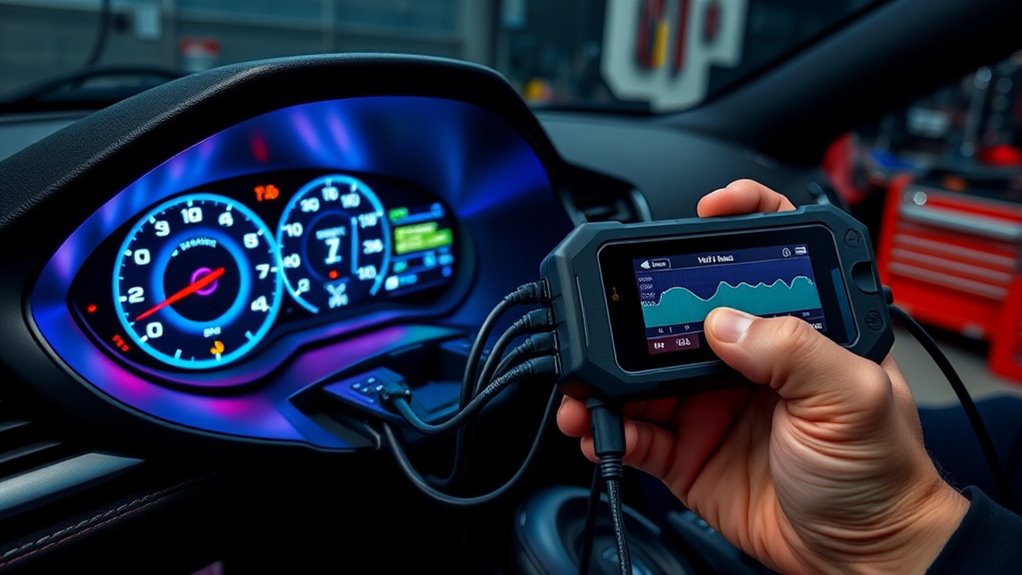
Tuning with data logging is a powerful method for optimizing your vehicle’s performance by providing real-time insights into how it behaves under various conditions. When you harness the right tools, you can identify issues, fine-tune settings, and extract maximum efficiency from your engine. At the core of this process is sensor calibration, which guarantees that the data you collect is accurate and reliable. Proper sensor calibration involves adjusting sensors so their readings match known standards, preventing false or misleading data from skewing your tuning efforts. Without calibrated sensors, you risk making misguided adjustments based on incorrect information, which can harm your engine’s performance or longevity.
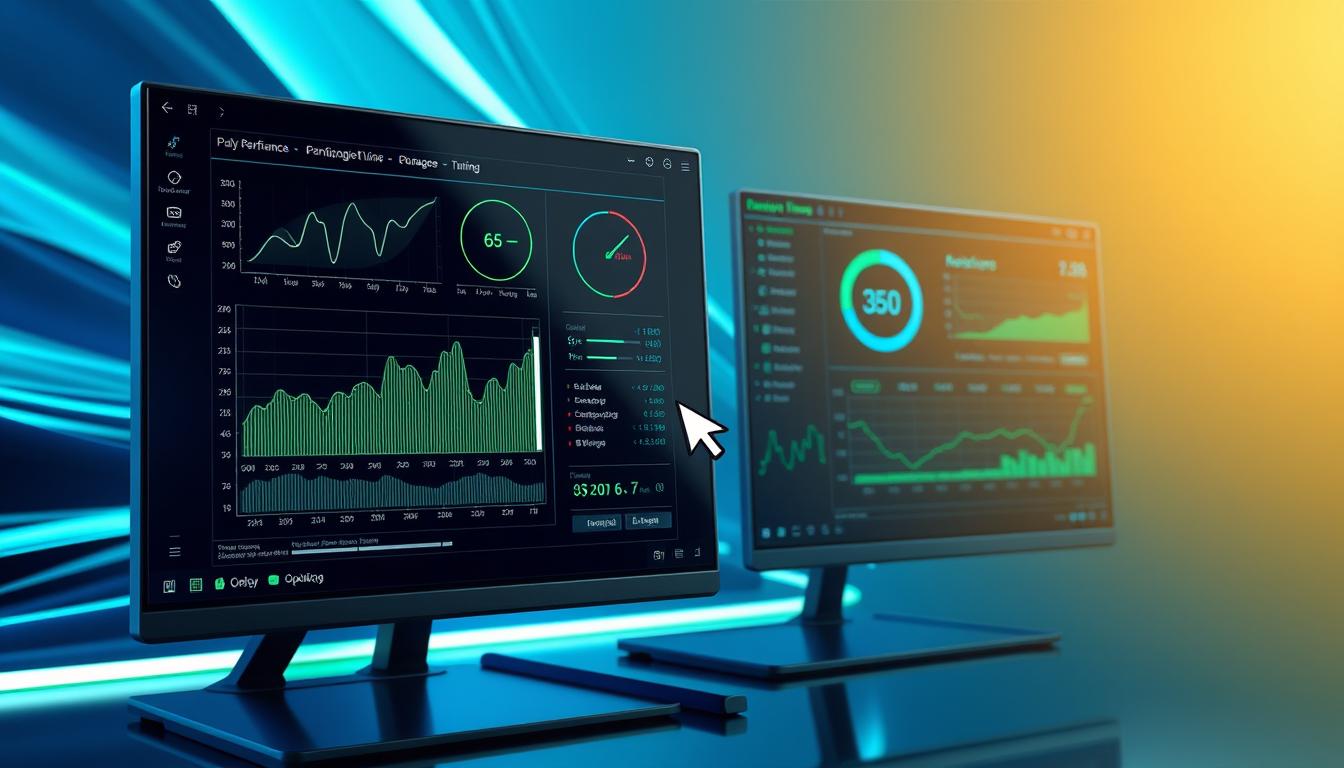
Logging software plays a vital role in this process. It allows you to record data from multiple sensors—such as air-fuel ratio, boost pressure, throttle position, and more—while you drive or perform stationary tests. Good logging software isn’t just about recording data; it provides real-time visualization, making it easier to interpret what’s happening in the moment. As you monitor live graphs and readouts, you can quickly identify anomalies or patterns that need correction. Many logging software options also enable you to set thresholds or alarms, alerting you when certain parameters go outside safe or peak ranges. This immediate feedback loop is essential for making precise adjustments during tuning sessions.
Once you’ve collected enough data, the next step is analyzing it to identify areas for improvement. For example, if your air-fuel ratio shows lean conditions under certain loads, you might need to adjust fuel maps or sensor calibration to get more accurate readings. By cross-referencing logged data with your vehicle’s performance, you can determine whether your sensors are functioning correctly or if calibration is needed. Often, sensor calibration involves using calibration tools or procedures provided by the software or sensor manufacturer, ensuring your data remains trustworthy. When your sensors are properly calibrated, your logged data accurately reflects real engine conditions, making your tuning efforts more effective and less trial-and-error. Additionally, utilizing well-being tips can help maintain your vehicle’s health and prolong sensor accuracy over time.
In essence, combining sensor calibration with robust logging software transforms the tuning process from guesswork into a precise science. It empowers you to make informed decisions rooted in accurate data, leading to better power delivery, fuel efficiency, and engine health. Whether you’re tuning for racing, daily driving, or fuel economy, this approach helps you access your vehicle’s full potential. The key is consistent calibration and diligent data analysis—tools that turn raw sensor signals into actionable insights. With the right setup, tuning becomes faster, more accurate, and ultimately more rewarding.

OBD2 Diagnostic Interface Scanner Tool, Vehicle Code Reader and Data Logging Adapter for Compatible Cars, Trucks, SUVs and Performance Vehicles, 1 Pack
- OBD2 Diagnostic Interface: Connects to vehicle's OBD-II port
- Real-Time Data Monitoring: Displays sensor and system data live
- Code Reading Support: Reads diagnostic trouble codes
As an affiliate, we earn on qualifying purchases.
As an affiliate, we earn on qualifying purchases.
Frequently Asked Questions
What Are the Best Data Logging Tools for Beginners?
You should start with user-friendly data logging tools like Arduino or Raspberry Pi, which make sensor placement simple and accessible. These platforms often have built-in features for easy data visualization, helping you interpret your data effectively. They also support a variety of sensors, allowing you to experiment and learn. As a beginner, these tools provide a solid foundation for understanding data logging without feeling overwhelmed.
How Do I Interpret Data Logs Effectively?
You interpret data logs effectively by focusing on sensor calibration to guarantee accuracy. Look for patterns or anomalies in the data, which can indicate tuning issues. Use data visualization tools to turn raw data into clear graphs or charts, making it easier to spot trends. Cross-reference your visualized data with expected performance metrics, helping you identify areas needing adjustment and optimize your tuning process efficiently.
Can Data Logging Improve Vehicle Performance Significantly?
Data logging can substantially improve your vehicle’s performance when you investigate its effectiveness thoroughly. You should focus on sensor calibration to guarantee accurate readings and use data visualization to identify patterns and issues quickly. While it’s a powerful tool, remember that proper interpretation and adjustments are essential. When used correctly, data logging helps you fine-tune your vehicle, making it more responsive, efficient, and ultimately, better performing.
What Are Common Pitfalls in Data Logging Tuning?
You should be aware that common pitfalls in data logging tuning include neglecting sensor calibration, which skews your results, and poor data sampling, leading to incomplete or misleading data. Always guarantee sensors are properly calibrated before logging, and maintain consistent, high-frequency sampling to capture accurate engine behavior. Avoid rushing analysis, and double-check your data to prevent chasing false issues or making incorrect adjustments, which can hinder performance improvements.
How Often Should I Analyze Data Logs During Tuning?
You should analyze data logs frequently during tuning, ideally in real-time or at least after every few adjustments. By monitoring log frequency, you catch issues early and make informed decisions quickly. Real-time analysis helps you identify trends and anomalies immediately, saving time and ensuring maximum performance. Regular log reviews keep your tuning process on track and prevent problems from escalating, leading to more accurate and efficient engine tuning.
Conclusion
By mastering data logging tools and techniques, you turn tuning into a dance where every step is guided by precise insights. It’s like having a GPS for your engine’s performance, steering you toward ideal settings with confidence. Stay attentive, analyze your logs carefully, and adapt as needed. With each tweak, you’re composing a symphony of efficiency and power—making your vehicle perform at its best, one data point at a time.