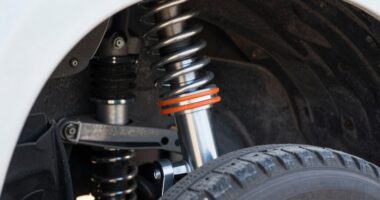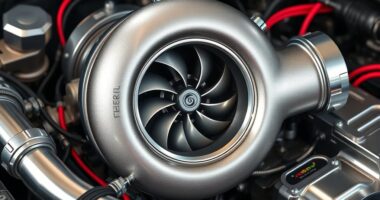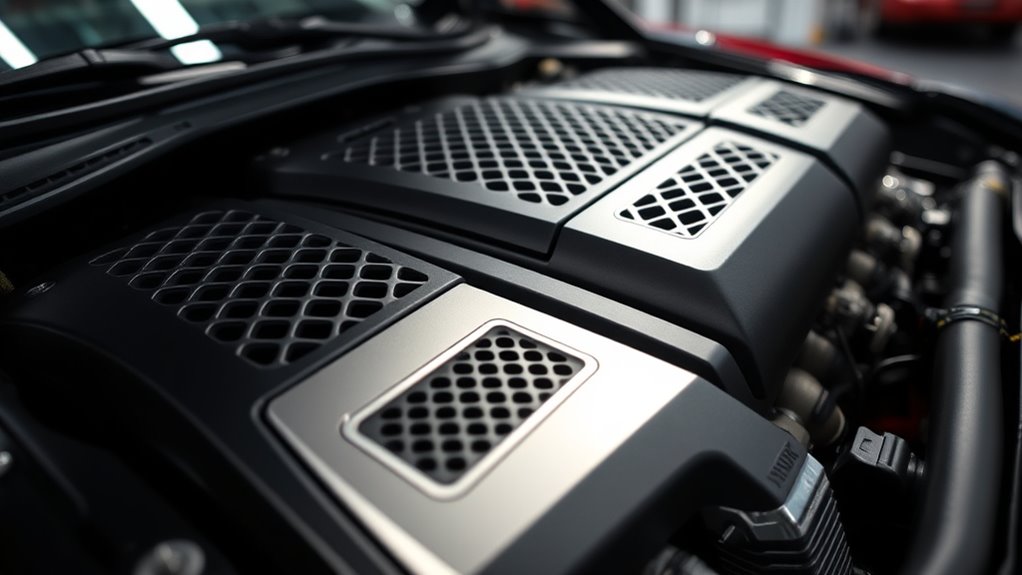

3D printed components are transforming your car tuning experience by offering custom, lightweight, and durable parts that boost performance and aesthetics. You can create complex geometries, experiment quickly with prototypes, and personalize features to match your unique style. Advanced materials ensure these parts withstand the rigors of daily driving or racing. As technology advances, you’ll discover even more innovative ways to enhance your vehicle—keep exploring to see what’s possible.
Key Takeaways
- Enables rapid production of custom, complex automotive parts tailored to specific tuning needs.
- Uses advanced, durable materials to ensure longevity and performance under driving stresses.
- Significantly reduces prototyping time, allowing quick testing and refinement of new components.
- Facilitates intricate detailing and personalized design elements for aesthetic and functional upgrades.
- Supports ongoing innovation in car tuning by providing adaptable, high-quality parts with expanding design capabilities.
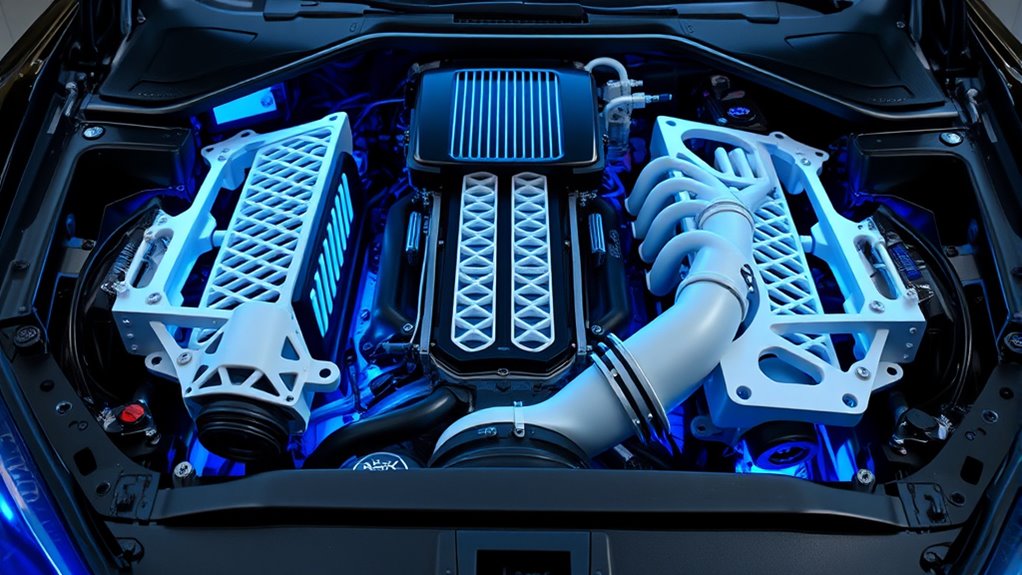
3D printing technology is revolutionizing the automotive industry by enabling manufacturers to produce car components more quickly and cost-effectively. As a car enthusiast or tuner, you now have access to a level of customization that was previously difficult or expensive to achieve. With 3D printed parts, you can tailor components to fit your unique specifications, whether that’s for aesthetic improvements or performance upgrades. This technology allows you to experiment with intricate designs, complex geometries, and personalized features that traditional manufacturing methods might struggle to produce. The flexibility of 3D printing means you’re no longer limited by standard stock parts; instead, you can create custom pieces that perfectly match your vision for your vehicle.
When it comes to material durability, 3D printing offers a broad spectrum of options suited for various applications. Advanced materials like reinforced composites and high-strength thermoplastics ensure that printed components can withstand the stresses of daily driving or high-performance scenarios. For example, you can replace fragile or bulky parts with lightweight yet durable alternatives, improving your vehicle’s overall efficiency and handling. The ability to choose materials based on your specific needs means you’re not sacrificing strength for weight or cost. Instead, you get optimized parts that can handle the rigors of tuning, racing, or regular use, all while maintaining longevity.
Furthermore, the quick turnaround time of 3D printing allows you to prototype and test different parts rapidly. Instead of waiting weeks for traditional manufacturing, you can design, print, and evaluate a new component within days. This agility encourages experimentation, so you can refine your modifications without significant delays or expenses. Whether you’re creating a custom intake manifold, a bespoke interior piece, or performance-enhancing brackets, the process becomes more accessible and affordable. Plus, as the technology advances, the range of printable materials expands, offering even more options for durability and functionality.
You also gain a creative edge by leveraging 3D printing’s capabilities for intricate detailing. You can incorporate complex patterns or branding elements into your parts, showcasing your personal style while maintaining structural integrity. This level of detail is challenging to achieve with traditional manufacturing, giving your vehicle a truly unique look. Additionally, 3D printed components can be easily modified or upgraded over time, aligning with your evolving tuning goals. Moreover, the development of specialized printing techniques continues to push the boundaries of what’s possible in custom automotive parts. All these advantages combine to make 3D printed car components an essential tool for modern car tuning, offering unmatched customization options and reliable material durability that help you push your vehicle’s performance and aesthetic boundaries.

Plastic Glue 100g for Model, 3D Printing Repair, Legos & Miniatures, Fast-Setting Heavy Duty Plastic Adhesive for PLA, ABS, PVC, Acrylic, Car, Includes 6 Precision Micro-Tips, Super Glue for Plastic
MADE FOR PLASTIC REPAIRS AND ASSEMBLY: This plastic glue is designed for bonding and repairing rigid plastic parts,…
As an affiliate, we earn on qualifying purchases.
As an affiliate, we earn on qualifying purchases.
Frequently Asked Questions
How Durable Are 3D Printed Car Parts Under Extreme Conditions?
3D printed car parts can be quite durable under extreme conditions if you choose the right materials. They often have good stress resistance and heat tolerance, but their longevity depends on the specific type of filament used. For high-stress or high-heat environments, you should select specialized filaments like nylon or carbon fiber composites. Proper design and post-processing also enhance their durability, ensuring they perform reliably under harsh conditions.
What Materials Are Best for 3D Printed Automotive Components?
Think of your 3D printed parts as the backbone of your build; choosing the right material makes all the difference. Resin offers fine detail and smooth finishes, ideal for intricate parts, while filament provides stronger, more flexible components. Metal surpasses plastic in strength and durability, perfect for high-stress areas. You’ll want to weigh resin vs filament and metal vs plastic based on your specific needs, balancing precision with resilience.
How Cost-Effective Is 3D Printing Compared to Traditional Manufacturing?
You’ll find 3D printing to be quite cost-effective for small batches and prototypes, thanks to lower setup costs and material efficiency. The cost comparison favors traditional methods for large-scale production, but 3D printing shines in rapid manufacturing speed, allowing you to quickly iterate designs and reduce lead times. Overall, it’s a smart choice when flexibility, speed, and lower initial expenses matter most for your automotive projects.
Can 3D Printed Parts Meet Safety Standards for Road Use?
Yes, 3D printed parts can meet safety standards for road use if you make certain they adhere to legal compliance and certification standards. You need to work with reputable manufacturers who follow rigorous testing and validation processes. By doing so, you guarantee that the parts are durable, reliable, and safe for driving. Always verify that the components have the proper certifications before installing them in your vehicle.
What Is the Typical Lifespan of 3D Printed Car Components?
Typically, 3D printed car components last between 6 months and 2 years, depending on usage and material quality. Material testing plays a key role in ensuring durability, while design optimization helps improve lifespan. If you regularly monitor wear and select high-quality materials, you can extend the lifespan. However, it’s essential to understand that 3D printed parts might not match traditional metal components’ longevity, especially under extreme conditions.
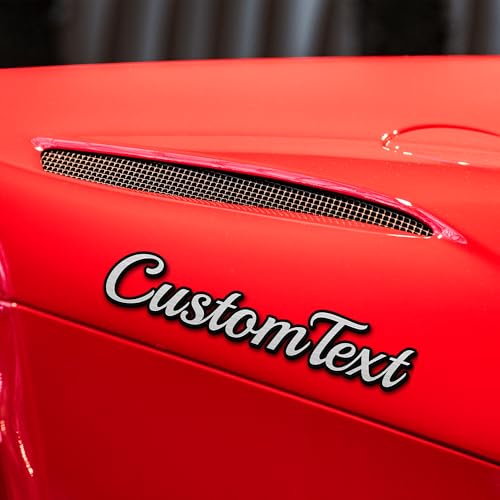
DIZZY New Car Emblem Badges Personalized – Acrylic Custom Text and Number Car Emblem with Adhensive Tape, Text Number, 3D Letter Automotive Badge for Front Hood (Fake Metal Finish)
Personalized Car Emblem: Customize your vehicle with any text and number, available in five different sizes (4", 6",…
As an affiliate, we earn on qualifying purchases.
As an affiliate, we earn on qualifying purchases.
Conclusion
As you explore the world of modern car tuning, 3D printed components open up endless possibilities for customization and innovation. You can create lightweight, precise parts tailored to your needs, making your vehicle truly unique. So, why settle for off-the-shelf solutions when you can design and print your own? Embrace 3D printing and elevate your tuning game—are you ready to take your ride to the next level?

Polymaker Fiberon Black PET-GF15 3D Printer Filament 1.75mm 1KG, 15% Glass Fiber Reinforced, High Strength & Heat Resistance, Ideal for Automotive, Industrial & Functional Parts, AMS Compatible
Industrial-Grade Strength: Reinforced with 15% glass fiber for superior rigidity and integrity; delivers 104 MPa bending strength and…
As an affiliate, we earn on qualifying purchases.
As an affiliate, we earn on qualifying purchases.

Bumper Bracket Car Bumper Brackets Support Tuning Car Support Bracket Custom Fit Easy Installation Lightweight
1.Adjustable Design: Supports fine tuning for ideal bumper alignment and gap matching
As an affiliate, we earn on qualifying purchases.
As an affiliate, we earn on qualifying purchases.