
To calibrate traction control on high-horsepower cars, you need to finely tune the system’s interaction between ABS engagement and throttle mapping. This ensures the system detects wheel slip early and responds smoothly, preventing jerky acceleration. Adjusting response timing and throttle delivery helps balance safety and performance, optimizing grip without hindering power. Fine-tuning might take some testing, but mastering it leads to better traction control and confidence behind the wheel. Keep exploring to discover more about achieving perfect calibration.
Listen free for 30 days with Audible
Thousands of audiobooks and originals — cancel anytime.
As an affiliate, we earn on qualifying purchases.
Key Takeaways
- Precise calibration of ABS engagement timing prevents jerky acceleration and ensures smooth power delivery during high torque conditions.
- Adjust throttle mapping to work seamlessly with ABS, controlling engine power to minimize wheel spin.
- Fine-tune system response delays to balance traction control effectiveness with driver comfort.
- Conduct iterative testing under varied conditions to optimize grip, safety, and performance.
- Incorporate adaptive learning systems to refine traction control calibration based on driving style and road conditions.
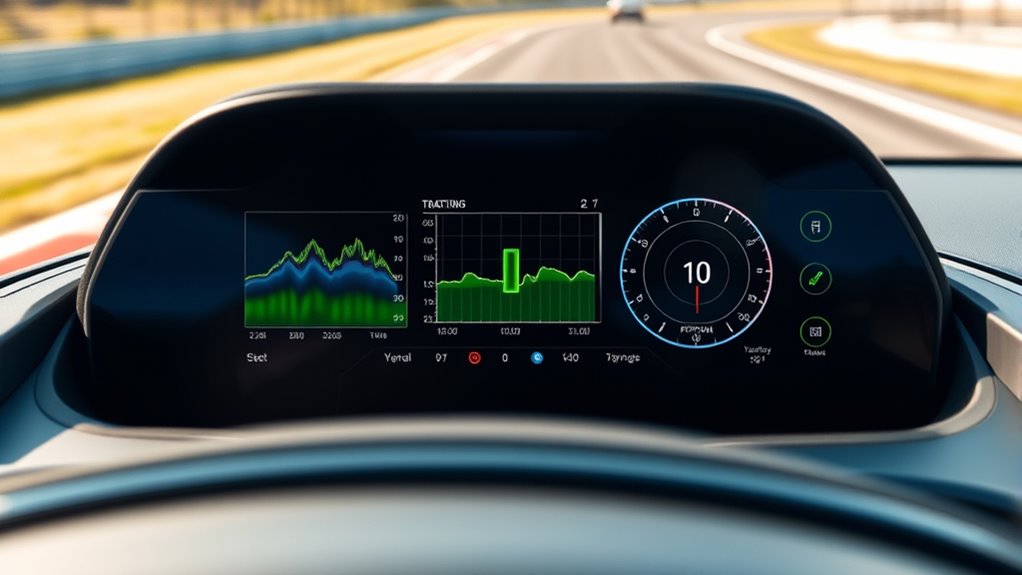
Have you ever wondered how your vehicle’s traction control system maintains ideal grip on the road? It’s a finely tuned dance between various components working seamlessly to prevent wheel spin and keep you stable, especially in high-horsepower cars. One key aspect of this balance involves how the ABS engagement responds during slip conditions. When the system detects that a wheel is losing traction, it quickly engages the ABS to modulate brake pressure, preventing further spin and helping the tire regain grip. But it’s not just about braking; throttle input plays a critical role too. Throttle mapping, which defines how engine power is delivered based on pedal position and driving conditions, is calibrated to work in harmony with traction control. When done correctly, throttle mapping ensures power is supplied smoothly, reducing sudden torque spikes that could overwhelm the tires and cause loss of control.
Calibration of traction control for high-horsepower vehicles requires a precise understanding of how these systems interact. If the ABS engages too aggressively, it can make acceleration feel jerky and unpredictable, so the system needs to be fine-tuned to respond just enough to maintain traction without sacrificing driver feel. Similarly, throttle mapping must be adjusted to provide a predictable and manageable power curve. You want to avoid overly aggressive throttle responses that could cause wheel spin, especially when driving at the limit. Instead, the calibration should allow for a gradual, controlled increase in power, giving you confidence to push the car without risking loss of grip. Additionally, performance tuning often involves iterative testing—adjusting how quickly the ABS engages and how throttle mapping responds under various conditions. You might find that a slight delay in ABS engagement allows for smoother acceleration over rough surfaces or when cornering. Fine-tuning throttle mapping ensures that power delivery is responsive yet controlled, preventing sudden surges that could overwhelm the tires. Some advanced systems even adapt to driver behavior, learning how you typically accelerate and adjusting throttle and traction responses accordingly.
Ultimately, achieving an ideal traction control calibration means balancing safety with performance. It’s about giving you enough grip and control to release the full potential of your high-horsepower vehicle, while still providing the safety net of ABS and well-calibrated throttle mapping. When these elements are perfectly tuned, you experience a more connected and confident driving experience—where your car responds precisely as you intend, even at the edge of traction.
high-performance traction control calibration kit
As an affiliate, we earn on qualifying purchases.
As an affiliate, we earn on qualifying purchases.
Frequently Asked Questions
How Does Traction Control Impact Engine Performance?
Traction control improves your engine performance by enhancing electronic stability and maximizing tire grip. It prevents wheel spin during acceleration, allowing your engine’s power to transfer efficiently to the road. You’ll notice smoother acceleration and better handling, especially in challenging conditions. By maintaining ideal tire grip, traction control helps you stay in control, boosting overall performance and safety without compromising your engine’s potential.
Can Calibration Improve Traction Control Response During Aggressive Driving?
Think of calibration as tuning a fine instrument; it sharpens your traction control’s response. Yes, calibration can improve how quickly your system reacts during aggressive driving by reducing wheel slip and maximizing tire grip. When properly calibrated, your traction control becomes a skilled dance partner, responding swiftly to maintain stability. This fine-tuning keeps you confident behind the wheel, ensuring peak performance when pushing your high‑horsepower car to its limits.
What Are the Signs of Incorrect Traction Control Calibration?
You’ll notice signs of incorrect traction control calibration when you experience excessive wheel slip or a noticeable throttle delay during aggressive driving. If the system doesn’t intervene properly, your tires might spin more than they should, or you may feel a lag before the system responds. These issues indicate that your traction control isn’t calibrated correctly, compromising your vehicle’s grip and safety on the road.
Is Professional Calibration Necessary for High-Horsepower Vehicles?
Yes, professional calibration is essential for high-horsepower vehicles, especially after aftermarket upgrades. Proper calibration guarantees your traction control system works effectively, maintaining safety and performance. Without it, you risk losing control during aggressive driving or on slippery surfaces. Investing in expert calibration helps optimize your car’s safety features, providing peace of mind and better handling, so you can enjoy your high-horsepower setup without compromising safety considerations.
How Often Should Traction Control Calibration Be Reviewed or Adjusted?
You should review or adjust your traction control calibration whenever you change tire pressure or suspension tuning, or if you notice handling issues. Regular checks, especially after modifications or track days, help guarantee ideal performance. Keep in mind that high-horsepower cars require precise calibration to prevent wheel spin or loss of control, so consulting a professional periodically guarantees your traction control stays finely tuned for safety and maximum traction.
Conclusion
Now that you understand how to calibrate your traction control for high-horsepower cars, you hold the key to revealing jaw-dropping performance. With precise adjustments, you’ll tame even the wildest beast on the road, transforming chaos into smooth, controlled power. Remember, a properly calibrated traction control system isn’t just a feature—it’s your secret weapon, making every drive feel like you’re wielding the power of a thousand thunderstorms. Get ready to conquer the asphalt like never before.
Fall Picks
fall essentials
As an affiliate, we earn on qualifying purchases.