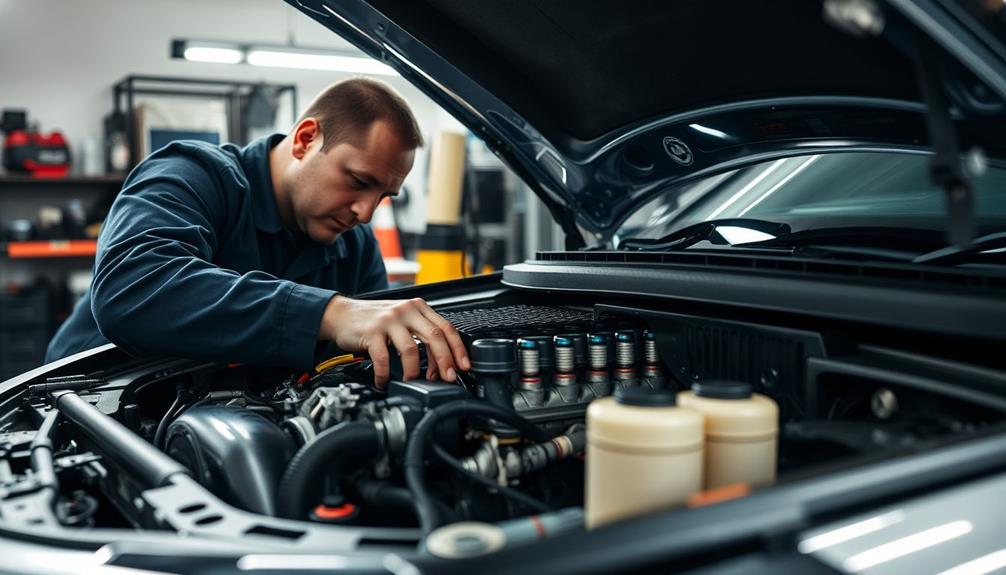
Skid plates are essential for protecting your vehicle’s critical parts, like the oil pan, transmission, and fuel tank, from damage caused by rocks, stumps, or debris when off-roading. Choosing the right material—steel for tough conditions, aluminum for lighter weight, or composites—ensures maximum protection. Proper installation and regular inspections are key to keep your vehicle safe and prevent costly repairs. If you keep exploring, you’ll discover how to maximize your skid plate’s effectiveness during every adventure.
Key Takeaways
- Skid plates shield vital undercarriage components like oil pans and fuel tanks from rocks, debris, and rough terrain damage.
- Choosing the right material (steel, aluminum, or composite) depends on terrain severity and protection needs.
- Proper installation and regular inspection ensure skid plates provide optimal protection and prevent damage during off-road trips.
- High-quality skid plates extend vehicle lifespan by reducing costly repairs and keeping the vehicle on the trail longer.
- Routine maintenance and tightening bolts after rough terrain help maintain skid plate effectiveness and vehicle safety.
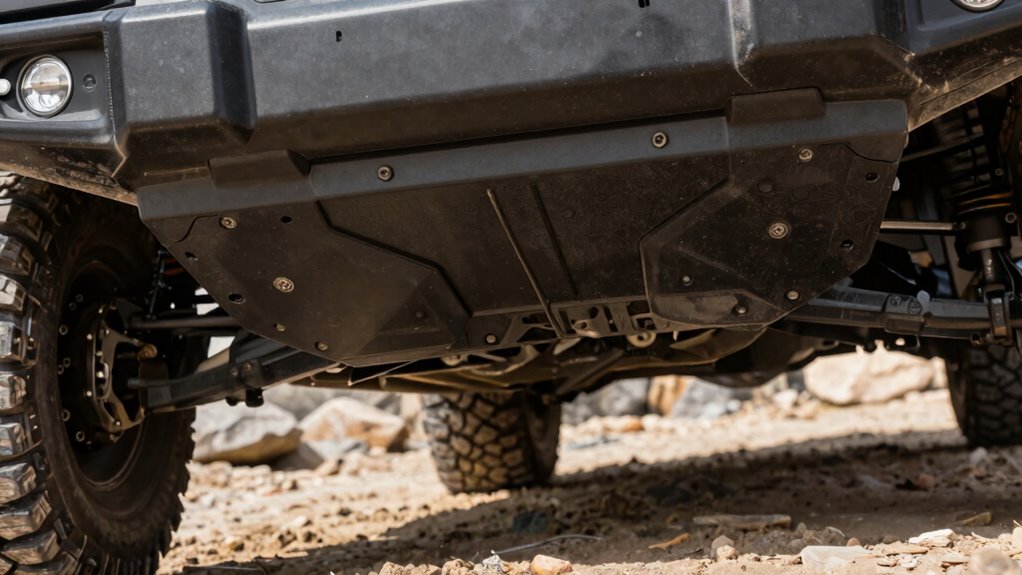
Have you ever wondered how off-road vehicles protect their crucial components from rough terrain? The answer lies in skid plates—those tough shields mounted underneath your vehicle that guard vital parts like the oil pan, transmission, and fuel tank. When you’re tackling rocky trails, muddy paths, or uneven ground, skid plates are your first line of defense against rocks, stumps, and debris that could cause costly damage. Their main goal is to improve off-road durability, ensuring your vehicle can withstand the harshest conditions without breaking down or sustaining serious harm.
Choosing the right skid plates and installing them properly can significantly extend your vehicle’s lifespan and keep you on the trail longer. Off road durability depends heavily on quality materials—most skid plates are made from steel, aluminum, or composite materials, each offering different levels of strength and weight. Steel provides maximum protection and is ideal for extreme conditions, but it’s heavier. Aluminum is lighter and still offers good durability, making it suitable for moderate off-road adventures. Composite materials are lightweight and resistant to corrosion but might not offer the same level of impact protection as metal options. When selecting skid plates, consider your typical terrain and the kind of protection you need, and always prioritize quality to ensure lasting off-road durability.
Installation tips are crucial for getting the most out of your skid plates. First, make sure you have the right tools and follow the manufacturer’s instructions carefully. Many skid plates require removal of certain undercarriage components, so having a lift or jack stands makes the process easier and safer. Before installation, clean the area thoroughly to remove dirt and debris, which helps achieve proper fitment. When attaching the skid plates, tighten all bolts to the specified torque; loose bolts can lead to rattling, or worse, the plate coming loose during a drive. It’s wise to double-check all fasteners after your initial test drive to ensure everything remains secure. Additionally, periodically inspect your skid plates for damage or looseness, especially after rough trails, so you can address issues early and maintain optimal off road durability.
Frequently Asked Questions
Can Skid Plates Improve Off-Road Vehicle Resale Value?
Yes, skid plates can boost your off-road vehicle’s resale value. They enhance mud protection and improve ground clearance, making your vehicle more durable and capable on tough terrains. Buyers see skid plates as a practical upgrade that extends the vehicle’s lifespan and off-road performance. By investing in skid plates, you demonstrate care for the vehicle’s condition, which can attract more interest and potentially increase its resale price.
Are There Specific Materials Better Suited for Certain Terrains?
Think of your skid plate as a suit of armor for your vehicle; the right material is your shield against nature’s toughest challenges. You’ll want high-grade steel for rocky terrains, where durability is king, while aluminum works well on softer paths, offering lightweight protection and corrosion resistance. Matching material durability and terrain compatibility guarantees your skid plates stand strong, safeguarding your trip and preserving your vehicle’s core.
How Do Skid Plates Affect Vehicle Fuel Efficiency?
Skid plates can slightly reduce your vehicle’s fuel efficiency due to increased weight and aerodynamic drag. The impact depends on skid plate design; heavier or poorly streamlined plates may cause more drag. However, if you choose lightweight, well-designed skid plates, the effect is minimal. Ultimately, their protection benefits often outweigh the small fuel efficiency impact, especially if you’re frequently off-road or tackling rough terrain.
Can I Install Skid Plates Myself or Need Professional Help?
You can attempt a DIY installation of skid plates, but beware—it’s not as simple as it looks. If you have mechanical skills and the right tools, you might succeed, yet professional installation guarantees proper fit and ideal protection. Don’t risk damaging your vehicle or compromising safety; sometimes, trusting experts for professional installation is the smarter choice. Make sure to weigh your experience before diving into this potentially tricky project.
Do Skid Plates Void Vehicle Warranties?
Installing skid plates can sometimes affect your vehicle’s warranty, depending on manufacturer policies. Generally, if you install them properly and they don’t damage existing parts, warranty implications are minimal. However, some manufacturers may view aftermarket modifications as voiding certain coverage. To avoid issues, check your vehicle’s warranty terms and consult the manufacturer or a professional installer before adding skid plates. This way, you protect your ride without risking warranty problems.
Conclusion
Now that you know how essential skid plates are, it’s clear they can save you from costly repairs and dangerous situations. Did you know that over 60% of off-road vehicle accidents involve undercarriage damage? Protecting your vehicle’s critical parts isn’t just smart—it’s indispensable for peace of mind and safe adventures. Invest in quality skid plates, stay prepared, and keep exploring with confidence. Your journey depends on what you shield along the way.