
When comparing tuning mild hybrids versus full hybrids, you’ll find that full hybrids offer more opportunities for upgrades thanks to their larger batteries and electric-only drive mode. This allows you to tweak regenerative braking and power management for better efficiency and performance. Mild hybrids mainly assist the engine and have limited tuning options because of their smaller batteries. If you want to explore the full potential of hybrid systems, there’s more to uncover below.
Key Takeaways
- Full hybrids have larger batteries, allowing more extensive tuning and system upgrades compared to mild hybrids.
- Mild hybrids offer limited tuning options due to smaller batteries and less integrated electric drive systems.
- Full hybrids enable enhancements in regenerative braking, improving electric driving and energy recovery capabilities.
- Tuning full hybrids can optimize electric-only driving and fuel efficiency, unlike mild hybrids with minimal electric range.
- Battery capacity differences directly impact the potential for system customization and performance tuning in each hybrid type.
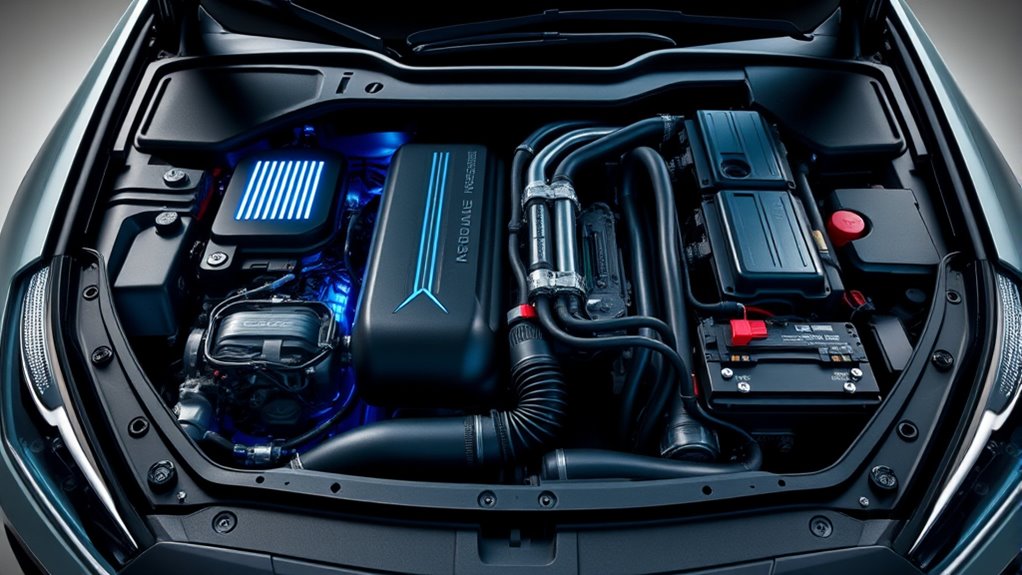
When it comes to hybrid vehicles, understanding the differences between mild hybrids and full hybrids is essential for making an informed choice. One of the key factors that sets them apart is their battery capacity. Mild hybrids typically have smaller batteries that assist the engine rather than power the vehicle on their own. These batteries are designed to support functions like start-stop systems and provide a boost during acceleration, but they can’t drive the car independently. Full hybrids, on the other hand, come equipped with larger batteries that allow the vehicle to run solely on electric power at low speeds or during light acceleration. This increased battery capacity means full hybrids can operate more efficiently in a variety of driving conditions, especially in stop-and-go traffic, where electric-only mode can markedly reduce fuel consumption.
Mild hybrids have smaller batteries aiding the engine, while full hybrids feature larger batteries enabling electric-only driving at low speeds.
Another critical aspect is how each system utilizes regenerative braking. Both mild and full hybrids employ this technology to recover energy that would otherwise be lost as heat during braking. However, the extent and effectiveness of regenerative braking vary between the two. In mild hybrids, regenerative braking mostly assists the engine and helps recharge the smaller battery, but it doesn’t contribute as much to overall electric driving. Because their batteries are limited in capacity, they can’t store large amounts of energy, so the system’s benefits are somewhat constrained. Full hybrids, with their larger batteries, capitalize more on regenerative braking by capturing and storing a greater amount of energy. This stored energy can then be used to propel the vehicle on electric power, especially during low-speed maneuvers, which translates into better fuel economy and reduced emissions.
Understanding these differences impacts how you might tune or modify each type of hybrid. For instance, enhancing the regenerative braking system in a full hybrid can lead to even more energy recovery and improved efficiency. Conversely, in a mild hybrid, tuning options are limited because of the smaller battery and less integrated electric drive. The battery capacity also influences how much you can expand or upgrade the system — larger batteries in full hybrids offer more room for customization, whereas mild hybrids are more constrained.
Ultimately, knowing how battery capacity and regenerative braking work together helps you identify the strengths and limitations of each hybrid type. If you’re looking for a vehicle that maximizes electric driving and efficiency, full hybrids provide more potential for tuning and optimization. If your priority is simplicity and lower costs, mild hybrids still offer a boost in fuel economy but with fewer opportunities for extensive tuning. By understanding these core differences, you’ll be better equipped to choose the hybrid system that aligns with your driving needs and tuning goals.
Frequently Asked Questions
How Do Maintenance Costs Compare Between Mild and Full Hybrids?
You’ll find that maintenance costs for mild hybrids are generally lower because their battery lifespan is shorter, leading to fewer repair expenses over time. Full hybrids tend to have more complex systems and larger batteries, which can increase repair expenses if issues arise. However, with proper care, both types usually require minimal maintenance. Keep in mind, full hybrids might cost more upfront but could save you money on repairs long-term.
Can Mild Hybrids Be Upgraded to Full Hybrids Later?
Mild hybrids generally can’t be upgraded to full hybrids later because of significant differences in their hybrid systems. Retrofit possibilities are limited, as full hybrids require larger batteries and more complex components not designed for mild hybrid architectures. If you’re considering a hybrid upgrade, it’s best to choose a full hybrid from the start, since converting a mild hybrid later isn’t practical or cost-effective.
Are Full Hybrids More Environmentally Friendly Than Mild Hybrids?
Full hybrids are generally more environmentally friendly than mild hybrids because they rely more on their electric motors, reducing emissions impact. You’ll notice better battery life in full hybrids since they can operate solely on electric power at times. This means lower emissions and improved fuel efficiency, helping you minimize your carbon footprint. Overall, if eco-friendliness is your goal, full hybrids are the better choice.
Do Hybrid Types Affect Insurance Premiums Differently?
You might find it surprising, but hybrid types can affect your insurance premiums differently. Full hybrids often cost more to insure because they’re seen as more valuable and costly to repair, impacting insurance premiums. Mild hybrids generally have lower cost implications, making them cheaper to insure. So, choosing between them could influence your overall expenses, not just fuel savings. Always check with your insurer to understand how your hybrid type impacts your premium costs.
Which Hybrid Type Offers Better Long-Term Reliability?
Full hybrids generally offer better long-term reliability because they have larger, more robust batteries built for frequent use, ensuring longer battery longevity. Their components are designed to withstand more extensive driving conditions, making them more durable over time. Mild hybrids, with smaller batteries and less complex systems, may face quicker wear and tear, but full hybrids tend to hold up better, providing you with more consistent performance and fewer repairs long-term.
Conclusion
Understanding the differences between tuning mild hybrids and full hybrids is like choosing between a gentle breeze and a rushing river—you get to decide the flow of power and efficiency. Mild hybrids offer subtle support, while full hybrids deliver full-on electric performance. By knowing how each system works, you can pick the one that best fits your driving style. Ultimately, it’s about finding the perfect balance, like finding the right rhythm in a song that moves you.