
Understanding air-fuel ratios is key to maximizing your engine’s performance and efficiency. You need to balance the amount of air and fuel entering your engine precisely, usually around 14.7:1 for gasoline engines. Proper tuning ensures complete combustion, boosts power, and minimizes emissions. By monitoring oxygen levels and adjusting your mixture accordingly, you can optimize your engine’s potential. Keep exploring further to learn how to fine-tune this balance for your specific setup.

Get business pricing on garage and car supplies
- Business-only prices and quantity discounts
- Tax-exempt purchasing
- Multiple users, one account, clear invoices
Key Takeaways
- The air-fuel ratio determines optimal combustion, typically around 14.7:1 for gasoline engines, balancing power and fuel efficiency.
- Oxygen levels directly affect combustion completeness, influencing engine performance, emissions, and longevity.
- Monitoring with oxygen sensors and ECU adjustments helps maintain the ideal mixture for tuning and performance gains.
- Richer mixtures (lower ratios) boost power but increase fuel use; leaner mixtures (higher ratios) improve efficiency but risk running too lean.
- Fine-tuning the air-fuel ratio enhances engine response, power output, and fuel economy in performance tuning applications.
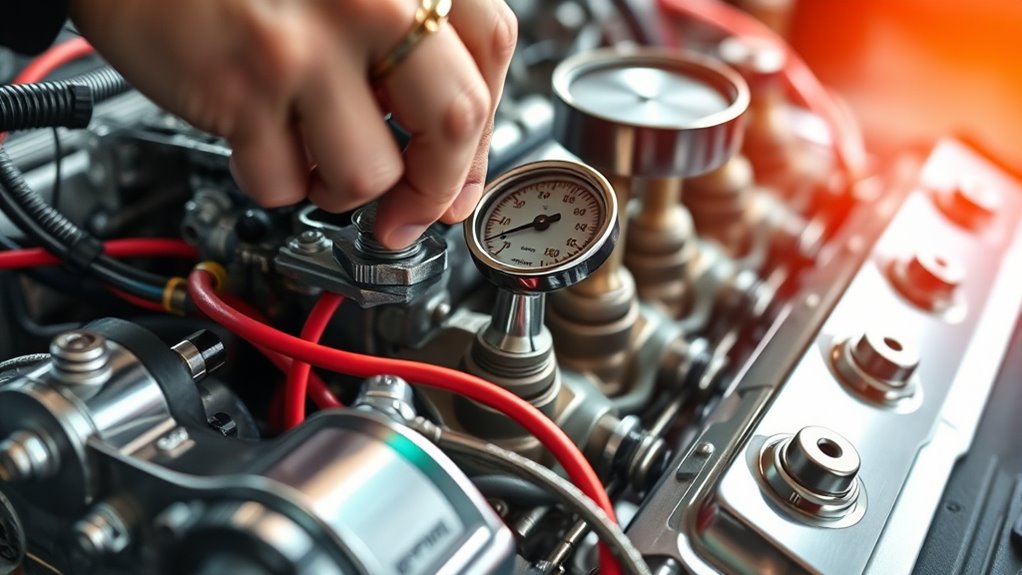
Have you ever wondered how engines optimize performance and fuel efficiency? It all comes down to the air-fuel ratio, which is the balance between the amount of air and fuel entering your engine. When this ratio is just right, your engine runs smoothly, delivers power efficiently, and uses fuel wisely. But to understand how this works, you need to grasp the importance of oxygen levels and combustion efficiency. Oxygen is essential because it reacts with fuel during combustion, releasing energy that powers your vehicle. If there’s too little oxygen, the fuel doesn’t burn completely, leading to poor performance, higher emissions, and wasted fuel. On the other hand, too much oxygen can cause the engine to run lean, which might increase combustion temperature and potentially damage engine components.
Achieving the ideal air-fuel ratio hinges on controlling oxygen levels in the combustion chamber. When the ratio is perfect—commonly around 14.7:1 for gasoline engines—it ensures that enough oxygen is present to burn the fuel completely. This perfect mixture maximizes combustion efficiency, which translates into more power, better fuel economy, and fewer pollutants. In performance tuning, adjusting the air-fuel ratio means tweaking how much air and fuel your engine receives, often through modifications like aftermarket fuel injectors or ECU remapping. These adjustments help your engine reach its full potential by improving combustion efficiency, meaning your engine converts more of the fuel’s energy into useful work with less waste.
Monitoring oxygen levels is essential because it directly impacts combustion efficiency. Modern engines are equipped with sensors—such as oxygen sensors—that constantly check the amount of oxygen in the exhaust gases. This real-time data helps the engine’s control unit make precise adjustments, ensuring the air-fuel mixture stays at its perfect point under different driving conditions. When tuning for performance, you might aim for a slightly richer mixture (more fuel) to generate more power, or leaner (less fuel) for better efficiency. The role of oxygen sensors is crucial in maintaining the optimal air-fuel ratio and preventing issues like knocking or incomplete combustion.
In essence, understanding how oxygen levels influence combustion efficiency allows you to fine-tune your engine for peak performance. Whether you’re after more horsepower or better fuel economy, controlling the air-fuel ratio ensures your engine operates at its best. It’s about finding that perfect balance where oxygen is plentiful enough to fully burn fuel but not so excess that it wastes energy or causes problems. By mastering this balance, you open your engine’s true potential, making every drop of fuel count and every mile more powerful.
oxygen sensor for gasoline engines
As an affiliate, we earn on qualifying purchases.
As an affiliate, we earn on qualifying purchases.
Frequently Asked Questions
How Do Air-Fuel Ratios Affect Emissions and Environmental Impact?
You can reduce emissions and lessen environmental impact by adjusting air-fuel ratios properly. A lean mixture (more air) lowers carbon monoxide and unburned hydrocarbons, helping with emission reduction. Conversely, a rich mixture (more fuel) increases pollutants. Finding the ideal ratio balances engine performance with eco-friendliness, ensuring you minimize harmful emissions and contribute to a cleaner environment. Proper tuning is key to achieving these environmental benefits.
Can Changing Air-Fuel Ratios Improve Fuel Economy Under Normal Driving?
If you adjust your air-fuel ratio to a slightly leaner mixture, you can improve fuel efficiency during normal driving. For example, a driver who fine-tunes their engine to optimize mixture stability and reduce excess fuel consumption might see better mileage without sacrificing performance. This change guarantees the engine runs efficiently, saving fuel and lowering emissions. Just make sure the mixture remains stable to avoid engine issues.
What Tools Are Best for Measuring Real-Time Air-Fuel Ratios?
To measure real-time air-fuel ratios accurately, you should use wideband sensors paired with data loggers. Wideband sensors provide precise, instant readings of your engine’s air-fuel mixture, while data loggers record this data over time, helping you analyze performance and make adjustments. These tools are essential for tuning your vehicle, ensuring ideal fuel economy and power while preventing damage from improper ratios.
How Do Altitude Changes Influence Optimal Air-Fuel Ratios?
Altitude effects make your engine run leaner because there’s less oxygen in the air. You’ll need to adjust your tuning to compensate for this, typically by enriching the air-fuel mixture. Make tuning adjustments by increasing fuel delivery or altering the fuel map to maintain ideal ratios. Always monitor your air-fuel ratios after altitude changes to ensure your engine performs efficiently and avoids damage.
Are There Risks Associated With Running Too Lean or Too Rich?
Running too lean risks engine knocking and catalyst damage, while running too rich can cause fouled spark plugs and poor fuel economy. You need to find a balance because too lean can lead to overheating and engine damage, whereas too rich wastes fuel and harms emissions. Staying within ideal air-fuel ratios protects your engine’s longevity and performance, preventing costly repairs from improper tuning.
Conclusion
Mastering air-fuel ratios can boost your engine’s performance and efficiency. Did you know that a slight leaner mixture can improve fuel economy by up to 10%, but too lean can harm performance? Staying within the precise range ensures you get the best balance of power and fuel savings. Keep tuning and experimenting carefully—understanding these ratios puts you in control of your engine’s true potential.
Fall Picks
fall essentials
As an affiliate, we earn on qualifying purchases.