In modified engines, optimizing spark timing is essential for boosting power without causing knocking. Advancing your ignition can improve performance, but too much risks knocking and engine damage. Modern systems use knock sensors to detect detonation and automatically retune timing to keep your engine safe. Managing factors like fuel quality, cooling, and air-fuel ratios also help prevent knocking. If you continue exploring, you’ll uncover how to fine-tune these systems for maximum safety and performance.
Key Takeaways
- Properly advancing spark timing boosts performance but must be carefully monitored to prevent knocking in modified engines.
- Knock sensors detect detonation early and automatically retard ignition timing to protect the engine.
- Using high-octane fuel and adjusting cooling systems help reduce knocking risks associated with aggressive timing.
- Fine-tuning ignition curves with data from knock sensors ensures optimal power without engine damage.
- Real-time monitoring and aftermarket ECUs facilitate precise spark timing control and effective knock suppression.
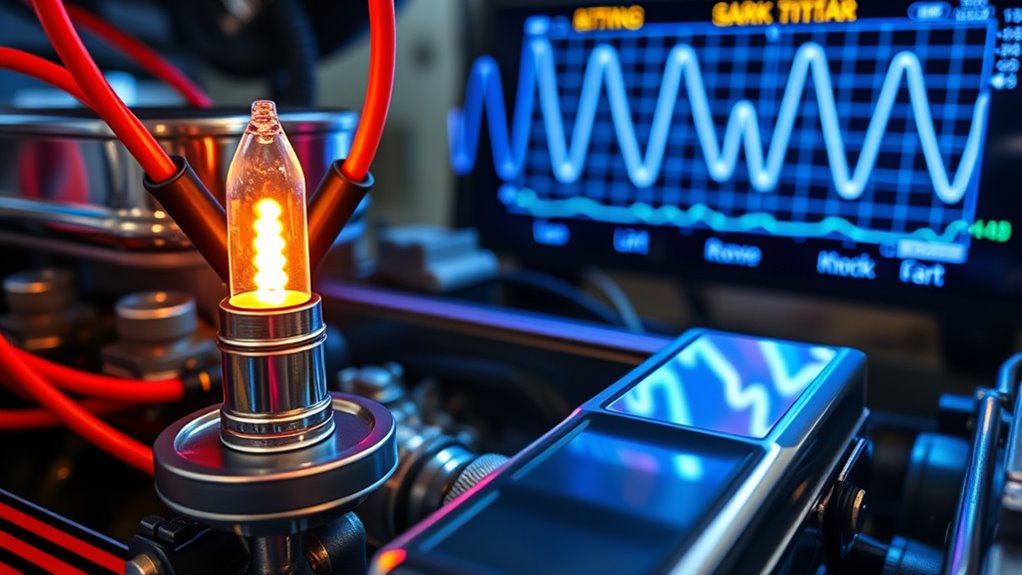
When modifying an engine for increased performance, managing spark timing and knock control becomes essential. One of the key aspects you need to focus on is ignition advance. Advancing the spark timing means igniting the air-fuel mixture earlier in the combustion cycle, which can boost power and efficiency. However, pushing the ignition too far can lead to knocking, a condition where the unburned mixture detonates prematurely, causing engine damage. To prevent this, you must carefully calibrate the ignition advance to find the optimal point that maximizes power without risking knock.
Controlling ignition timing is a delicate balance. If you set it too conservative, you miss out on potential gains; if you go too aggressive, you risk knocking. Modern engine management systems often include knock sensors that detect early signs of detonation. When these sensors pick up abnormal vibrations, the system automatically retards the ignition timing, a process known as detonation suppression. This quick adjustment helps keep the engine safe while still allowing for performance tuning. As you modify your engine, integrating an adjustable ignition system or aftermarket ECU can give you more control over ignition advance, enabling precise tuning for your specific setup.
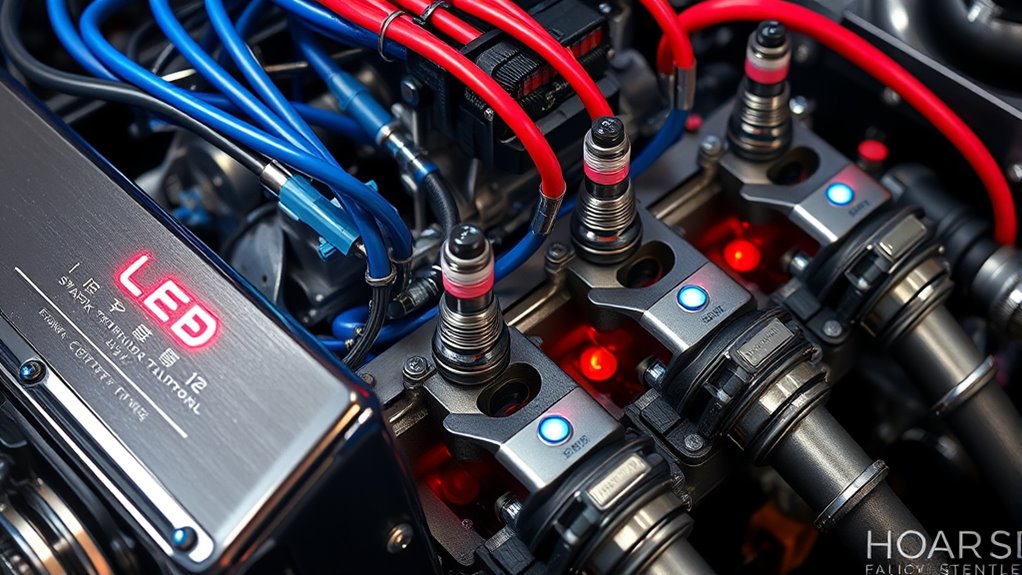
Modern engine systems use knock sensors to automatically retune ignition timing for safety and performance.
Additionally, understanding how to implement detonation suppression techniques is *essential*. This can involve using higher-octane fuel, which resists knocking better, or adding knock-retard strategies within your engine’s control system. Proper cooling and maintaining *ideal* air-fuel ratios also play *crucial* roles in preventing detonation. If the mixture is too lean or the intake temperature gets too high, the risk of knocking increases. By managing these variables alongside ignition timing, you create a safer environment for your engine to operate at higher performance levels.
Furthermore, incorporating *advanced* tuning tools that analyze engine response can significantly improve your ability to optimize ignition timing and knock control. Many effective systems utilize real-time data monitoring to make instant adjustments, ensuring consistent performance without sacrificing engine safety.
Another effective approach is to monitor knock activity regularly. Many tuners use data logs from knock sensors during testing to identify the limits of ignition advance that your engine can handle safely. This process allows you to fine-tune the ignition curve, advancing it as much as possible without triggering detonation. Over time, as you become more familiar with your engine’s behavior, you’ll develop an intuitive sense of how far you can push ignition timing to maximize performance while maintaining reliability.
Frequently Asked Questions
Can I Adjust Spark Timing Myself on a Modified Engine?
Yes, you can adjust spark timing yourself on a modified engine, but it requires careful engine tuning. Start by adjusting ignition advance gradually while monitoring engine performance and knock detection. Use a timing light and data from your engine’s sensors to find the most effective spark timing. Keep in mind, incorrect adjustments can cause engine damage, so proceed with caution or seek professional help if you’re unsure.
What Signs Indicate Knocking Due to Incorrect Spark Timing?
You notice your engine hesitating or experiencing ignition misfire, which signals knocking from incorrect spark timing. The metallic pinging sound, like marbles in a tin can, becomes more intense under load or acceleration. You might also feel a loss of power or rough idling. These signs indicate your spark might be too advanced, causing knocking. Addressing it promptly prevents engine damage and keeps your ride running smoothly.
How Does Altitude Affect Spark Timing and Knocking?
Altitude affects spark timing and knocking because higher elevations reduce air density, making your engine prone to knocking if timing isn’t adjusted. You need to adapt your ignition timing for altitude changes, typically retarding it to prevent knocking. As air density decreases, your engine’s combustion process becomes more sensitive, so proper altitude adaptation is essential to maintain ideal spark timing and avoid knocking issues.
Are There Advanced Sensors for Real-Time Knock Detection?
Yes, advanced sensor technology now offers real-time knock detection. These sensors continuously monitor engine vibrations and acoustic signals, allowing you to identify knocking as it happens. With this instant feedback, you can fine-tune your spark timing more precisely, optimizing performance and protecting your engine. Investing in such sensors helps you respond quickly to changing conditions, ensuring your engine runs smoothly without damage from knocking.
What Are the Risks of Overly Aggressive Spark Timing Modifications?
Pushing your engine too hard with aggressive spark timing is like riding a wild stallion without reins—you risk chaos. You could cause engine damage, as knocking and detonation become your engine’s enemies. Tuning risks skyrocket, and you might end up with costly repairs instead of gains. Always remember, precision beats reckless speed; a cautious approach keeps your engine running smoothly and your wallet intact.
Conclusion
So, you’ve mastered spark timing and knock control in your modified engine—congratulations! Now, you’re basically a wizard with a timing gun, keeping your engine happy and knocking at bay. Just remember, all this precision might turn your daily driver into a race car, and your neighbors might start to question your sanity. But hey, who needs quiet and comfort when you’ve got the thrill of perfect timing and a roaring engine? Enjoy the chaos!